meta-ad-types
10 Meta Ad Types Explained
By
Kinnari Ashar
Results from Meta ads often look unpredictable on the surface. One campaign takes off, another stalls, even when the targeting and creative feel nearly identical. The difference often sits in a choice made early, the format used to present the ad.
Ads on Meta Platforms run on a combination of objective, format, and placement. Each one shapes how your ad is delivered and experienced. Among these, format directly controls how your message is consumed, whether someone pauses, scrolls past, or clicks through.
This guide focuses on the formats themselves, unpacking how each one performs once it is live. You will see when to use them, how people respond to them, and what patterns show up across campaigns.
The format may look like a simple selection, but it quietly sets the tone for everything that follows.
How Meta Ad Types Actually Work?
Meta ads run as a system, not as standalone formats. What you choose during setup shapes how your ad is delivered, seen, and acted on.
Three elements work together every time an ad goes live.
The objective tells Meta what outcome to prioritize. Whether it is purchases, clicks, or engagement, the system adjusts delivery based on the goal you set.
The format defines how your message appears. A single image, a video, or a carousel each creates a different viewing experience and influences how long someone pays attention.
The placement decides where the ad shows up. Feeds, stories, and reels all come with different browsing behavior, which affects how people respond to the same creative.
A simple example makes the interaction clear. A carousel ad under a Sales objective pushes toward conversions, so it reaches users more likely to buy. The same carousel under an Engagement objective attracts users who are more likely to interact. The format remains unchanged, but the outcome shifts because the system behind it changes.
Performance issues often come from misalignment across these elements, not from the format alone. A strong creative can still underperform if the objective or placement does not support it.
As you go through each ad type, evaluate it through three lenses. Where it fits in the funnel, what kind of creative it supports, and what type of offer works naturally within it.
10 Meta Ad Types You Should Actually Use
1. Image Ads
(Best for Fast Testing and Retargeting)
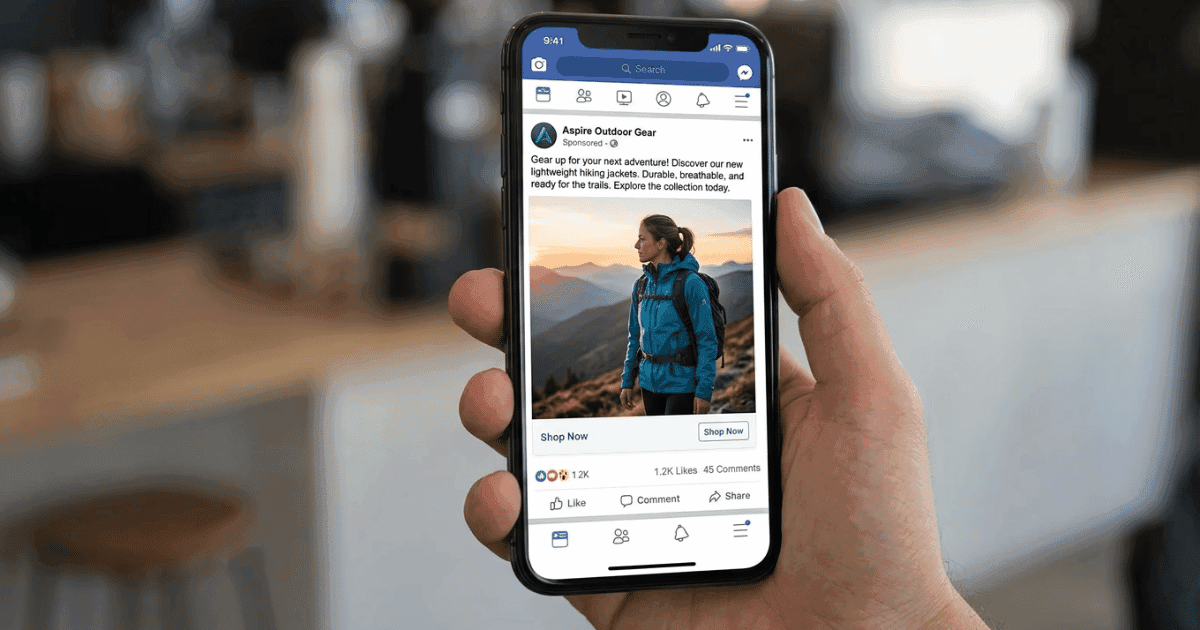
An image ad uses a single visual paired with a short headline and a clear call to action. It looks simple on the surface, yet it remains one of the most reliable formats when the goal is quick response.
This format works especially well when the message is already clear. Retargeting campaigns benefit the most because the audience already knows the product. A clean visual combined with a direct offer, such as a discount or limited-time deal, often pushes users to act wi
thout needing extra explanation.
Static ads tend to generate higher click-through rates and lower cost per acquisition in direct response campaigns, even when video drives more engagement overall. This makes image ads a strong choice when the focus is conversions, not attention.
Creative execution matters more than the format itself. High contrast visuals stop the scroll faster than polished but flat designs. The message should be obvious within a second. Product benefit, pricing hook, or outcome needs to be visible without relying on long captions.
There is a limit, though. Image ads do not give you space to build a narrative. Complex products, new concepts, or anything that needs demonstration will struggle here. When clarity fits into a single frame, this format delivers. When it does not, performance drops quickly.
2. Video Ads
(Best for Attention and Awareness)
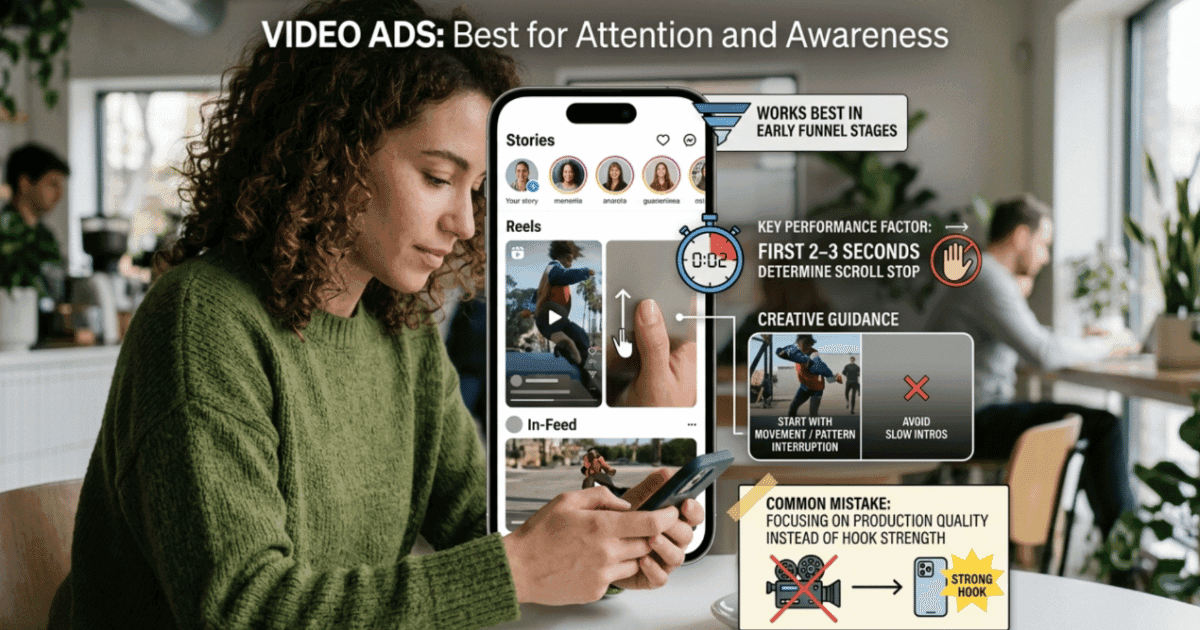
Video ads appear across feeds, Stories, and Reels, making them one of the most flexible formats in the Meta ecosystem. They are built to capture attention first and build interest before any intent to purchase shows up, which is why they perform best in early funnel campaigns.
The first few seconds decide everything. Most users scroll quickly, so if the opening does not create curiosity or movement, the ad gets ignored. Strong performers often start with motion, unexpected visuals, or a pattern break that interrupts the scroll.
Slow intros or logo animations at the beginning tend to lose viewers before the message even starts.
Performance data highlights why advertisers rely on video for awareness. Video ads consistently generate higher engagement and interaction rates compared to static formats, with studies showing significantly more likes, comments, and overall engagement. At the same time, they often come with lower CPMs, which helps reach a broader audience at a lower cost.
Creative direction matters more than production quality. A simple, raw clip with a strong hook can outperform polished content that takes too long to get to the point. What holds attention is not how cinematic the video looks, but how quickly it gives the viewer a reason to keep watching.
A common mistake is investing heavily in editing while ignoring the opening seconds. Without a compelling hook, even the best-produced video struggles to deliver results.
3. Carousel Ads
(Best for Multi-Product or Feature Breakdown)
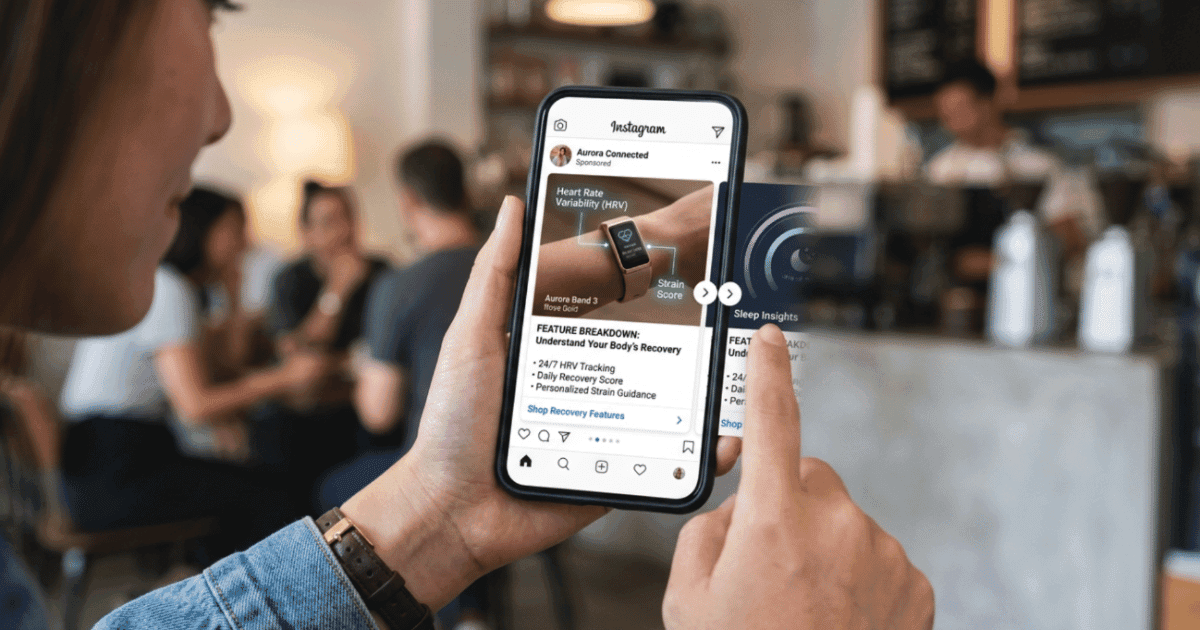
Carousel ads give you space to show multiple angles within a single ad. Each card can carry its own visual, message, and link, which makes it useful when one frame cannot fully explain the product.
They work especially well for situations where clarity builds step by step. A product with variations, a comparison between features, or a simple before-and-after flow all fit naturally into this format.
There is a clear performance advantage when used correctly. Many DTC brands report higher click-through rates with carousel ads because users interact with more than one card. That added interaction often helps improve efficiency and can lower CPM in comparison to static formats.
A strong carousel usually follows a quiet structure:
First card pulls attention with a clear hook
Middle cards add depth or highlight differences
Final card pushes toward action
The order matters more than the visuals alone. When each swipe adds something new, people stay engaged.
Where things break down is when every card looks the same or repeats the same message. Without progression, users stop after the first swipe, and the format loses its advantage.
4. Collection Ads
(Best for Mobile Product Discovery)
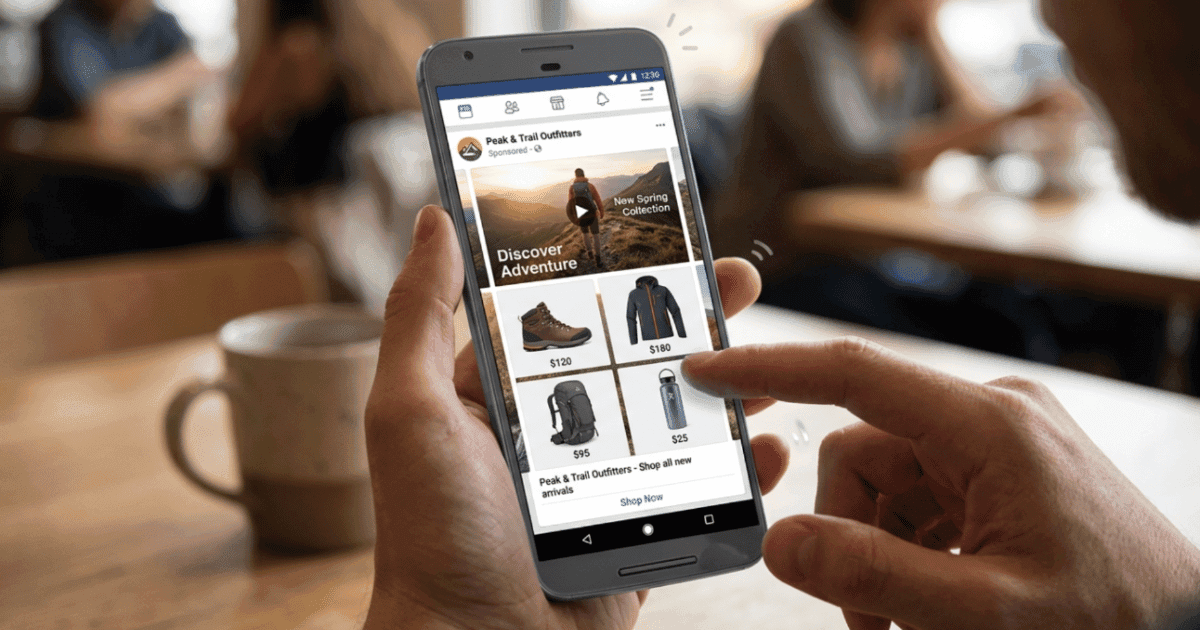
Collection ads are built for one thing, making product discovery feel effortless on mobile. The format combines a primary visual at the top with a grid of products underneath, giving people a quick preview before they even click.
The moment someone taps, it opens into an Instant Experience. This is a full-screen, fast-loading environment where users can browse multiple products without leaving the app. That small detail changes how people behave, with fewer drop-offs, more exploration, and a smoother path toward purchase.
Where this format fits best:
E-commerce stores with multiple SKUs
Dropshipping funnels that rely on impulse browsing
Catalog-driven campaigns where variety matters
What gives it an edge is reduced friction. Users do not get pushed to an external site immediately. They stay within Meta’s environment, scroll through products, and build interest before deciding to click through. This native experience is one reason it drives stronger engagement compared to standard link ads.
A well-built collection ad usually follows a simple flow:
A strong hero image or video that grabs attention
Product grid that feels relevant and easy to scan
The format is heavily mobile-driven by design. It was created to load quickly and feel seamless within the app, which matters since most Meta traffic comes from mobile usage.
Where advertisers struggle is in treating it like a regular ad. Without a compelling hero or relevant product selection, users do not tap, and the entire experience never gets triggered.
5. Instant Experience Ads
(Best for High Intent Engagement)
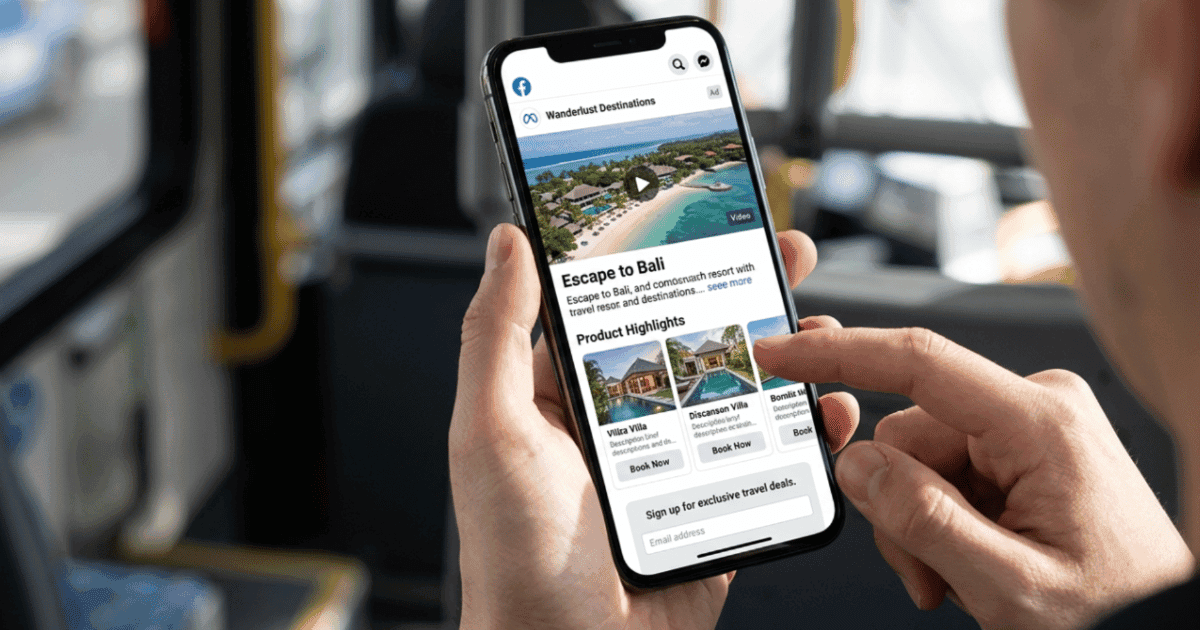
Instant Experience ads turn a tap into a full-screen journey inside Meta apps. The user does not get redirected to a website. They stay within the app and explore a fast-loading, interactive environment built entirely around your product.
What makes this format different is how much you can pack into it. A single experience can combine video, scrollable sections, product highlights, and even lead capture. It feels closer to a landing page than a traditional ad, but without the friction of loading an external site.
These experiences load up to 15 times faster than mobile web pages, which helps reduce drop-offs during the transition.
The performance upside shows up in attention. Early tests found that more than half of users view at least half of the experience, with average view times around 30 seconds or more. That level of engagement is difficult to achieve with standard formats.
Real brands use this format when storytelling matters:
Airbnb created immersive travel journeys where users explored destinations, watched clips, and browsed listings before booking, all within the ad itself
Bud Light used Instant Experience tied to a major campaign and reached nearly half of its target audience while improving brand perception
Despite strong results, adoption stays low because setup takes effort. You are building a structured experience, not uploading a single creative. Layout, pacing, and content order all influence whether users keep scrolling or drop off.
This format fits best when the product needs context before conversion. When used well, it warms up intent before sending users to the final step.
6. Stories Ads
(Best for Quick Attention in Vertical Format)
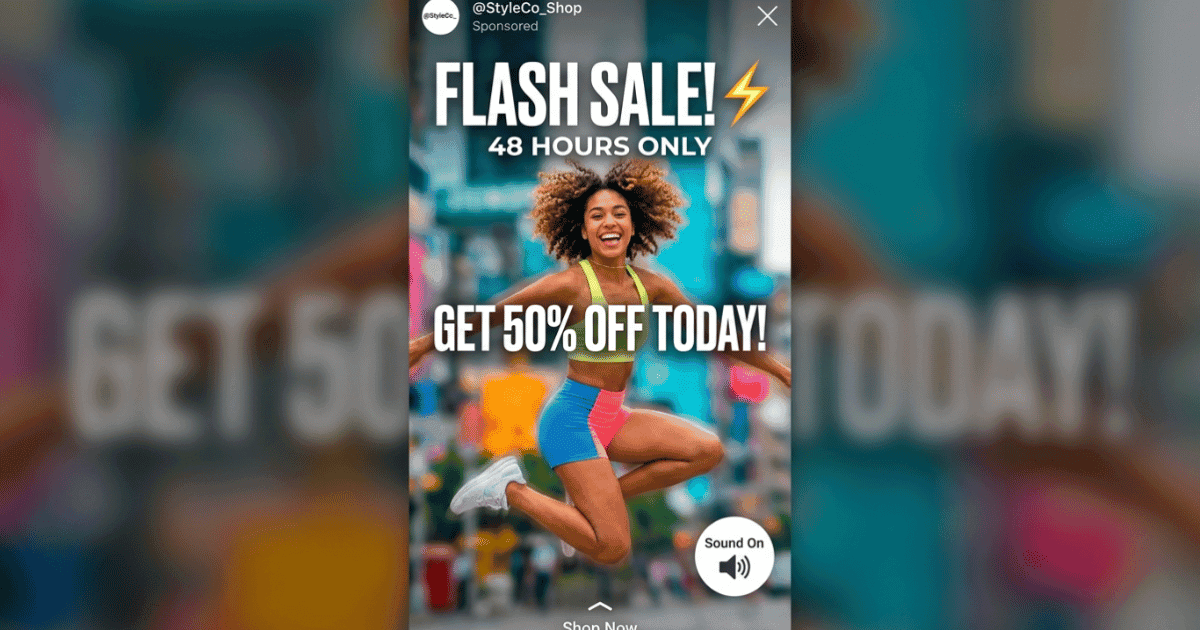
Stories ads are designed for speed. They take up the entire screen in a vertical 9:16 format and appear between user Stories, which means there is no competition on the screen when your ad shows.
The way people interact here is very different from feeds. Users tap forward quickly, often within seconds, so the message has to land almost instantly. If the first frame does not communicate something clear, the ad is gone before it even gets a chance.
This placement is not just about attention, it is efficient, too. Instagram Stories ads have been recorded with around 1.34% CTR and a lower cost per click compared to feed placements, which makes them one of the more cost-effective ways to drive action when the creative is strong.
What tends to work well:
Bold text overlays that can be read in a split second
Fast pacing that moves from hook to value quickly
Visuals designed specifically for vertical viewing, not cropped from feed creatives
There is also a behavioral signal worth noting. A significant portion of users who see a product in Stories go on to explore the brand further, which makes it useful for both discovery and action-driven campaigns.
The limitation is simple. Attention is short and unforgiving. There is no room for slow build-up or detailed explanation. If the message is not clear within the first moment, the user moves on without hesitation.
7. Reels Ads
(Best for Reach and Algorithmic Distribution)
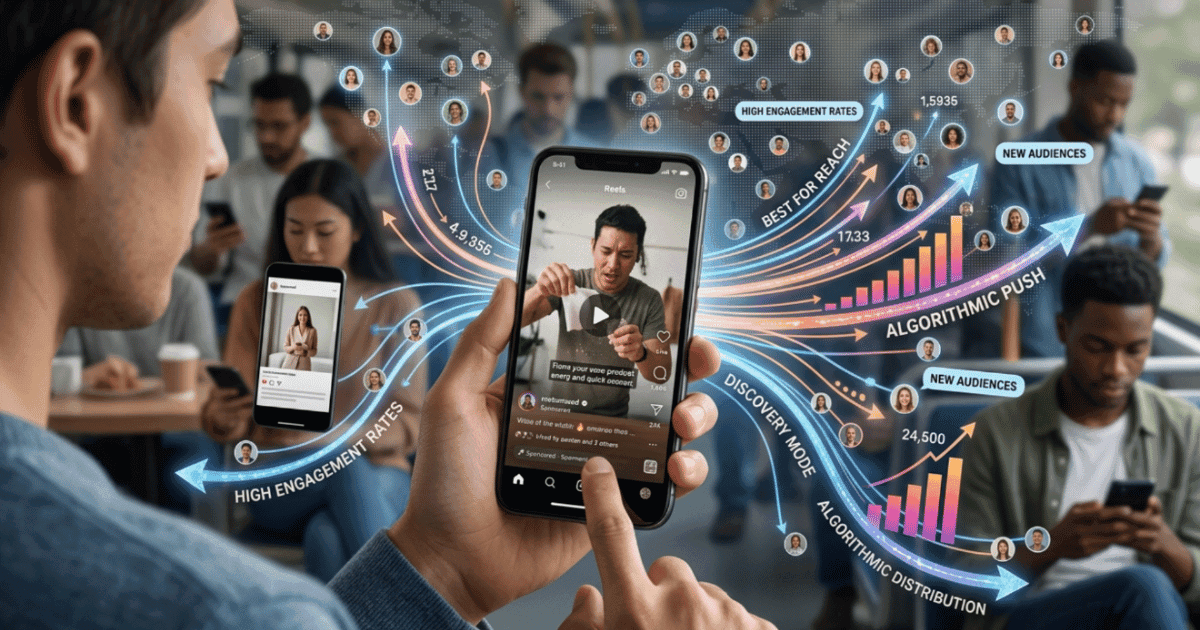
Reels ads sit inside the short-form video feed, which means they are not just shown, they are pushed. The algorithm actively distributes this content based on engagement signals, making it one of the strongest formats for reach.
The scale here is hard to ignore. Reels now account for a large share of time spent on Instagram, with billions of daily interactions and a growing share of ad inventory. Engagement rates also tend to be higher than static formats, with Reels consistently outperforming photo and carousel posts in both reach and interaction.
That reach comes with a pattern. Reels ads are excellent at getting in front of new audiences, but conversions can vary. Users are in discovery mode, not buying mode, which means attention is high but intent is inconsistent.
Where they work best:
UGC style creatives that feel native to the feed
Trend-driven content that blends with organic posts
Early funnel campaigns focused on awareness and traffic
Creative fit decides performance here. Highly polished ads often struggle because they feel out of place. Content that looks like it belongs in the feed, raw clips, voiceovers, and quick demos tend to hold attention longer and generate better engagement signals.
A few things matter more than production quality:
Immediate hook within the first second
Human presence or relatable context
Fast pacing that matches how users consume short-form video
Reels rewards relevance. When the ad feels like an ad, users scroll past. When it feels like content, it travels further.
8. Lead Ads

(Best for Capturing Data Without Landing Pages)
Lead ads remove one of the biggest drop-off points in a funnel. Instead of sending users to a landing page, the form opens directly inside Meta, often pre-filled with their details. That small change makes a noticeable difference in completion rates.
This format fits naturally for service-based businesses, consultations, demos, and any campaign focused on collecting contact details rather than immediate purchases.
There is a clear efficiency advantage. Lead generation campaigns on Meta often see conversion rates in the 5% to 12% range, depending on the industry, which is higher than many traffic-driven funnels. At the same time, cost per lead on Meta can stay relatively low compared to other platforms, with averages often sitting under $30 in several sectors.
The reason is simple. Fewer steps mean fewer chances to drop off.
What makes this format tricky is the lead quality. When the form is too easy, you get volume but not always intent. People tap through quickly without thinking, which creates a gap between leads collected and actual customers.
A small adjustment improves this significantly:
Add 1 or 2 qualifying questions to filter intent
Ask something that requires a bit of effort, not just one tap
Align questions with what actually matters for your business
Meta has even introduced optimization options that prioritize higher-quality leads instead of just quantity, which highlights how common this issue is.
Lead ads work best when friction is controlled, not eliminated. Too much friction kills volume, but zero friction floods you with weak leads. Finding that balance is what makes this format profitable.
9. Dynamic Ads

(Best for Retargeting and Scaling E-commerce)
Dynamic ads remove guesswork from product promotion. Instead of manually choosing what to show, Meta automatically pulls products from your catalog and matches them with users based on their behavior.
If someone views a product, adds it to the cart, or browses a category, the ad they see later reflects that exact interest. This level of personalization is what makes the format powerful.
Where they perform best:
Retargeting users who visited product pages
Recovering abandoned carts
Scaling ecommerce campaigns with large catalogs
The performance edge comes from relevance. You are not showing a generic ad to a broad audience. You are showing the exact product or a closely related one to someone who has already shown intent. That is why retargeting campaigns often see higher conversion rates and lower costs compared to cold traffic campaigns.
There is also strong data behind this approach. Retargeting campaigns can increase conversion rates by up to 150%, largely because the audience is already familiar with the product.
In some cases, dynamic ads have delivered up to 2X higher conversion rates and significantly better return on ad spend compared to standard ads.
What makes them work:
Product-level personalization driven by user behavior
Automated delivery across large catalogs
Continuous optimization based on engagement signals
The dependency sits on your product feed. If titles, images, or pricing data are inconsistent or poorly structured, performance drops quickly. Clean data leads to better matching, and better matching leads to stronger results.
Dynamic ads do not rely on creative variety as much as other formats. They rely on data quality and audience intent. When both are strong, they scale with very little manual effort.
10. Messenger Ads
(Best for Conversation-Based Funnels)
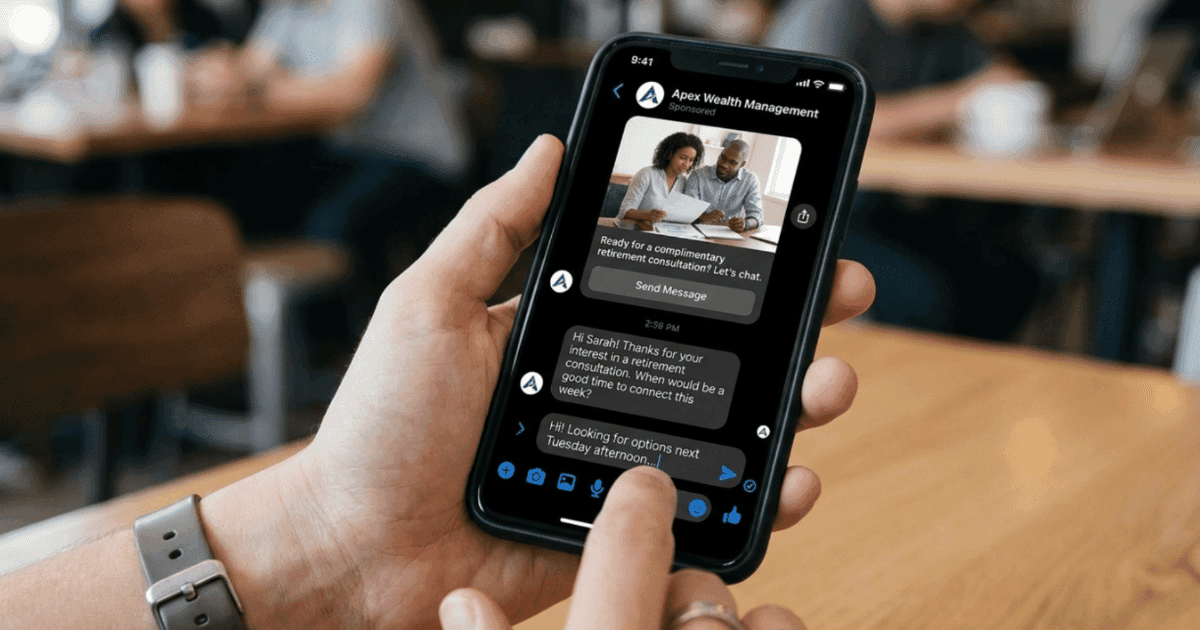
Messenger ads move the interaction away from clicks and into conversations. Instead of sending users to a page, the ad opens a chat inside Messenger where the buying process can begin instantly.
This format fits naturally when a purchase needs discussion. High-ticket products, services, and consultation-based offers benefit the most because users can ask questions, clarify details, and build trust before committing.
There is a strong performance angle behind this. Click to Messenger campaigns remove the usual drop-off that happens between ad click and landing page, which improves conversion flow. Some reports show conversion rates reaching around 18.6%, significantly higher than many traditional funnels.
Engagement is also much stronger, with open rates often ranging between 50 to 80%, far higher than email or standard traffic campaigns.
What makes this format effective is the direct interaction:
Users can ask questions before buying
You can qualify leads in real time
Objections get handled instantly instead of being ignored
That said, the setup cannot be ignored. Without a response system, either manual or automated, conversations stall and leads go cold. Meta allows built-in automated question flows, but without structure, the experience quickly breaks down.
Which Meta Ad Type to Use Based on Funnel Stage?
Choosing a format without thinking about the funnel stage is one of the fastest ways to waste budget. Each format aligns with a different level of intent, and when that alignment breaks, performance drops even if the creative looks strong.
Here is how formats map more naturally across the funnel:
Funnel Stage | Best Ad Types | Why They Work |
Awareness | Video Ads, Reels Ads, Stories Ads | These formats capture attention quickly and reach cold audiences at scale. They are built for discovery, not immediate action. |
Consideration | Carousel Ads, Video Ads | Users need more context here. These formats allow explanation, comparison, and deeper engagement before a decision. |
Conversion | Collection Ads, Dynamic Ads, Image Ads | High intent formats focused on clarity and action. They reduce friction and push users toward purchase or completion. |
The logic is simple. Early-stage users are not ready to buy, so formats that educate or entertain perform better. As intent builds, formats that provide detail and structure become more effective. At the final stage, simplicity and relevance drive conversions.
What Actually Drives Performance?
Format gets attention, but the creative decides whether anything happens next. Two advertisers can use the same ad type and see completely different results because the message, not the format, controls how people respond.
Each format has its own pressure point.
Image ads rely on instant clarity. If the benefit is not obvious at first glance, the scroll continues. Strong contrast and a clear message carry more weight than design polish.
Video ads depend on the opening seconds. If nothing interesting happens early, retention drops fast, and the rest of the content never gets seen.
Carousel ads work through progression. Each card needs to add something new, or users will stop swiping after the first one.
Another factor that quietly affects performance is repetition. Even a strong ad starts to lose impact once the same audience sees it multiple times. Click-through rates drop, costs rise, and results flatten. This is not a format issue. It is creative fatigue.
The fix is not switching formats every time performance dips. It is testing variations within the same format. Small changes in hooks, visuals, or messaging often bring results back without rebuilding the entire campaign.
Common Mistakes When Choosing Meta Ad Types
Poor results often come from small decisions made during setup. The ad runs, traffic comes in, yet performance never quite lines up with expectations. In most cases, the issue is not the format itself but how it has been paired with the rest of the campaign.
A few patterns show up repeatedly:
Treating formats as standalone choices: Selecting an ad type without considering the objective or placement breaks how Meta delivers the ad. The system needs alignment to find the right audience behavior.
Ignoring objective alignment: A format designed to drive action can struggle if the campaign is optimized for engagement. The platform follows the objective, not the intention behind the creative.
Using video without a strong opening: The first seconds decide whether the ad gets attention. Without a clear hook, even well-edited videos lose viewers immediately.
Running lead ads without qualification filters: Built-in forms make submission easy, which increases volume but often lowers quality. Adding a couple of thoughtful questions helps filter intent before the lead is captured.
Relying on one format for too long: Performance drops when the same format and message are shown repeatedly. Audiences recognize the ad, engagement declines, and costs start rising.
Making Meta Ad Types Work in Your Favor
Meta ad types only start making sense when viewed as part of a system. Results come from how the objective, format, and placement align, not from the format alone. When these elements support each other, delivery improves, and performance becomes more predictable.
Strong campaigns grow through testing, not guesswork. Starting with simple formats like image or video ads helps you understand what message connects. Once that is clear, expanding into carousel or collection formats becomes a natural next step.
Creative iteration plays a bigger role than switching formats. Small adjustments in hooks, visuals, or sequencing often bring stronger results than rebuilding campaigns entirely.
Looking at what is already working can shorten the learning curve. You can explore active ads across formats, break down how top advertisers structure their creatives, and notice patterns that repeat in high-performing campaigns.
WinningHunter gives you access to a large database of Facebook and TikTok ads with real-time performance insights. You can filter by spend, engagement, and performance to identify what is scaling, study how video hooks are built, and see how carousel and collection ads are structured. It helps you move from guessing to informed testing much faster.
FAQs
Which Meta ad format works best for conversions?
There is no single best format for conversions. Dynamic ads, collection ads, and carousel ads often perform well because they match user intent and reduce friction. For example, carousel ads can deliver up to 30 to 50% lower cost per conversion in some cases. The right choice depends on audience intent, product type, and funnel stage.
What is the difference between Meta ad formats and objectives?
Ad format defines how your ad looks, such as image, video, or carousel. An objective defines what Meta optimizes for, like purchases, clicks, or engagement. Format shapes the experience, while objective controls delivery. Both must align, or the system pushes your ad toward the wrong user behavior.
Are video ads better than image ads on Meta?
It depends on the goal. Video ads often generate higher engagement and lower CPM, while image ads tend to deliver higher click-through rates and lower cost per acquisition in direct response campaigns. Video works well for attention, while images often convert better when the message is simple.
What is the best Meta ad type for dropshipping?
Dropshipping campaigns usually rely on a mix. Video ads and Reels help attract attention, while carousel, collection, and dynamic ads drive product exploration and purchases. Many e-commerce brands see strong returns from carousel and dynamic formats due to higher relevance and interaction.
How do I choose the right Meta ad format?
Start by identifying the funnel stage and campaign objective. Use video or Reels for awareness, carousel or video for consideration, and dynamic or collection ads for conversions. Then test multiple creatives within each format. Performance improves when format, message, and audience intent work together, not when one element is chosen in isolation.


We already know what works before you even have the chance to blink!
© 2024 WinningHunter.com