turn-viral-products-into-high-converting-content-pages
From Trend to Storefront: Turning Viral Product Data into High-Converting Content Pages
By
Kinnari Ashar
In late 2022, the Owala FreeSip started dominating TikTok feeds through organic creator reviews. This was the beginning of their massive takeover of the hydration market, turning a simple water bottle into a cultural staple.
Other brands watched this early viral velocity spike, but scrambled to build competing landing pages, publishing templated copies instead. They lost their momentum. By the time their generic product pages were live, the peak conversion window had already closed.
Missing that window is exactly how most ecommerce brands bleed revenue. They treat viral traffic like standard search traffic and rely on standard ecommerce product page SEO instead of matching the specific emotional trigger that caused the product to trend.
This article details how to catch these trends early and build high converting pages for trending products. You will learn how to read early signals, build the necessary content assets, and capture social traffic with smart product page optimization before the trend inevitably dies.
Key Takeaways
Speed matters more than perfection. A page published early usually performs better than a polished page launched after the trend peaks.
Your landing page should match the same hook, tone, and emotional trigger that made the product trend in the first place.
Structured layouts, FAQs, and schema markup help search engines and AI systems understand the page more clearly.
Viral traffic is mostly mobile traffic. Slow load times, popups, and complicated checkout flows reduce conversions fast.
Strong product trends spread across multiple platforms before search demand fully catches up.
Many buyers discover products through social content, then return later through Google Search or direct visits. Basic click attribution often misses these delayed conversions.
Reading Viral Product Signals Before They Peak
Chasing a product that is already saturating everyone's TikTok FYP is a fast way to lose money. By the time you jump in, the attention has peaked, and the margins are dead.
Catching the signal early lets you build the storefront while your competitors are still scratching their heads.
Where to look first: Start your monitoring stack with TikTok Creative Center and Minea to spot early social momentum. Cross-reference those hits with WinningHunter or Exploding Topics to see if the commercial interest is actually there.
Do not forget to watch Google Trends rising queries, Amazon Movers & Shakers, and niche subreddits like r/HydroHomies where the Owala FreeSip first blew up.
For example, this Google Trends chart shows how Owala FreeSip search popularity has been steadily (and almost exponentially) growing worldwide. Currently, it’s the #1 best seller in the world in its niche.
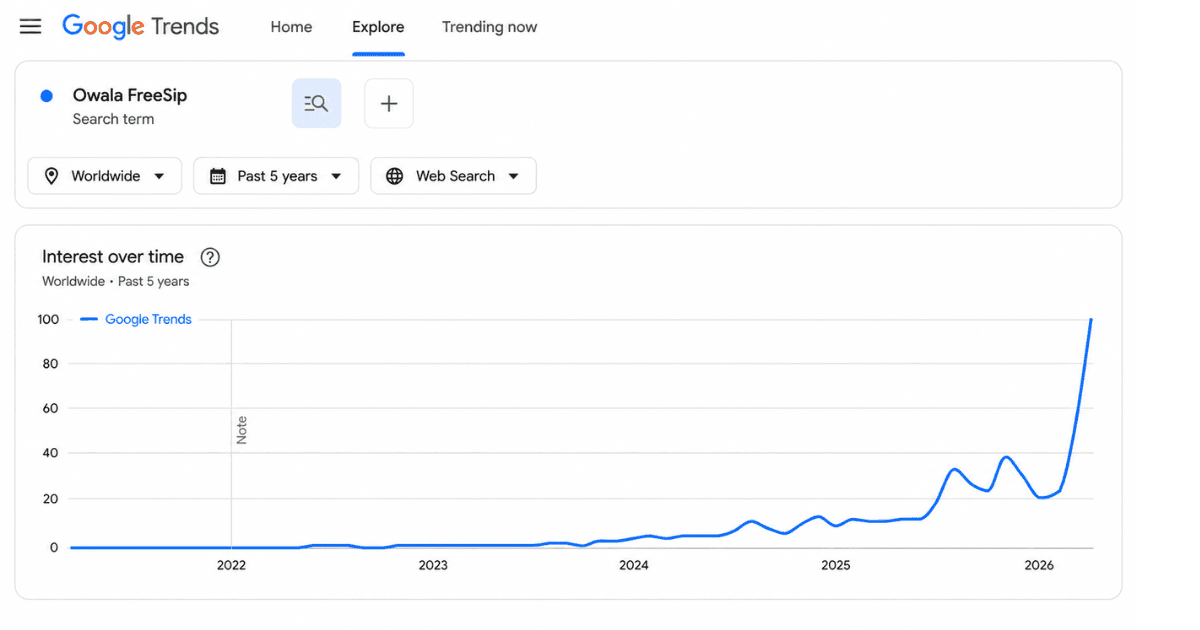
What separates signal from noise: Real viral product trends show sustained energy across a couple of platforms. They are driven by actual creators rather than a massive ad budget.
Remember that organic search always trails social momentum by one to three weeks.
When products like the Owala bottle first go viral, SEO tools like Semrush typically show the main Google search spike trailing the initial TikTok surge by one to three weeks. Even by today, their stats show a staggering 22K global search volume for the “Owala FreeSip” keyword, with the US alone hitting 12K in annual search.
Reading the window: Most product trends hold strong commercial intent for four to eight weeks. After that window closes, market saturation inevitably kills your margin, and conversion rates plummet.
This tight timeline means your landing page should be live within days, not weeks.
False positives to ignore: Not every traffic spike deserves a dedicated product page or content sprint. Ignore single-creator spikes that fail to ripple out to the broader community.
You must also avoid paid-only velocity with no organic follow-up and novelty products that offer zero repeat-purchase path.
How to Create Content Pages for Viral Products
One page is never the full answer. The primary product page acts as the anchor, but supporting content must surround it to capture different stages of intent. You need a structured product content marketing ecosystem that feeds the main conversion point.
Building product pages that match search and AI intent
Your primary goal is to establish entity clarity within the first 100 words. To achieve that, state exactly what the product is, who it is for, its category, and its defining feature, clearly so LLMs can extract it cleanly.
For example, for the Owala FreeSip, this means explicitly calling out the built-in straw and sip-or-swig functionality immediately.
Deploy a robust schema stack at a minimum to build high converting product pages. You need Product, Offer, Review, and FAQPage markup. Following Google's own AI Overviews guidance for schema recommendations ensures crawlers understand the page structure instantly.
Finally, write FAQ sections using actual buyer questions pulled from TikTok comments, Amazon reviews, and r/HydroHomies threads. Do not rely on generic keyword-tool outputs. Make sure your above-the-fold content answers "what is this and should I buy it" in one single scroll.
While social velocity drives the initial spike, knowing how to increase landing page organic traffic will ensure your product page remains profitable in the months that follow.
Creating supporting content around the product
One primary product page is never enough to capture the full revenue value of a viral spike. You need to surround this primary page with a dedicated product content marketing ecosystem. This structure feeds relevance back to the main conversion point and captures buyers at different stages of intent.
To maximize this traffic, structure your supporting content across these four areas:
Hook-specific landing pages: Do not bury a specific viral hook in a generic product detail page. If the Owala FreeSip trended specifically as the water bottle that never leaks in a work bag, build a dedicated landing page around that exact angle.
On-site expansion: Create comparison pages, use-case scenarios, and problem-led blog posts that position the product as the ultimate solution.
Off-site amplification: Secure editorial placements via guest blogging services on relevant publications to build authority and external signals while the trend is hot. This tactic is highly useful for both standard search rankings and getting cited in LLM answers.
UGC repurposing: Inject creator phrasing and comment-section language directly into your page copy. Your buyers have already market-tested that language.
Expanding your ecommerce product page SEO with these supporting assets, along with insights from an seo checker tool, ensures you capture both high-intent social traffic and the organic search volume that follows a few weeks later. A single isolated page simply cannot do both effectively.
Aligning content formats with discovery channels
Different traffic sources create different browsing habits. Search users usually want quick answers and clear product details. Social users move faster and expect the page to feel like a natural continuation of the video or creator post they just watched.
A short summary block near the top of the page helps both audiences. Clear product descriptions, direct answers, and structured content also make it easier for Google to understand the page for AI Overviews and rich results.
After that first section, the layout should shift toward fast mobile scanning. Long paragraphs and oversized product descriptions slow social traffic down quickly.
A few formats work especially well here:
Quick answer boxes: Place common buyer questions directly below the hero section.
Collapsible sections: Hide detailed specs, sizing, or care instructions behind expandable toggles to keep the mobile layout clean.
Visible shipping timelines: Show delivery estimates clearly on the page instead of forcing users into separate policy pages.
The visual style matters just as much as the structure. Social buyers expect continuity between the creator content and the landing page. Overly polished studio photography often breaks that connection.
User generated visuals usually perform better because they preserve the original context behind the trend. A product shown inside a gym bag, work tote, or everyday setting feels more believable than a sterile catalog image.
Converting Social-Sourced Buyers (Not Just Search Buyers)
The core secret of how to turn viral product trends into sales pages is understanding that social buyers and search buyers arrive in completely different mental states. At the same time, the average trending products online store is built strictly for the slow, methodical pace of search intent. When you send high-velocity viral traffic to a standard product template, you immediately leak revenue.
Matching the page to the viral trigger
Lead with the exact hook that made the product trend in the first place. If the Owala FreeSip went viral specifically because the hidden straw prevents spills in a tote bag, that exact scenario must be your H1. Never greet an excited social buyer with a generic product title.
Here are a few other important things to consider:
Mirror the cadence: Adopt the phrasing of the creators who drove the traffic and temporarily suspend your rigid brand voice guidelines.
Preserve the driver: Focus on the emotional catalyst driving the traffic, whether that is FOMO, status, or pure curiosity.
Delay the features: Do not revert to standard feature and benefit copy until the initial social hook is fully validated at the top of the page.
When you align the page tone with the viral trigger, you maintain the momentum of the social feed. Breaking that continuity with standard corporate copy creates a jarring experience that kills the sale.
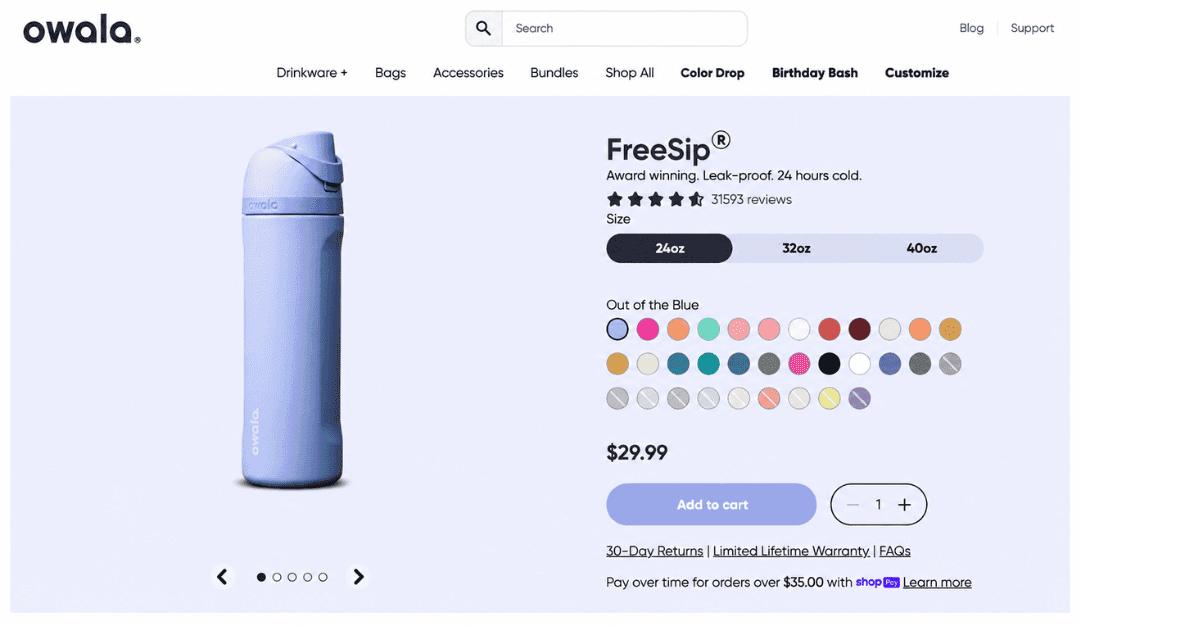
The Owala landing page feels like a natural extension of the TikTok review that led them there.
Reducing friction for social-sourced sessions
Social traffic has zero patience for standard ecommerce friction points. According to Shopify mobile conversion benchmarks, every second of delay kills your conversion rate.
To succeed at product landing page optimization, you must build for the exact devices and mindsets driving the viral surge. Here is how:
Mid-tier product page optimization: Your page must load in under 2.5 seconds on a mid-tier Android device. Android is frequently the dominant social referrer, so do not test exclusively on iPhones.
One-thumb checkout: Surface Apple Pay, Shop Pay, and Google Pay immediately before demanding manual credit card entry.
Single CTA focus: Keep exactly one primary call to action visible per scroll.
Zero popups: Eliminate exit-intent popups or email capture forms that fight against active, impulsive purchase intent.
Contextual trust: Place UGC carousels and TikTok review counts above the fold instead of burying them at the bottom.
Eliminating these friction points is non-negotiable for impulsive social buyers. A clunky checkout or a sudden pop-up will snap them out of the buying mindset instantly. Your goal is to clear the path between their sudden desire for the Owala bottle and the final purchase confirmation.
Measuring what is actually working
Standard attribution models fail completely when measuring viral social momentum. To overcome this blind spot, enforce strict UTM discipline on every creator link, repurposed clip, and outbound mention.
Relying solely on click-through attribution will severely undercount your actual impact. It completely ignores how buyers actually consume social media.
For example, TikTok users frequently watch a review, close the app, and open a browser later to search for the product. Try measuring view-through attribution to capture these delayed searchers who are looking for their new Owala bottle. Ahrefs or Semrush search data will confirm this lag, but your internal attribution must account for it.
Finally, know exactly when to pull the plug. Watch closely for these specific decay signals:
Traffic cliffs: Your daily pageviews drop by more than half over a 48-hour period.
CPA spikes: Your cost to acquire a customer suddenly doubles on social channels.
Add-to-cart drops: Visitors are still looking, but the urgency to buy is completely gone.
Comment saturation: The social chatter shifts from "I need this" to "I already bought three."
When the trend dies, strip the page down and repurpose the underlying architecture for the next viral breakout.
FAQs
How do you identify viral product trends early?
Early signals usually appear on platforms like TikTok, Reddit, Amazon Movers and Shakers, and Google Trends before search demand peaks. Strong trends typically spread across multiple platforms instead of relying on one creator.
Why do most viral product pages fail to convert?
Many brands use generic e-commerce templates that do not match the emotional trigger behind the trend. Social traffic usually converts better when the page reflects the same hook, tone, and urgency that drove the original click.
Why is mobile optimization important for viral traffic?
Most viral product traffic comes from mobile users on platforms like TikTok and Instagram. Slow pages, cluttered layouts, and complicated checkout processes can reduce conversions quickly.


We already know what works before you even have the chance to blink!
© 2024 WinningHunter.com