bigspy-review
BigSpy Review 2026: Features, Pricing & Real User Feedback

Every dropshipper eventually lands in the same place: scrolling endless ad libraries, hunting for creatives before everyone else copies them. BigSpy built its reputation around solving exactly that problem. With support for Facebook, TikTok, YouTube, Pinterest, and more, the platform became a popular pick for marketers who want large-scale ad research without paying premium tool prices.
Some users call it one of the best budget ad spy tools available. Others question the accuracy, freshness, and real value behind the data. So what actually happens once you start using it?
In this BigSpy review, you’ll see what the platform genuinely does well, where it struggles, and whether it still deserves attention in 2026.
Quick Verdict
Score: 7.1/10: A strong budget-friendly ad spy tool with broad platform coverage and useful creative research features, though data freshness and support consistency still hold it back for advanced advertisers.
What We Measured
Area | Score |
Ad Spy Features | 8/10 |
Database Accuracy | 6.5/10 |
Update Frequency | 6/10 |
Pricing & Value | 8.5/10 |
Ease of Use | 8/10 |
Support Quality | 5.5/10 |
Best for: Beginners, dropshippers, and ecommerce marketers who want affordable multi-platform ad research and fast creative inspiration.
Skip if: You rely on highly accurate scaling data, advanced TikTok intelligence, or enterprise-level competitor analytics.
What We Did to Test BigSpy?
Before putting this review together, our WinningHunter team spent time testing BigSpy across Facebook, TikTok, Instagram, and Pinterest ad research workflows to understand how the platform performs during actual product research and creative discovery sessions.
We also:
Reviewed user discussions across Reddit, Trustpilot, G2, Capterra, and YouTube
Tested filters, competitor tracking, and niche-based ad searches
Looked into recurring complaints related to duplicate creatives, outdated ads, billing concerns, and support quality
Evaluated whether the platform works better for finding product ideas or collecting creative inspiration
This review reflects hands-on testing, community feedback, and practical usability analysis, not marketing claims from the sales page.
What Is BigSpy?
BigSpy is a cloud-based ad spy platform that helps you research advertising creatives across multiple networks from one dashboard. The tool allows marketers to search, filter, and monitor ads running on platforms like Facebook, Instagram, TikTok, YouTube, Pinterest, Yahoo, AdMob, and other supported channels.
The platform is mainly used by e-commerce brands, dropshippers, affiliate marketers, and media buyers who want to study competitor campaigns, discover trending creatives, and collect advertising ideas before launching their own campaigns.
One reason BigSpy gained popularity is its lower pricing compared to several premium ad intelligence tools. The platform focuses heavily on accessibility and broad ad coverage, which makes it appealing for marketers who want a large creative database without a high monthly cost.
What Real Users Say?
We analyzed discussions from Reddit threads, Trustpilot reviews, YouTube comments, G2 feedback, and ecommerce communities. Several patterns appeared consistently.
What Users Love
1. Easy to use
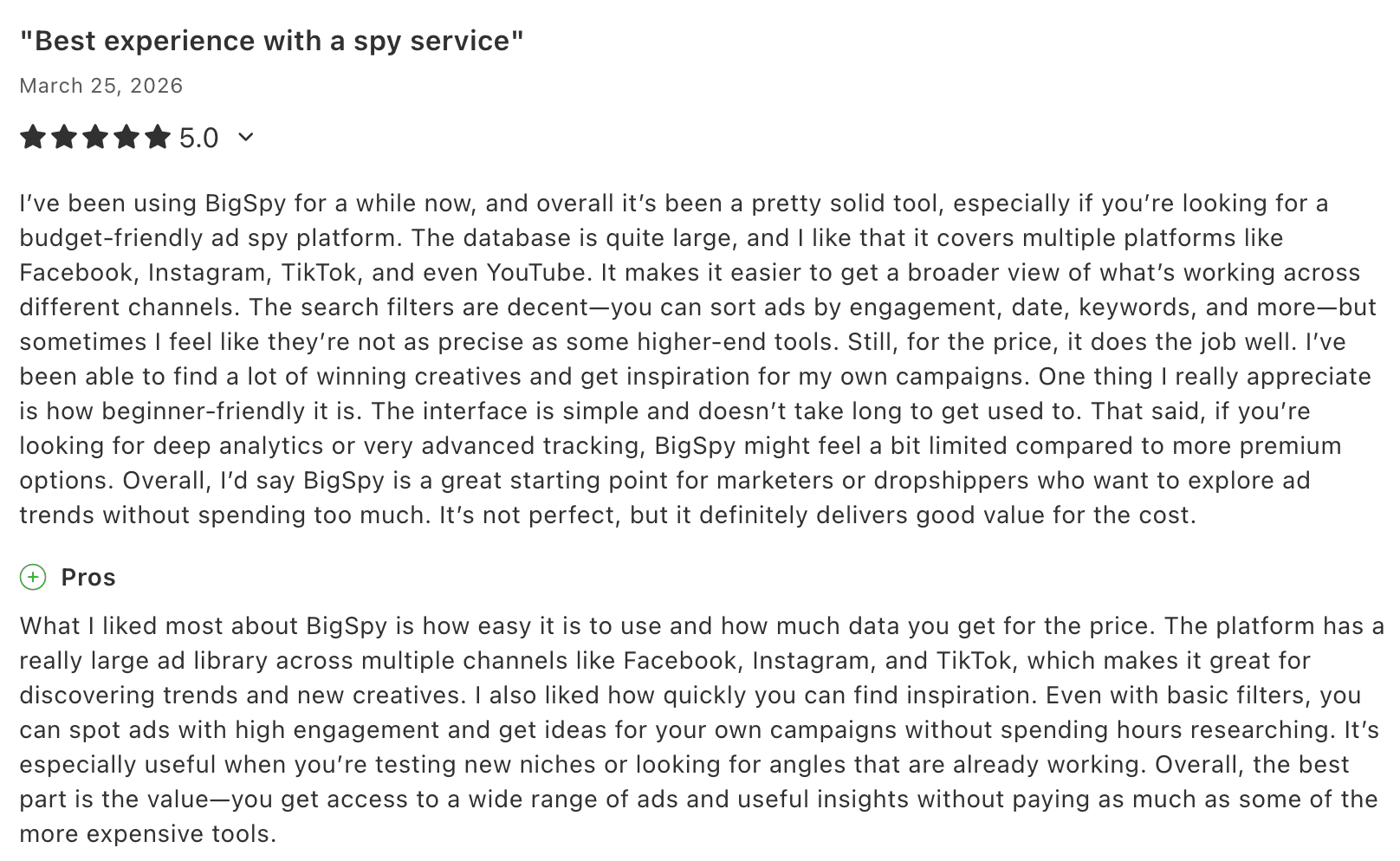
A recurring theme across user reviews is how approachable BigSpy feels for marketers who are new to ad research. Several users highlighted the platform’s simple interface, broad ad coverage, and lower pricing as major reasons they started using it. The ability to browse creatives across Facebook, Instagram, TikTok, and YouTube from one place also came up frequently in positive feedback.
Users particularly liked the large ad library and quick filtering system for spotting trends, engagement patterns, and creative angles without spending hours searching manually. While some reviewers mentioned that the filtering accuracy does not always match higher-priced competitors, many still felt BigSpy delivers solid value if your main goal is creative inspiration and early-stage product research.
2. Advanced Filters Make Ad Research Faster
Another strength mentioned repeatedly in user feedback is BigSpy’s filtering system. Reviewers often appreciated how quickly they could narrow massive ad libraries into more relevant results using filters tied to engagement, countries, platforms, keywords, ad duration, and advertiser activity.
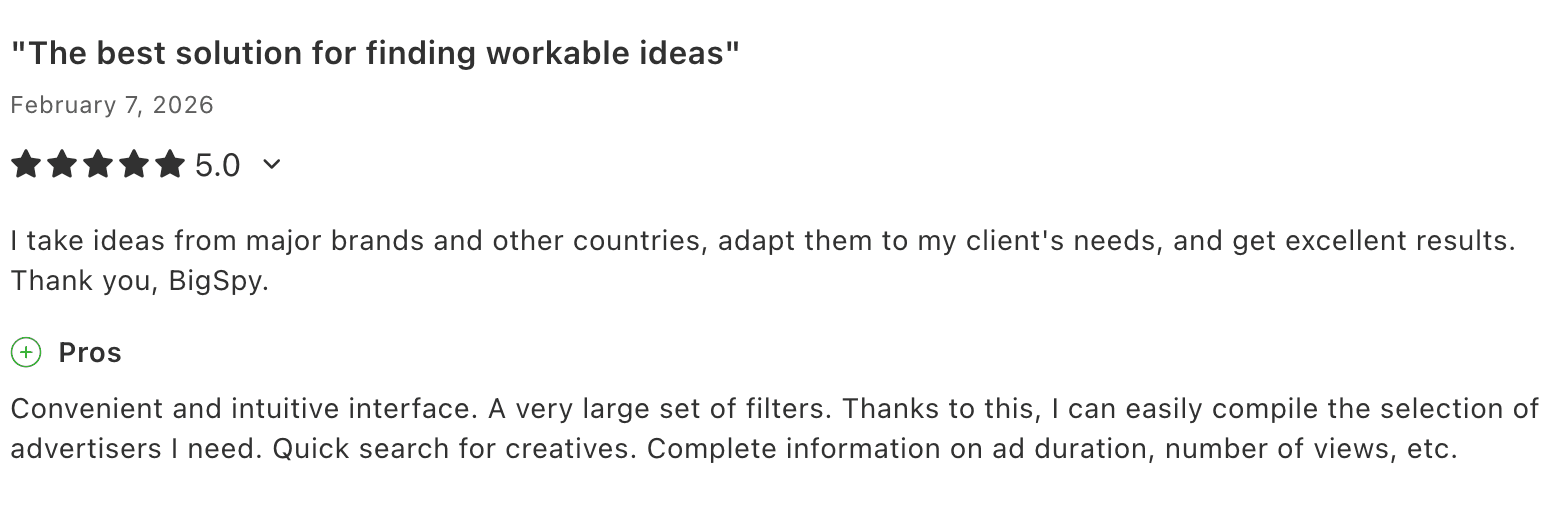
Several marketers also liked being able to study creatives from different regions and industries without manually searching through hundreds of unrelated ads. For users running product research sessions daily, this made competitor analysis feel much faster and more organized. The platform’s search experience appears especially useful for discovering working creative angles, tracking advertiser patterns, and collecting inspiration across multiple niches.
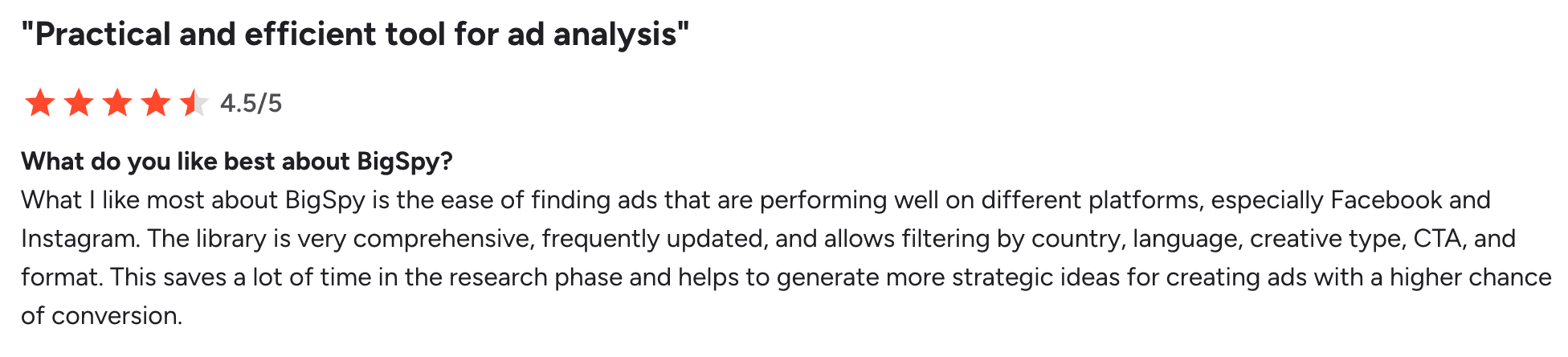
While some advanced users still wanted deeper analytics, many reviewers felt the filtering tools simplified early-stage research significantly.
3. Beginner Friendly Free Trial
For many users, BigSpy feels easier to try than several competing ad spy platforms. The free trial came up frequently in reviews from marketers who wanted to explore ad research without committing to another expensive monthly subscription immediately.
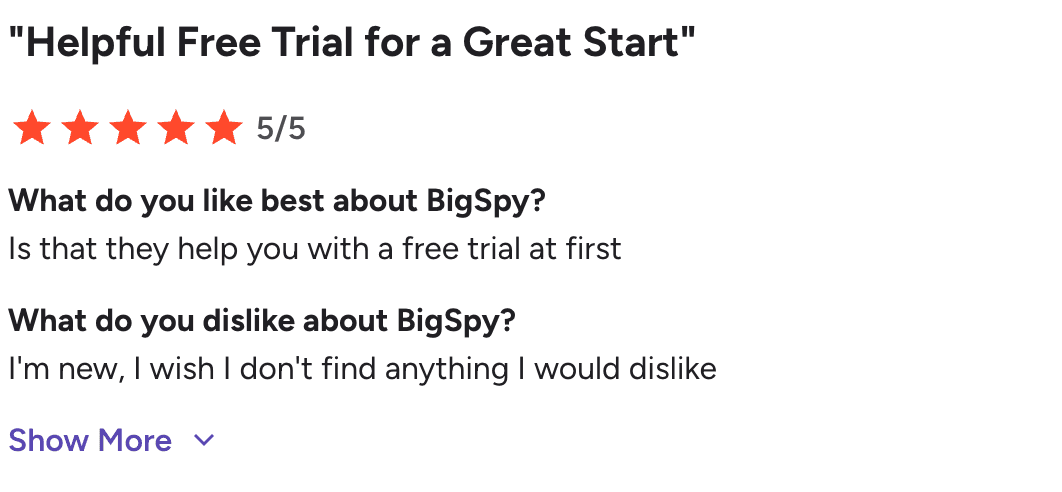
A few reviewers specifically pointed out that even limited access was enough to understand how the platform works, search active creatives, and test different niches. That flexibility appears to matter quite a bit for beginners still learning how ad research tools fit into their workflow.
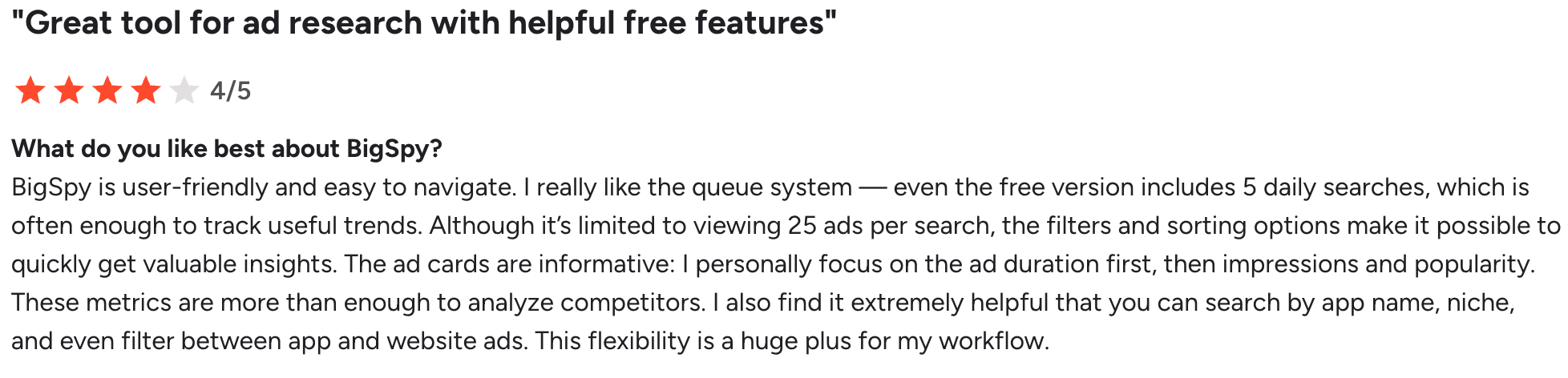
The overall onboarding experience also received positive feedback. Users often described the platform as simple to navigate, with very little setup required before searching ads across different traffic sources. For newer e-commerce marketers, that low-friction experience was viewed as a strong advantage.
4. Useful for Competitor Research
Users liked how quickly BigSpy helped them figure out what competitors were running across different platforms. Instead of manually searching Facebook or TikTok for ads, they could browse active creatives, compare angles, and collect campaign ideas from one place.
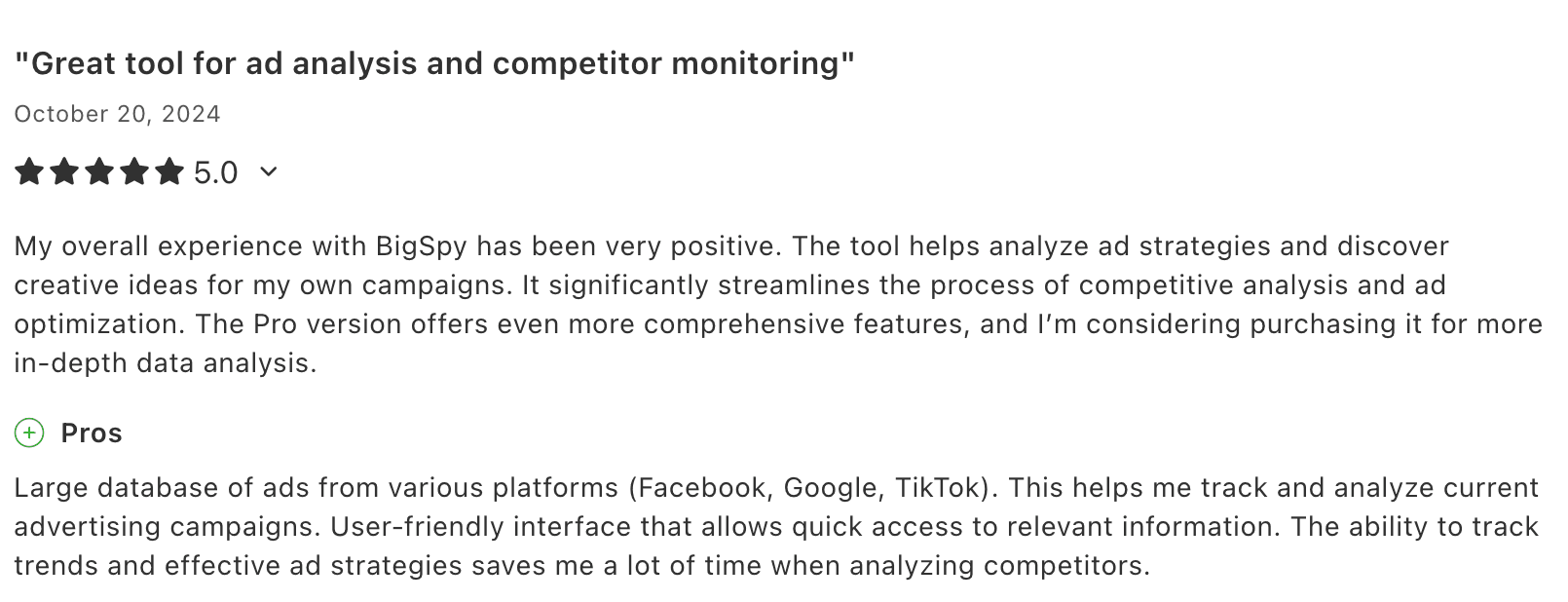
A few reviewers also mentioned using the platform to study ads from other countries and adapt those concepts for their own campaigns or clients. The broad ad database made that process much faster, especially during product research and creative planning sessions.
The convenience stood out more than deep analytics. Users appreciated having quick access to ad examples, trending creatives, and advertiser activity without spending hours digging through platforms manually.
What Users Complain About
1. Trial Billing and Refund Frustrations
One issue that surfaced across multiple negative reviews involved billing confusion tied to the trial period and subscription cancellations. Some users claimed they were charged after canceling their trial access, while others described difficulty getting refunds or receiving clear responses from support after payment disputes.
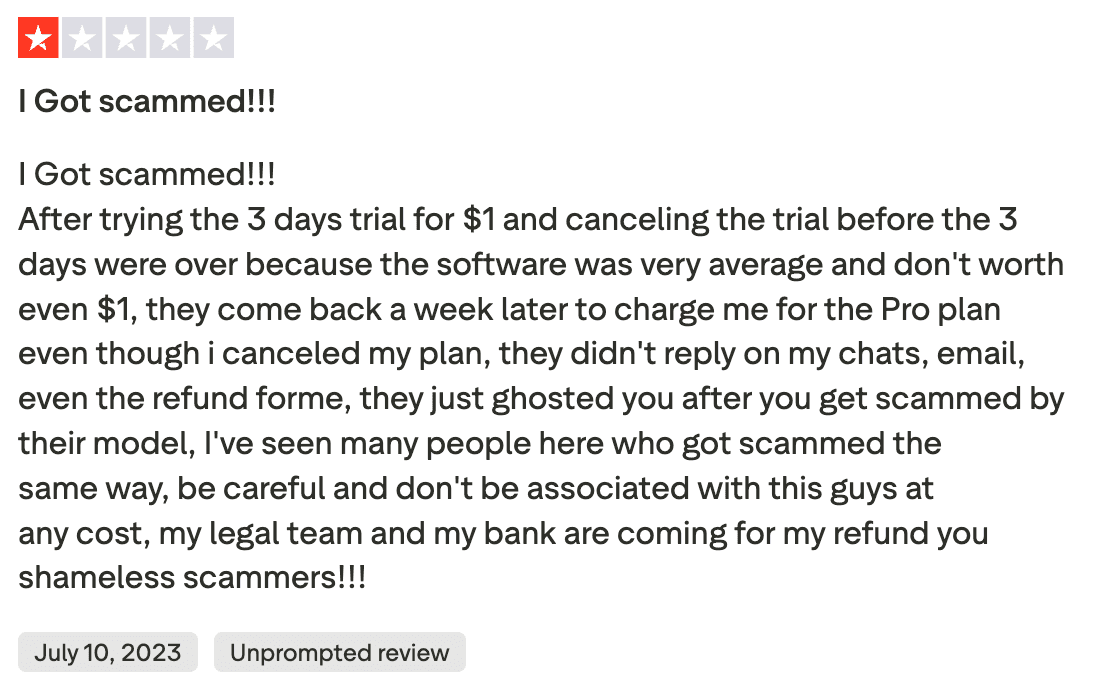
The frustration in these reviews was usually less about the platform itself and more about the post-purchase experience. Several complaints specifically mentioned delayed replies, generic chat responses, or trouble resolving refund requests through email support.
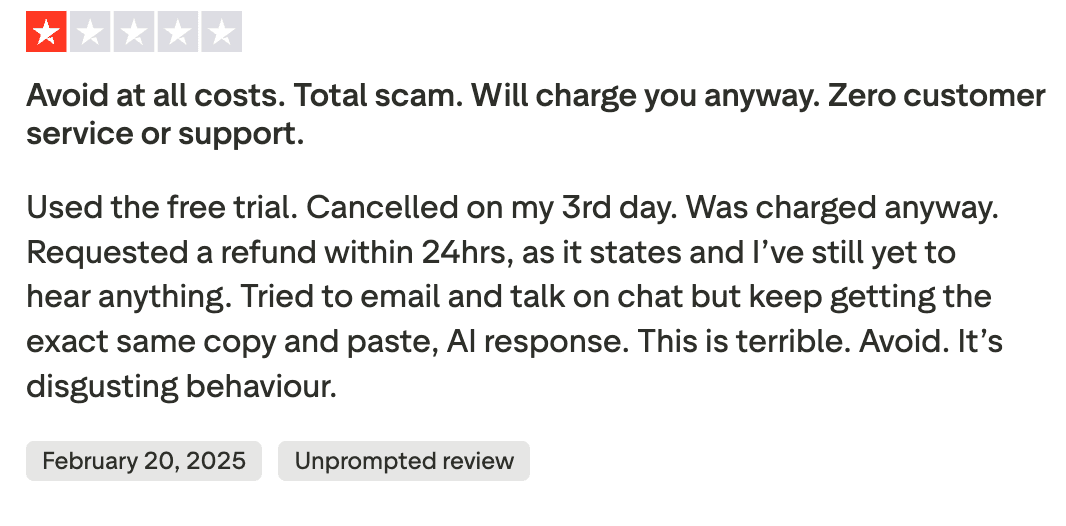
It is important to note that these experiences do not represent every customer. Still, the pattern appeared often enough across review platforms that new users should pay close attention to trial terms, renewal settings, and cancellation policies before subscribing.
2. Complaints Around Review Requests
Not every complaint focused on ad data or platform features. In several reviews, users seemed more irritated by the overall customer experience surrounding the product. One issue that appeared repeatedly involved constant prompts asking users to leave public reviews while using the platform or accessing certain features.
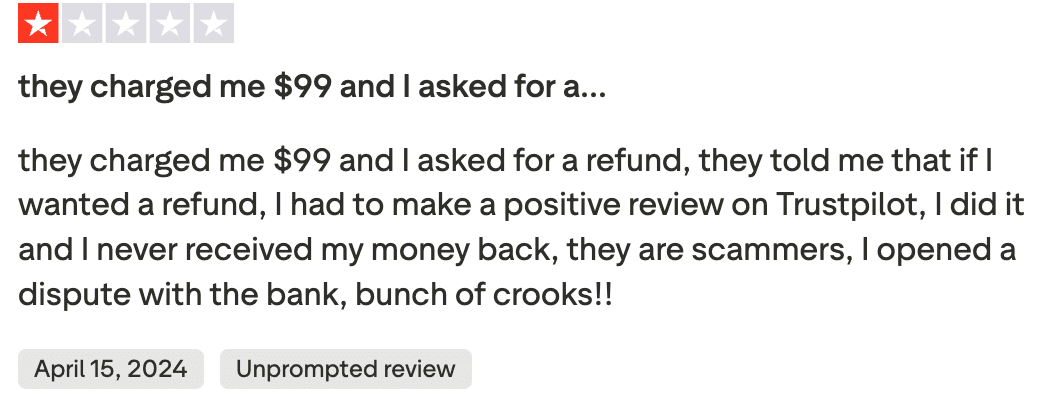
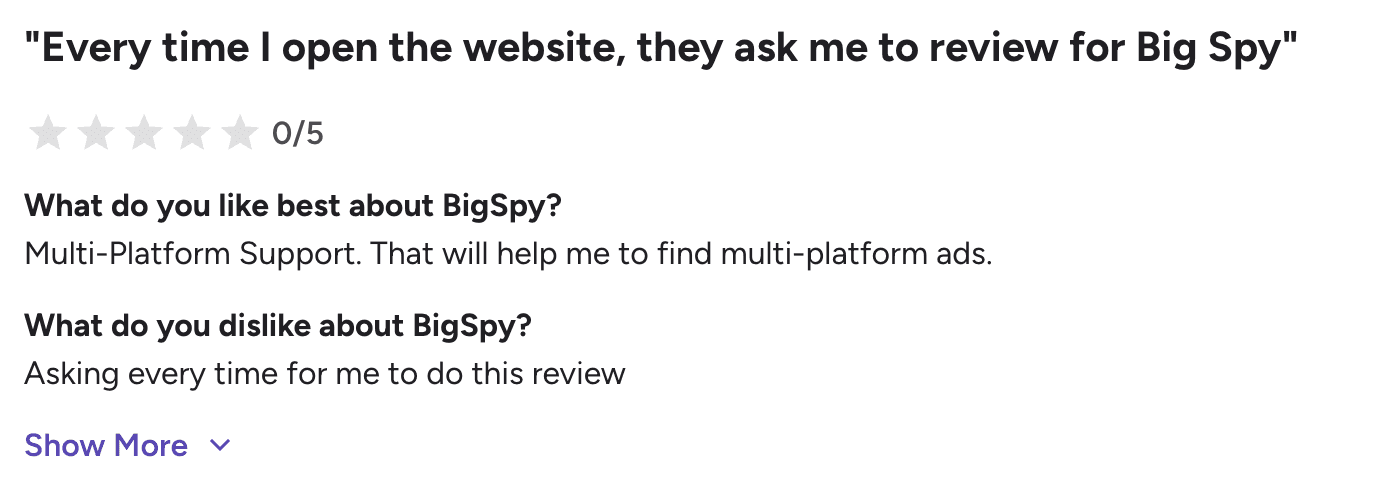
Reviewers also accused the company of tying refund conversations to review requests, though those claims could not be independently confirmed during our testing. Even so, the pattern surfaced often enough across public review sites to stand out.
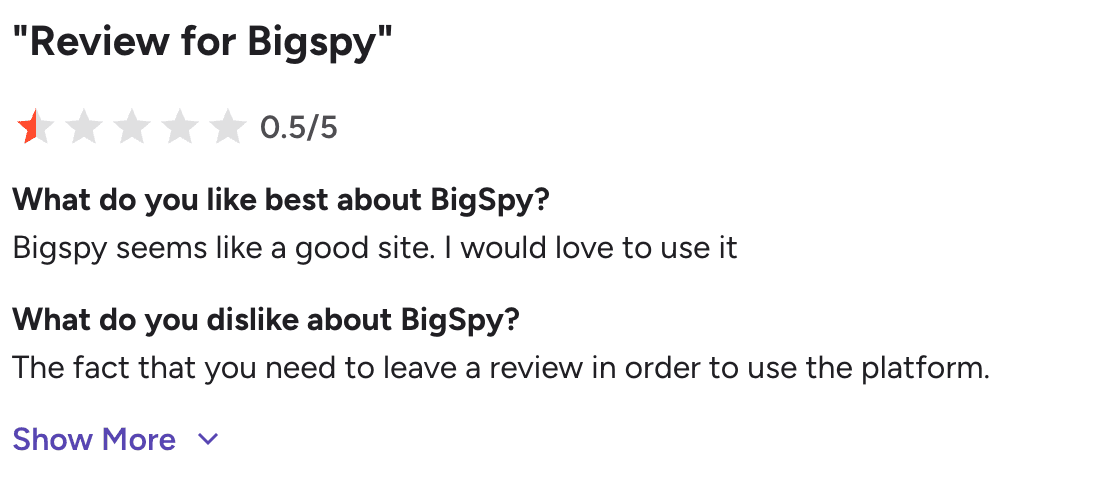
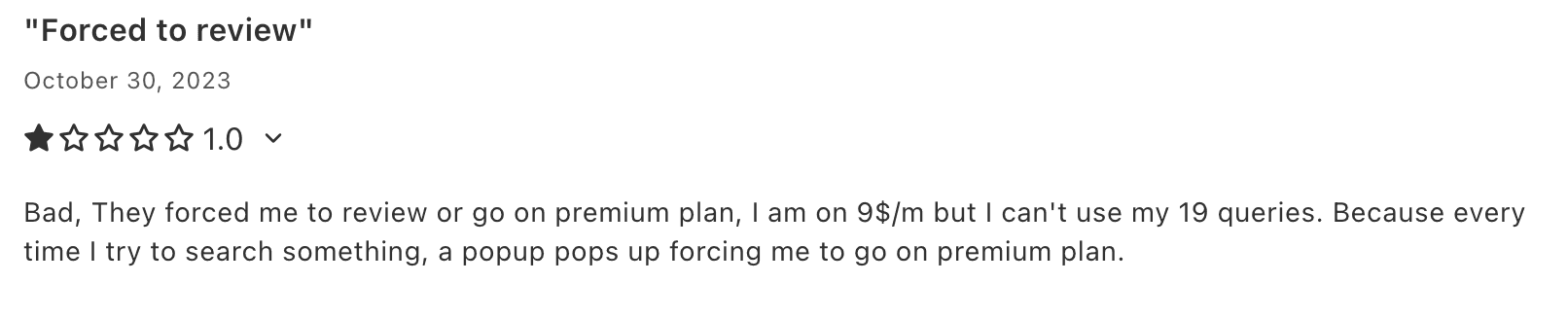
The criticism here was less about ad research quality and more about trust. For some users, repeated review requests created the impression of an overly pushy experience, particularly during free trial or refund-related interactions, which also reduces the credibility of positive reviews.
3. Free Trial Experience Feels Inconsistent
The gap between expectations and reality showed up quite often in trial-related reviews. Users influenced by YouTube creators and ecommerce tutorials expected to jump into live ad research immediately, but some ended up running into locked searches, limited functionality, or keyword tools that did not behave as expected during testing.
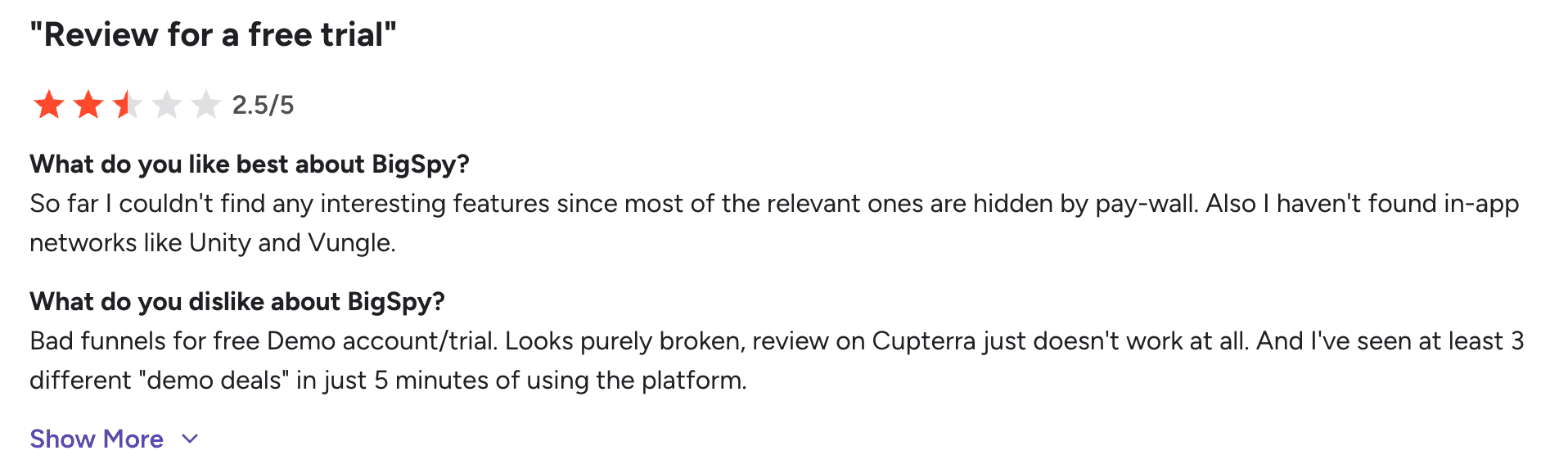
A few complaints also described the onboarding flow as confusing, particularly when trying to understand which features were genuinely available inside the free version versus the paid plans. For users exploring ad spy tools for the first time, that uncertainty created frustration early in the experience.
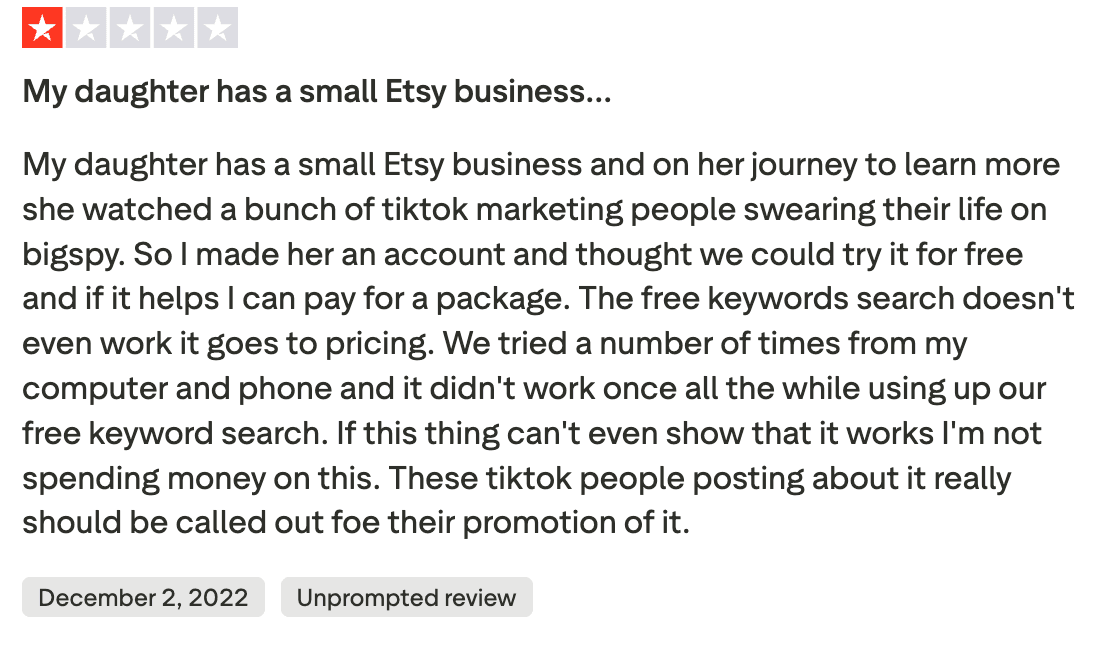
BigSpy clearly offers a large database once fully unlocked, though the free access experience did not leave the same positive impression for everyone trying the platform cautiously before upgrading.
4. Refund and Support Friction
BigSpy’s support reputation changes a lot depending on where you read the reviews. On platforms like G2 and Capterra, feedback stays fairly balanced. Trustpilot tells a different story. That is where the sharper complaints tend to appear.
The problem usually starts after a payment issue. Users who mentioned accidental renewals, refund requests, or failed cancellations often described the communication process as frustrating and slow. Some felt they were stuck repeating the same issue through chat or email without getting a clear resolution.
What stood out during research was the contrast. People discussing ad research features sounded far less emotional than users dealing with subscription problems. Once billing entered the picture, the tone of reviews became noticeably harsher.
Features Breakdown: What You Actually Get
1. Ad Search Database
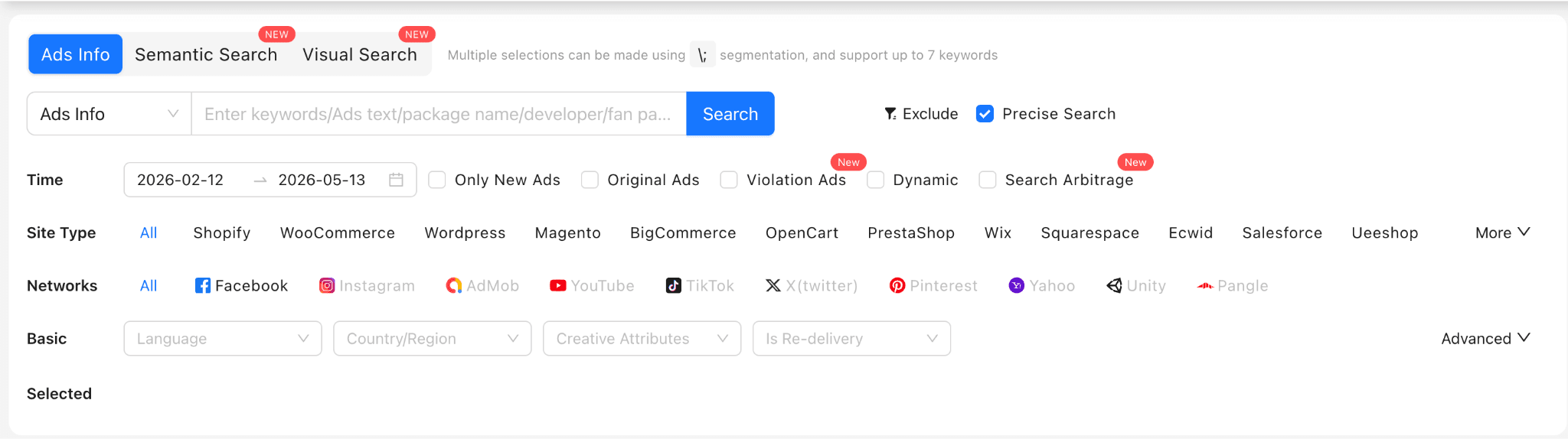
BigSpy’s biggest strength is scale. The platform gives you access to a large searchable library of ads across Facebook, Instagram, TikTok, YouTube, Pinterest, Yahoo, and AdMob, with filters for keywords, advertiser names, countries, CTA buttons, engagement signals, ad formats, and publish dates.
During testing, Facebook and Instagram delivered the strongest experience, especially for e-commerce and dropshipping research. It was easy to spot repeated hooks, long-running creatives, and common messaging trends across saturated niches.
Pinterest and YouTube support added a useful variety during competitor research, though the results felt less consistent compared to Meta platforms.
For the price, the database size is genuinely impressive. BigSpy works best as a creative discovery tool for researching ad concepts and competitor patterns. The platform feels less reliable once you start treating engagement numbers as serious performance intelligence.
2. Advanced Ad Filtering
BigSpy gives you a surprisingly deep set of filters for a tool in this price range. You can narrow ads by:
Keywords and advertiser names
Countries and languages
CTA buttons
Ad formats
Publish dates
First seen and last seen activity
Likes, comments, and shares
E-commerce platforms
Industries and traffic sources
Landing page URLs
Excluded keywords
The filtering system made research noticeably faster, especially when searching crowded e-commerce niches. Finding ads that stayed active for weeks helped surface creatives advertisers continued spending money on, which is often more useful than chasing random viral campaigns.
Search quality still varies occasionally. Broader queries sometimes pulled duplicated creatives or loosely related results. Even with that limitation, the overall workflow felt efficient and much more practical than manually digging through multiple ad libraries.
3. BigSpy Chrome Extension
BigSpy also offers a Chrome extension designed for saving and organizing ads while browsing Meta ad libraries and supported pages. The extension allows you to quickly store creatives, track competitor ads, and build swipe collections without constantly switching back to the main dashboard.
What made the extension useful was speed. While researching e-commerce brands, saving interesting creatives took a single click, which made building inspiration folders much less tedious. That workflow feels especially practical for media buyers, agencies, and dropshippers collecting references daily across multiple niches.
The extension is clearly built around productivity and creative organization, not deep analytics. It works best as a lightweight research companion for saving ads, monitoring competitors, and maintaining swipe files during active browsing sessions.
4. Competitor Tracking
One ad tells you very little. Ten ads from the same brand usually tell you exactly what they are trying to scale.
That is the part BigSpy handles well.
You can track advertiser pages, revisit older creatives, watch how long campaigns stay active, and compare how brands change hooks across Facebook, TikTok, and other supported platforms. The visual search feature also adds something useful here. Uploading a creative or searching similar ads makes it easier to uncover copycat campaigns and recycled angles spreading across e-commerce niches.
While researching skincare and gadget brands, the platform made it easy to spot patterns almost immediately. Certain advertisers kept recycling the same opening hooks, thumbnails, and offers across dozens of creatives with minor edits.
That visibility is valuable for creative research. The analytics side still feels lighter than premium intelligence platforms, but for competitor monitoring and swipe file building, the workflow feels practical.
Pricing: What It Actually Costs
BigSpy positions itself as one of the cheaper multi-platform ad spy tools on the market. The platform currently offers Free, Basic, Pro, Group, and Enterprise plans with pricing tied to search limits, platform access, downloads, and team usage.
Plan | Monthly Pricing | Best For |
Free | $0 | Testing the platform |
Basic | $9/month | Beginners researching Facebook and Instagram ads |
Pro | $99/month | Active ecommerce marketers and dropshippers |
Group | $249/month | Teams and agencies |
VIP Enterprise | Custom pricing | Large-scale operations |
The lower plans look affordable initially, though restrictions appear quickly once research becomes more serious. Search caps, limited downloads, and platform restrictions can make heavy daily usage feel tight without upgrading.
For beginners and intermediate marketers, the value is solid. You get broad ad coverage at a much lower entry price than premium competitors. The tradeoff appears in areas like support consistency, data depth, and analytics reliability.
Who Should Use BigSpy?
BigSpy makes the most sense for marketers focused on creative research, competitor monitoring, and early-stage product discovery. The platform gives you broad ad coverage across multiple networks at a much lower entry price than premium intelligence tools, which is a big reason it remains popular among dropshippers and smaller ecommerce brands.
The experience changes once you expect deeper analytics. BigSpy works well for spotting trends, saving creatives, and studying advertiser behavior, though it feels less dependable for real-time performance analysis or enterprise-level intelligence workflows.
BigSpy Is a Good Fit If You | BigSpy May Not Fit If You |
Want affordable ad research tools | Need highly accurate performance metrics |
Collect creative inspiration regularly | Depend heavily on TikTok scaling intelligence |
Run Facebook or Instagram ecommerce ads | Want enterprise-grade competitor analytics |
Build swipe files and study hooks | Expect real-time ad intelligence |
Are new to dropshipping or media buying | Rely heavily on engagement data for scaling |
Want multi-platform visibility without high pricing | Need advanced attribution or deep analytics |
What We’d Change
BigSpy already does a good job making large-scale ad research accessible to smaller marketers. Most of the gaps appear after you spend longer periods inside the platform doing deeper research daily.
Search freshness needs improvement: Some ads still appear long after campaigns seem inactive, while newer creatives occasionally take time to surface. Faster refresh cycles would make the database feel far more reliable during trend research and competitor monitoring.
Duplicate creatives create unnecessary clutter: Broad searches can flood results with near-identical ads, especially in saturated ecommerce categories. Cleaner indexing and stronger deduplication would improve research speed immediately.
The dashboard starts feeling crowded during deeper research: Once you open multiple filters, tracked advertisers, saved searches, and cross-platform queries together, the workflow becomes harder to manage. Advanced users would benefit from a cleaner research layout.
Support reputation needs work: The strongest criticism around BigSpy rarely involves ad discovery itself. Most frustration comes from refunds, billing confusion, cancellations, and delayed responses during subscription issues.
TikTok analytics still feel lighter than dedicated TikTok tools: BigSpy is useful for finding TikTok creatives and tracking trends, though advertisers heavily focused on TikTok scaling may still prefer platforms built specifically around TikTok intelligence and creator-level analysis.
Support: What to Expect
The support experience around BigSpy feels inconsistent, depending on the issue and the review platform you read. G2 and Capterra feedback stays relatively balanced, with users describing onboarding help and general platform support as acceptable in many cases. Trustpilot reviews are much harsher, especially once refunds, cancellations, or billing disputes become involved.
One thing that appeared repeatedly during testing was the heavy reliance on AI chat support before reaching a human response. For simple questions, that setup feels fine. The frustration starts when users are dealing with payment problems or urgent subscription issues and keep receiving repetitive automated replies instead of clear resolutions.
Weekend response delays also came up multiple times in public reviews. The overall impression is not that support is completely absent, but that the experience becomes noticeably weaker during account and billing-related situations.
The Bottom Line
Bigspy scores 7.6/10 in our analysis.
It earns its place as an affordable ad research platform built around creative discovery and competitor visibility. The platform gives you access to a huge collection of ads across Facebook, Instagram, TikTok, YouTube, Pinterest, Yahoo, and AdMob while keeping pricing far below premium intelligence tools.
What stands out most is the workflow speed. Searching active creatives, spotting repeated hooks, tracking advertisers, and building swipe files takes far less effort than manually researching ads platform by platform. The filtering system also adds real value once you start narrowing campaigns by engagement activity, countries, CTA types, or creative duration.
The weak spots are not difficult to notice either. Search freshness can feel inconsistent, duplicated creatives still appear too often, TikTok analytics remain fairly surface-level, and public sentiment around billing support is noticeably mixed. Trustpilot complaints tied to cancellations, refunds, and delayed communication appeared repeatedly during research.
BigSpy works best when you treat it as a large creative research engine, not a precision analytics platform built for deep performance validation.
Our recommendation: If your main goal is creative research, competitor monitoring, and finding ad ideas quickly, BigSpy delivers strong value for the price. If you rely heavily on accurate performance intelligence, advanced TikTok analytics, or deeper scaling signals, you will likely need a more analytics-focused alternative.
FAQ
Is BigSpy worth it?
If your goal is creative research and competitor monitoring, BigSpy offers strong value for the price. The platform gives you access to a very large ad database across multiple networks without the high monthly cost attached to premium intelligence tools. Advanced media buyers focused on precise scaling signals or deeper analytics may hit limitations faster.
Is BigSpy legit?
Yes. BigSpy is a legitimate ad spy platform that has been operating since 2018 and is widely used by dropshippers, ecommerce marketers, affiliate marketers, and agencies for ad research and creative discovery.
Does BigSpy have a free trial?
Yes. BigSpy currently offers a free plan with limited daily searches and platform access. The company also promotes a $1 three day Pro trial for users wanting temporary access to premium features. Trial structures and feature limits can change periodically depending on promotions and pricing updates.
What is the best BigSpy alternative?
That depends on the workflow you care about most. Platforms like Pipiads and Kalodata are stronger for TikTok-focused research, while tools like Minea lean more heavily into creative discovery and e-commerce product research. For broader ecommerce intelligence combining ads, stores, and tracking data, many marketers also compare it with Winning Hunter.
Is BigSpy good for TikTok ads?
BigSpy works well for discovering TikTok creatives, researching hooks, and spotting ad trends across different niches. The platform also includes a dedicated TikTok creative research section. The analytics depth still feels lighter than tools built specifically around TikTok intelligence and creator-level tracking.
Does BigSpy work for dropshipping?
Yes. Dropshippers are one of BigSpy’s largest user groups. The platform is commonly used for finding product angles, studying competitor creatives, building swipe files, and researching ads across Facebook, Instagram, and TikTok.


We already know what works before you even have the chance to blink!
© 2024 WinningHunter.com