kalodata-review
Kalodata Review 2026: Is It Worth It for TikTok Shop?
You do not lose on TikTok Shop because you lack products. You lose because you see them too late. By the time a trend looks obvious, pricing tightens, creators saturate the niche, and profit shrinks.
That pressure is exactly what pushed us to test Kalodata. The platform promises structured visibility into trending products and shop activity without spending hours manually scrolling through TikTok.
As we explored, one question was constantly there. Does Kalodata surface meaningful signals early enough to influence decisions, or does it simply organize data you could already find yourself?
This review breaks down what we observed so you can decide whether it truly strengthens your TikTok Shop strategy in 2026.
Quick Verdict
7.0/10 - Strong TikTok Shop trend visibility and creator tracking, but recurring concerns around data precision and starter plan limitations affect overall trust and value perception.
What we measured
Area | Score |
Ad Spy Features | 8/10 |
Database Accuracy | 5/10 |
Update Frequency | 7/10 |
Pricing & Value | 6.5/10 |
Ease of Use | 8.5/10 |
Support Quality | 6/10 |
Best For:
Affiliate-focused TikTok Shop sellers who need structured product and creator visibility inside one ecosystem.
Skip If:
You require audited revenue precision, full cross-platform ad spying, or are operating on a minimal testing budget.
What We Did to Test This
Before writing this review, our WinningHunter team:
Used Kalodata across different TikTok Shop niches to observe data consistency and trend shifts.
Reviewed community discussions on Reddit, including Reddit threads such as r/TikTokShop and r/dropship, along with feedback on Capterra and SourceForge.
Analyzed YouTube walkthroughs and independent user demonstrations to compare real-world usage experiences.
Tested product trend tracking, creator discovery tools, and video-level analytics inside the dashboard.
Evaluated whether the insights translated into practical product selection decisions
Everything in this review reflects direct platform usage combined with aggregated user sentiment analysis.
What is Kalodata?
If you sell on TikTok Shop, you already know the platform does not hand you clean data. You see views, likes, and sales tags, but connecting that activity to product momentum takes work. Kalodata exists to structure that chaos.
It is a research platform built entirely around TikTok Shop. Instead of tracking independent ecommerce stores, it focuses on products listed within TikTok Shop, the shops behind them, the creators promoting them, and the videos or livestreams driving visibility.
The tool brings product trend tracking, shop performance breakdowns, influencer analytics, and video-level insights into one system. Revenue figures are also there, but the larger aim is to highlight where traction is building before it becomes obvious.
What Real Users Say
We analyzed user discussions on Reddit, reviews on Capterra, where the Kalodata review holds an average rating of around 4.0/5 from a limited pool of reviewers (just 1 review), summaries on SourceForge, and feedback shared under YouTube walkthrough videos to understand real user sentiment around Kalodata.
What Users Love
Strong TikTok Shop trend visibility
Users point to Kalodata’s ability to surface products and creators that are already gaining traction. Feedback highlights its usefulness for market research and product discovery.

Reviewers also note that having product activity, shop performance, and live session data visible in one system reduces the need to cross-check information manually.
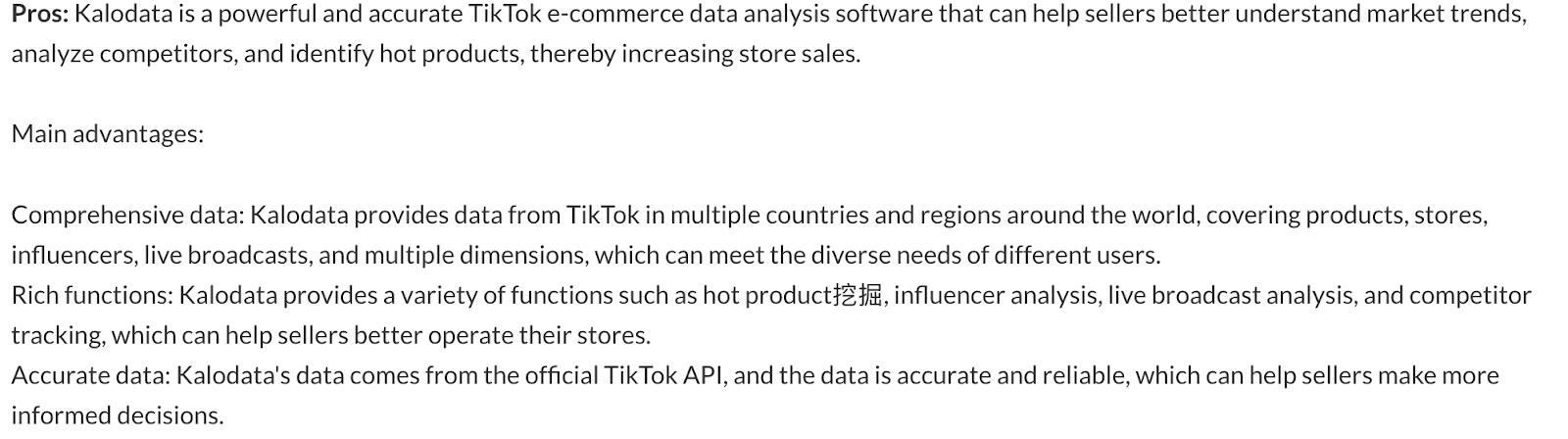
Public feedback on Kalodata remains relatively limited compared to more established e-commerce research platforms. The reviews that are available present a mixed picture, with some users expressing strong satisfaction while others raise concerns around specific features and expectations.
What Users Complain About
1. Pricing feels high for new sellers
A recurring concern in community discussions is pricing. Kalodata’s Starter plan typically ranges between 38$-45$ per month, while the Professional tier can reach between 83$-99$ monthly depending on the billing structure.

In Reddit threads, users describe the tool as useful but expensive for sellers who are still testing their first product or operating with limited capital. The hesitation does not always question functionality, but rather whether the subscription cost makes sense at an early stage.
2. Concerns Around Data Accuracy and Trust
A detailed Reddit post in r/TikTokshop raises concerns about the reliability of Kalodata’s data. The user claims that several metrics did not match their own TikTok Shop account performance, including discrepancies in units sold and leaderboard rankings. In some cases, products that reportedly had zero sales appeared with significant volume, while actual high-performing listings were not reflected accurately.
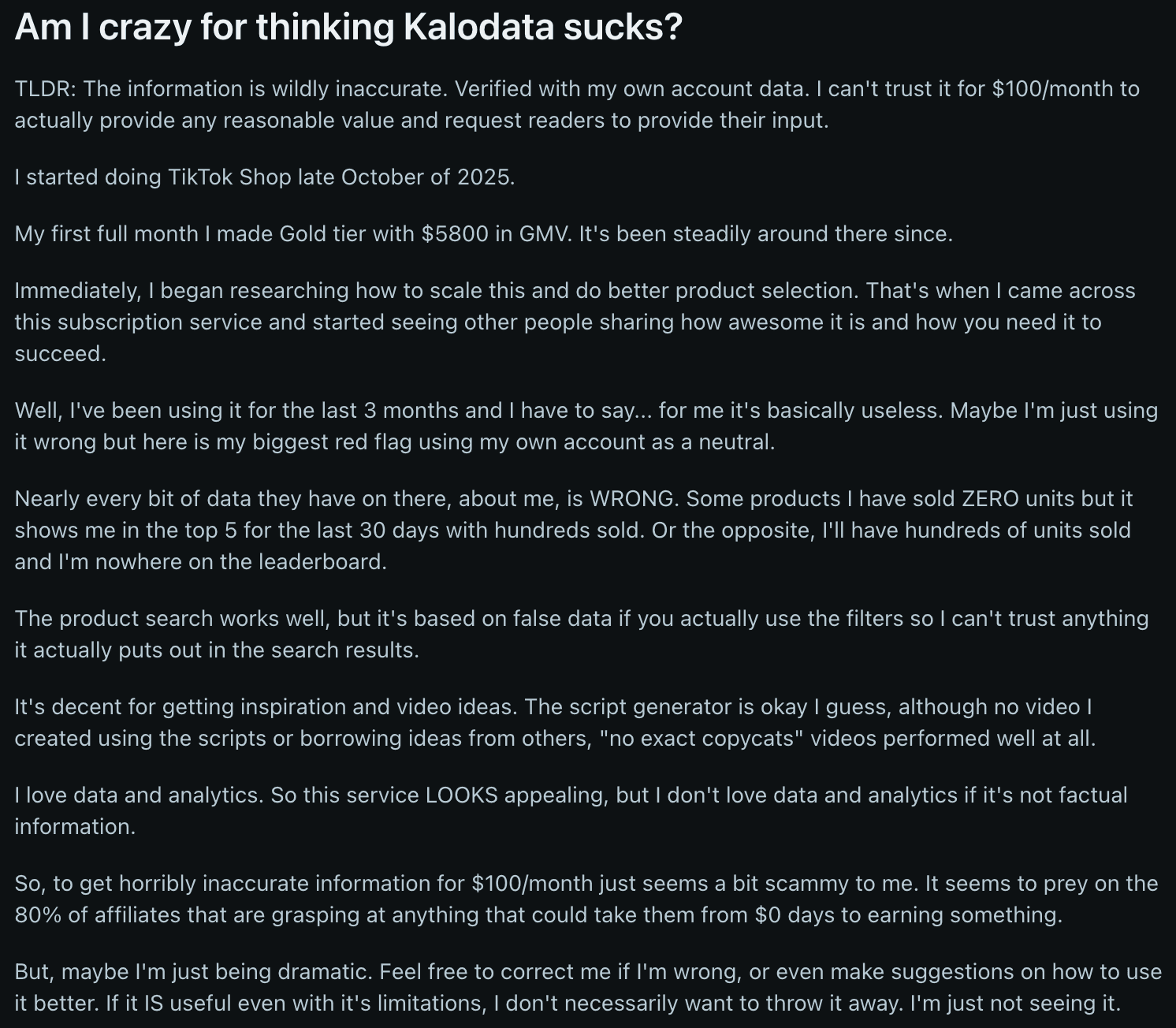
The reviewer states that although the product search interface functions as expected, the underlying numbers reduce their confidence in the results.
3. Feature Restrictions on Lower Tier Plans
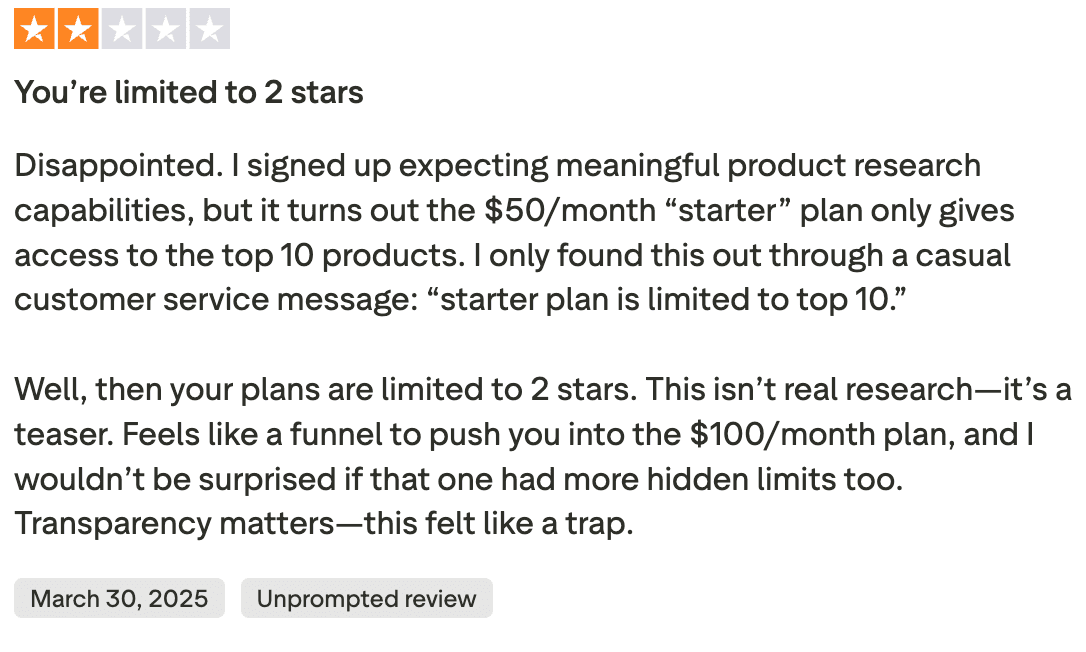
Some negative reviews focus on access limitations within the Starter plan. Users report that certain exports, deeper product lists, and advanced creator insights require upgrading to higher tiers. A few reviewers state they were only able to view a limited number of products before encountering paywalls tied to premium plans.
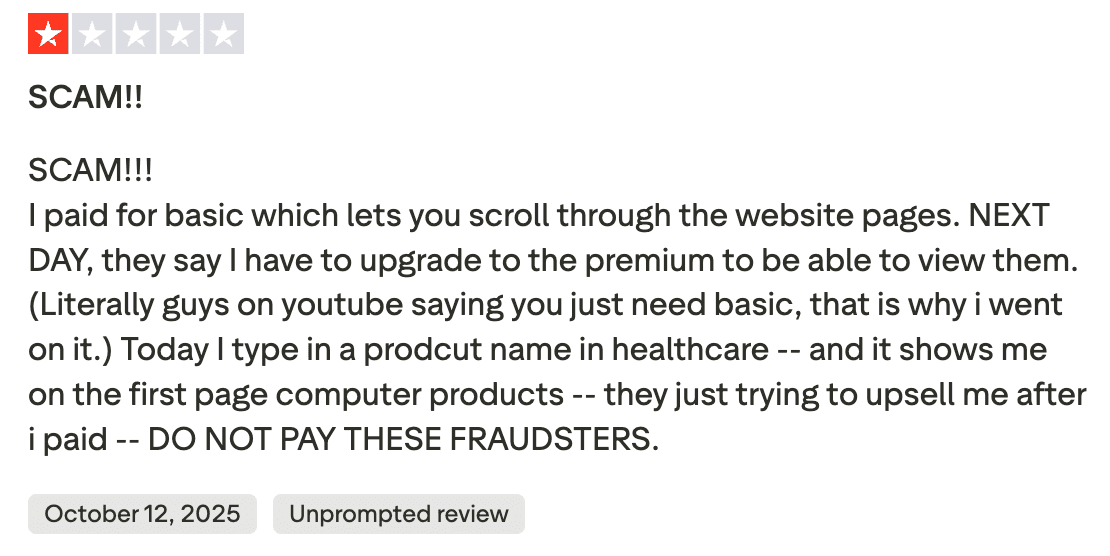
Concerns also mention a lack of clarity around what is included at each pricing level, with some users feeling that meaningful research capabilities are available with the higher monthly subscription. For sellers exploring the entry plan, these restrictions are described as frustrating and restrictive.
Features Breakdown: What You Actually Get
1. Product and Trend Research

The product intelligence area of Kalodata is based on filtering and performance visibility. When testing, we were able to refine results using:
Category selection
Revenue and units sold filters
Growth rate metrics
Average unit price ranges
Creator count and conversion indicators
Launch date filters
Time window adjustments, such as the last thirty days
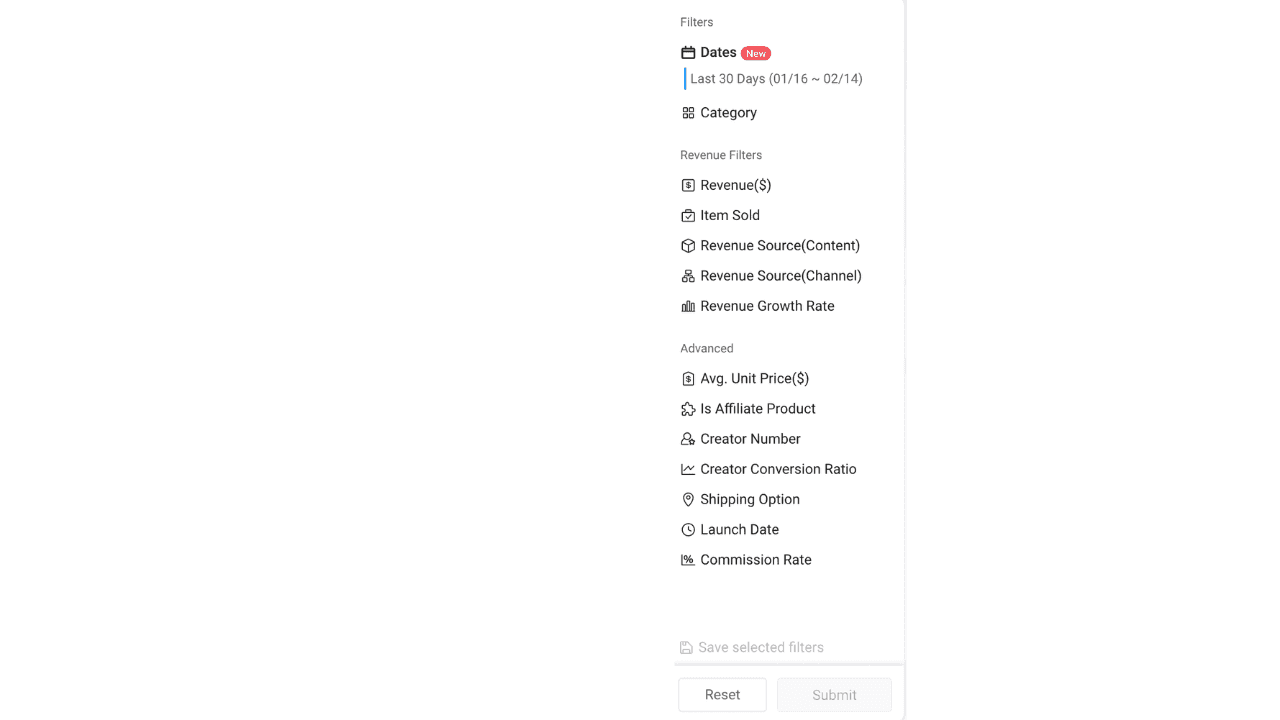
Sortable revenue columns and visible growth percentages make comparison straightforward. You can quickly see which listings are accelerating and which are slowing down within a category.
From our testing, the platform performs well in highlighting momentum shifts inside TikTok Shop. It is effective for spotting directional movement across products and niches. The data presentation focuses on trend signals and comparative metrics instead of positioning itself as an audited financial reporting.
2. Creator and Influencer Insights
Kalodata includes a dedicated creator analysis layer designed around TikTok Shop performance. While testing this section, we were able to:
Identify creators actively promoting specific products
View estimated sales linked to influencer-driven activity
Track creator frequency and product overlap
Access contact export features on higher-tier plans
For sellers building affiliate-focused strategies inside TikTok Shop, this area stands out. The ability to connect products directly to the creators pushing them adds context that traditional product spy tools often lack.
3. Competitive and Shop Analysis
Kalodata also includes a shop-level tracking layer built specifically around TikTok Shop activity. During testing, we were able to:
Analyze overall shop performance within TikTok Shop
Review active product assortments tied to individual sellers
Track historical movement across selected time windows
The structure stays focused on TikTok Shop storefronts and marketplace behavior. Unlike Shopify-oriented research tools that revolve around independent domains, this section remains aligned with in-platform shop data and marketplace performance trends.
4. Video & Live Stream Analytics

Kalodata also tracks how products perform inside videos and live sessions. You can see engagement numbers tied to specific listings and review which pieces of content are driving attention. Live streams are broken out separately, with session-level data connected to product activity.
If your sales depend on TikTok live commerce, this section becomes relevant quickly. It shows which creators are pushing products during streams and how those sessions correlate with visible movement.
The data helps you understand content impact. It leans toward engagement and trend signals, not detailed financial accounting.
Pricing: What It Actually Costs
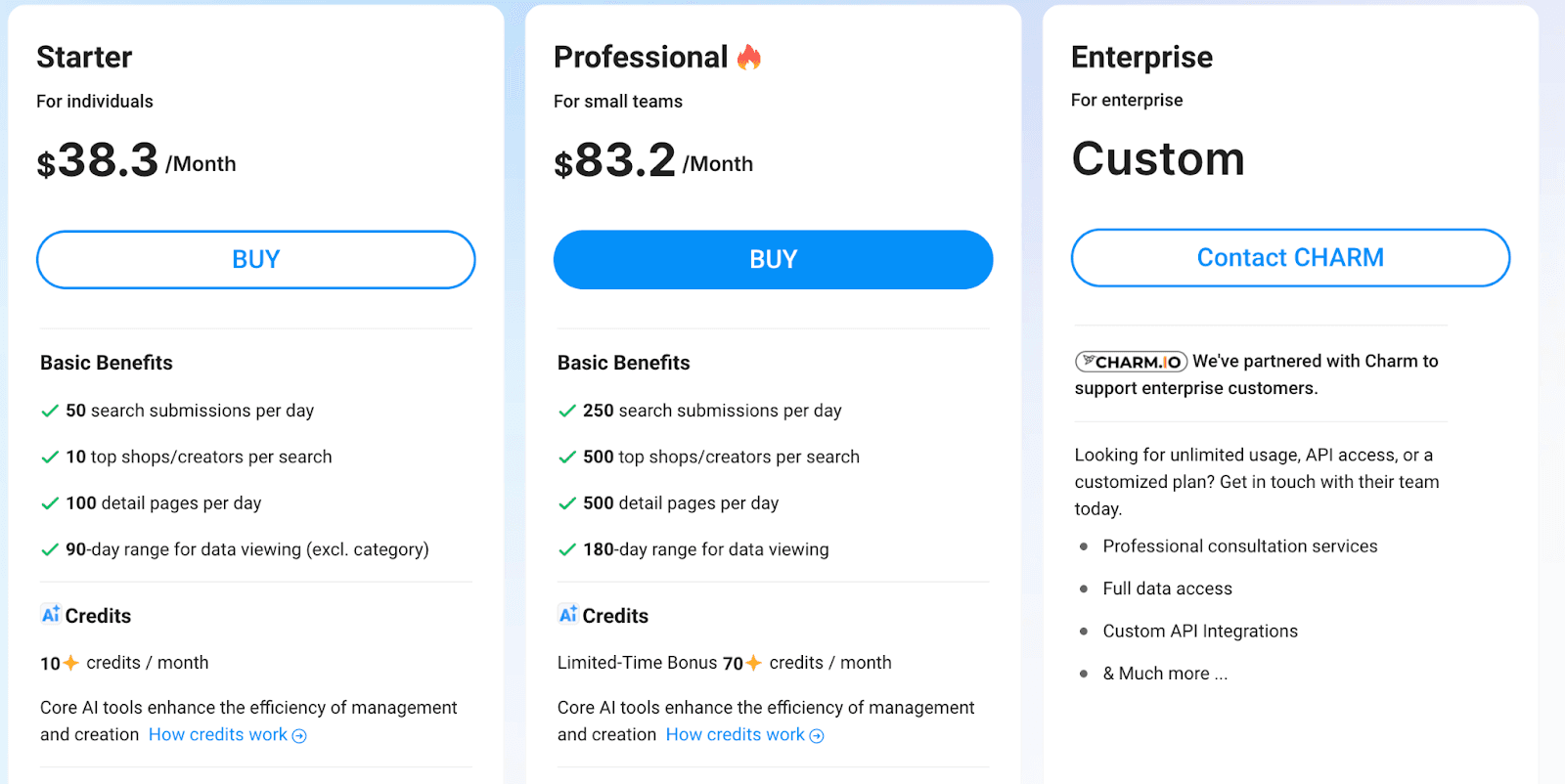
Kalodata currently offers three plans as shown above: Starter, Professional, and Enterprise.
The Starter plan is listed at 38.3$ per month and is positioned for individuals. It includes 50 searches per day, limited top shop and creator results per search, 100 detail pages per day, and a 90-day data viewing range.
The Professional plan is priced at 83.2$ per month for small teams. It expands daily searches to 250, increases top shop and creator visibility, allows 500 detail page views per day, and extends the data window to 180 days. Creator exports and broader data access are available at this level.
Enterprise pricing is custom and focuses on API access, consultation, and full data access.
User sentiment around value is mixed. The availability of a free trial is appreciated. At the same time, some sellers feel the Starter plan has noticeable limits, and early-stage users question whether the Professional tier justifies the higher monthly cost. Compared with general ecommerce tools, Kalodata is not the lowest-priced option, though it remains tightly focused on TikTok Shop data.
Who Should Use Kalodata?
Kalodata is built around TikTok Shop activity. Your experience with it will depend heavily on how important TikTok is as your selling strategy and how much you rely on structured data over manual research.
Here’s a quick reference for you to make a choice:
Good Fit If You | Not Ideal If You |
Sell primarily on TikTok Shop | Need exact revenue validation down to audited figures |
Want structured trend tracking across products and creators | Operates on a very tight budget and cannot justify recurring software costs |
Rely on affiliate and influencer partnerships to drive sales | Expect deep Facebook or Google ad intelligence |
Prefer organized dashboards instead of manual scraping and scrolling | Focus mainly on standalone Shopify store tracking |
The closer your workflow is tied to TikTok Shop ecosystems, the more relevant Kalodata becomes. If your needs sit outside that environment, the value may feel limited.
What We’d Change
After using Kalodata across different workflows, a few improvements would make the platform stronger and more accessible across seller levels.
If we were advising the product team, we would suggest:
Clearer explanations around how revenue estimates are calculated and what data sources influence them.
Fewer restrictions within the Starter plan, so early-stage sellers can properly evaluate the tool.
Deeper filtering controls for users who want more granular segmentation across categories and creator metrics.
Built-in margin estimation features that connect product price, commission structure, and potential profitability.
Support: What to Expect
Public feedback on Kalodata’s support is relatively limited when compared with more established e-commerce research platforms.
From what we observed:
Team members appear active in Reddit discussions and occasional AMA style threads
A Discord community is referenced positively by users who engage there
There are a few detailed public complaints specifically targeting customer support
Overall, there are no clear red flags tied to responsiveness or professionalism. But the volume of large-scale support reviews remains small, which makes broad conclusions difficult.
As shown above, Kalodata provides multiple contact options directly on its site, including a Discord community, active social media profiles on TikTok, Facebook, and X, along with a public support email for direct communication.
The Bottom Line
Kalodata scored 7.0/10 in our analysis.
It provides structured TikTok Shop intelligence, with clear strength in trend tracking and creator discovery. The dashboards are easy to navigate, and the workflow aligns well with affiliate-driven selling models.
Pricing and plan limits will matter, especially if you are still testing products or operating with a limited budget. Kalodata makes the most sense when TikTok Shop is your main channel. If you are looking for one tool to cover Facebook ads, Google ads, and broader ecommerce tracking, this will not replace those platforms.
Our recommendation: If TikTok Shop drives most of your revenue, Kalodata is worth testing for its trend and creator tracking capabilities. If your strategy depends on cross-platform ad analysis or detailed financial modeling, complementary tools will likely be necessary.
FAQs
Is Kalodata worth it?
If TikTok Shop is where you generate revenue, Kalodata can be useful. It helps organize product and creator data in a way that saves time. That said, if you are just experimenting with your first product, the Starter plan limits may feel tight. The value increases as your activity scales.
Is Kalodata legit?
Kalodata operates as a visible SaaS platform with an active online presence. You can find discussions about it on Reddit, review listings on software directories, and community interaction through Discord and social channels. It is not an anonymous tool, though it is still more niche than older e-commerce platforms.
Does Kalodata offer a free trial?
At the time of writing, Kalodata offers a 7-day free trial without requiring a credit card. This gives you the opportunity to explore its product, creator, and shop tracking features before committing. As with any SaaS tool, trial terms may change, so it is worth confirming on the official site.
What’s the best Kalodata alternative?
If your focus is on TikTok Shop data along with other platforms, tools like WinningHunter may serve as alternatives, especially if you want broader store analytics or cross-platform visibility.
Can beginners use Kalodata?
The interface itself is straightforward and does not require technical experience to navigate. The challenge lies in interpreting the data correctly. If you understand how TikTok Shop trends develop and how creators influence product sales, you can extract meaningful insights from the platform.


We already know what works before you even have the chance to blink!
© 2024 WinningHunter.com