ppspy-review
PPSPY Review (2026): Hands-On Testing & Real User Reviews

Most Shopify research tools earn trust by looking busy. PPSPY earned ours by forcing us to question it.
We did not come in expecting clean answers or perfect numbers. We opened PPSPY with one goal in mind, i.e., to see what actually shows up when you rely on it for tracking store sales, spotting products early. Some signals lined up. Others required closer inspection.
Everything you read here comes from hands-on testing, cross-checking results, and comparing what PPSPY reports against what we could verify elsewhere. The focus stays practical. If something held up, we say so. If it raised doubts, we explain why.
Quick Verdict
6.7/10 - Easy to use and helpful for early-stage product discovery and store research. However, exaggerated sales estimates and weak data reliability significantly limit how much trust you can place in the numbers.
What we measured
Area | Score |
Ad Spy Features | 7/10 |
Database Accuracy | 4/10 |
Update Frequency | 6/10 |
Pricing & Value | 8/10 |
Ease of Use | 9/10 |
Support Quality | 6/10 |
Best for
New dropshippers who want a simple interface for browsing products and studying store setups.
Skip if
You depend on accurate sales validation, need strong TikTok ad intelligence, or make decisions directly from tool data.
What We Did to Test This
Before writing this review, our WinningHunter team,
Used PPSPY to check all the features and claims
Analyzed real user feedback from Trustpilot, Reddit, YouTube comments, and independent review blogs
Compared PPSPY sales estimates against stores with known or verifiable performance
Evaluated product discovery, store tracking, and ad intelligence features
Reviewed refund, pricing, and support complaints reported publicly
We tested the claims under real-world conditions before reaching a conclusion.
What Real Users Say
We analyzed feedback from Trustpilot, Reddit threads, YouTube comments, G2, and other discussion forums, but there weren’t many reviews available.
While we researched reviews on all the platforms, most of them were negative ones.
1. Sales data accuracy issues
Sales accuracy is the biggest problem we saw people mentioning.
On Reddit, one user shared that PPSPY showed their store doing around $200k in revenue, even though the store had not crossed $1k in real sales. The store was barely a few weeks old. Their reaction was disbelief rather than confusion, because the gap was too large to explain away as estimation error.

Other users reported similar situations, including revenue being shown for stores that were not fully operational or had obvious limitations around checkout or payments. The pattern is consistent. PPSPY assigns strong revenue numbers where there is little visible proof that sales at that level are actually happening.
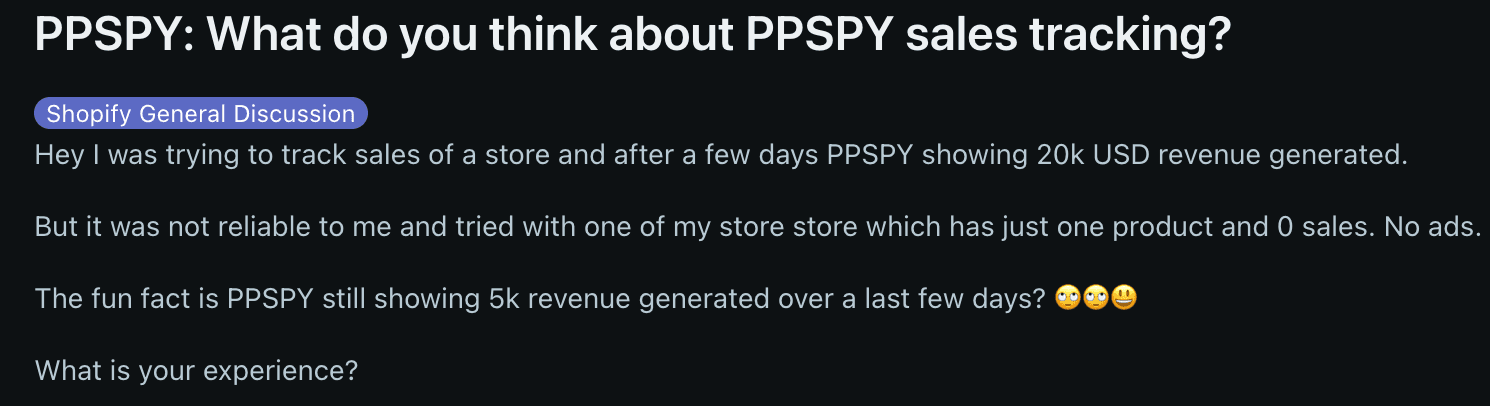
Trustpilot reviews have the same frustration. Multiple users describe the revenue reports as wrong and exaggerated. Some explicitly call the reports fake, not because they expect perfect accuracy, but because the numbers feel disconnected from reality.
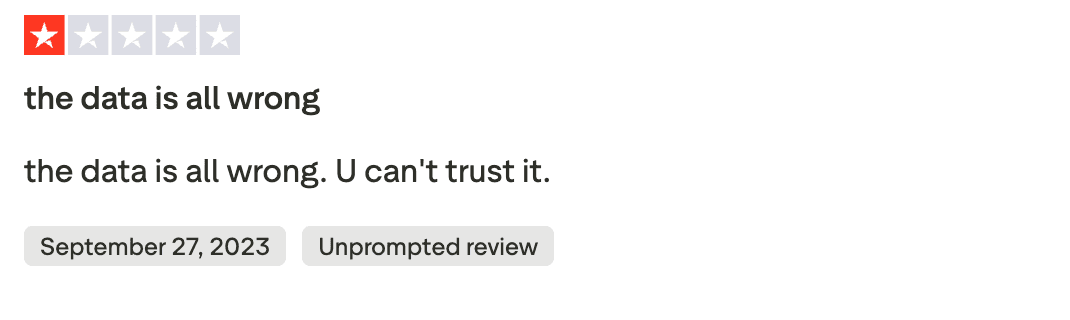
We saw this during testing as well. Sales estimates are regularly skewed high, especially for newer stores or stores with limited public signals.
2. Trustpilot sentiment is overwhelmingly negative
PPSPY’s Trustpilot profile (listed as “App Ppspy”) currently shows a low TrustScore (~2.8/5) with visible Trustpilot reviews all rated 1-star.
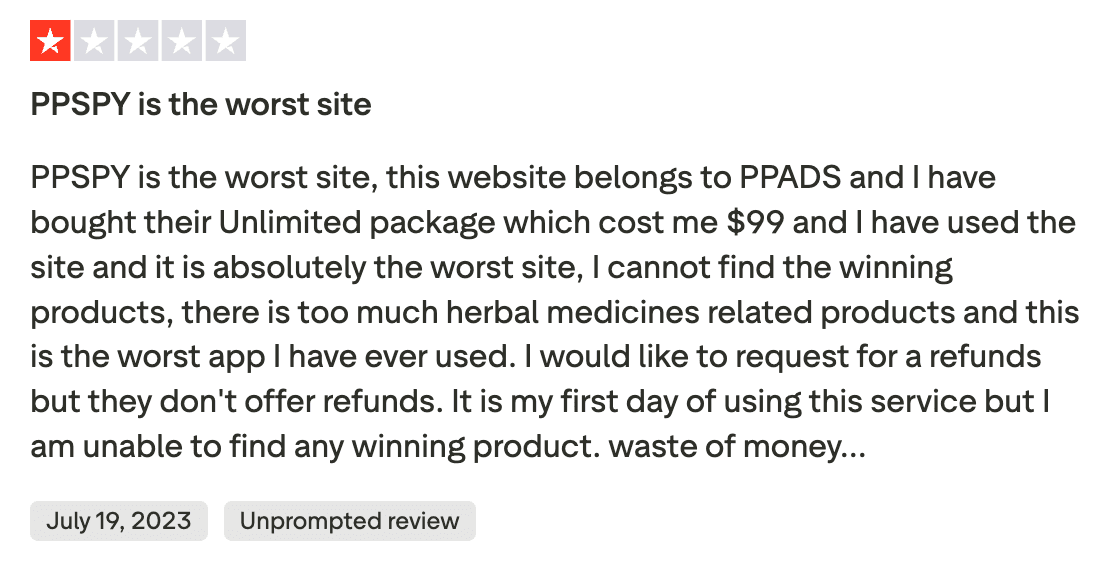
The feedback focuses on a few specific areas. Some users say the data does not match what they see in real store performance. Others mention that the tool did not help them identify products they felt confident moving forward with, especially after paying for higher-tier plans.
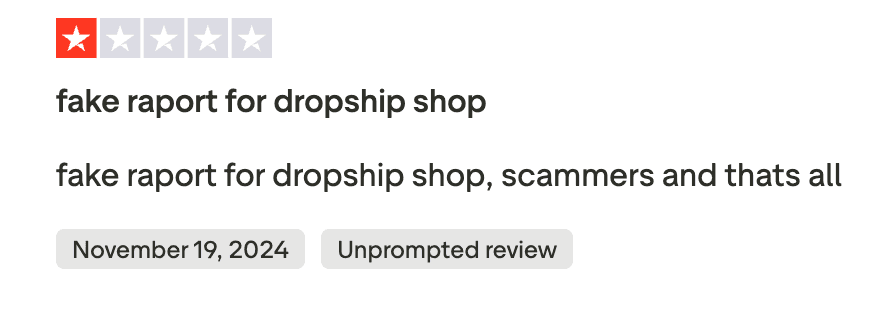
There was also a comment about a refund. User describes asking for a refund after realizing the tool was not a fit for their needs, and being unable to get one.
The total number of reviews is limited, but the concerns raised follow similar themes. For this review, we treated those comments as context rather than conclusions and compared them against what we observed during hands-on testing.
Features Breakdown: What You Actually Get
1. Product Research
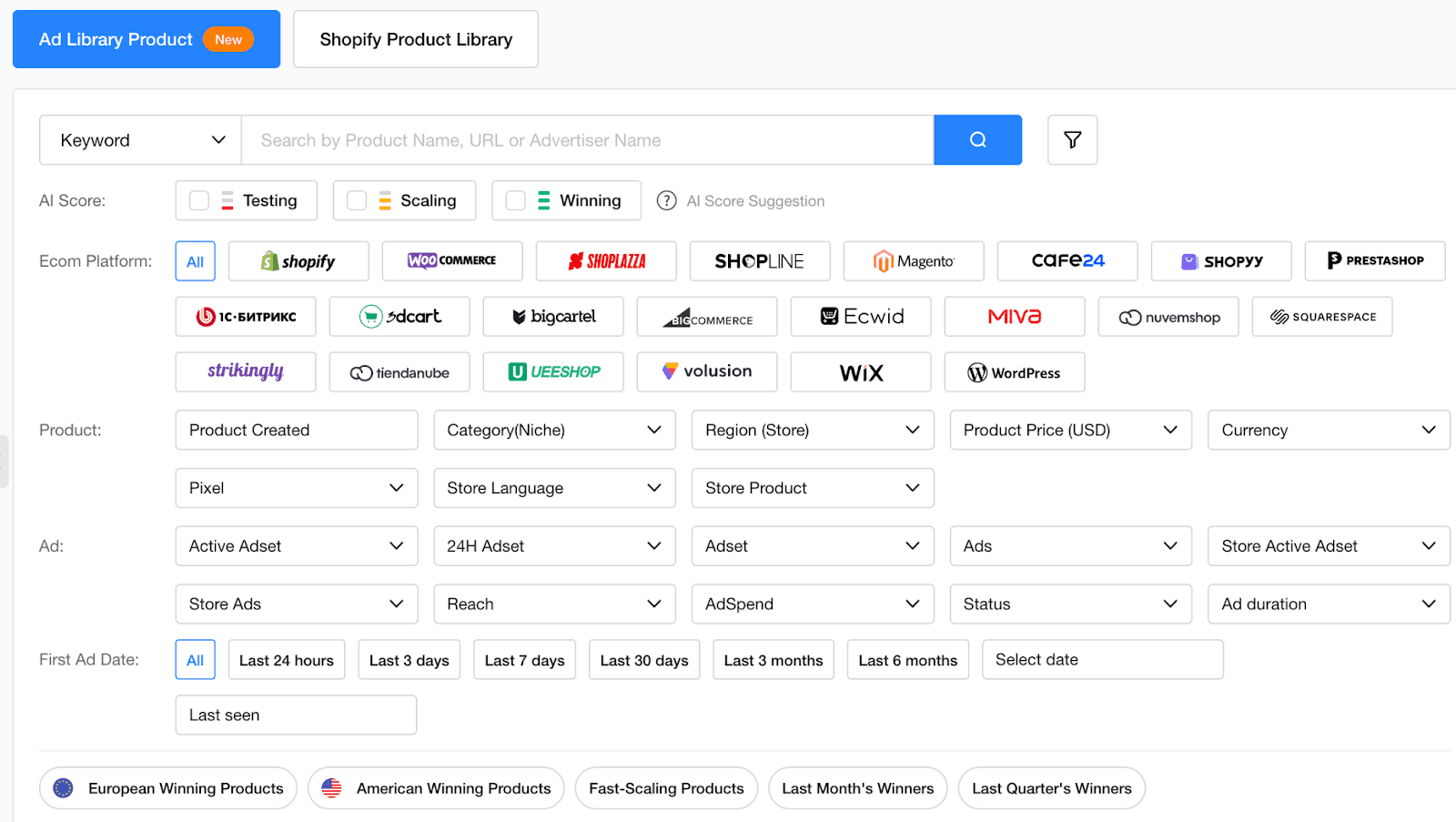
During testing, we found that PPSPY’s product research section focuses on filtering. When you open this part, it clearly aims to narrow large volumes of ads and products into manageable shortlists.
From testing, these are the main controls you actually end up using:
Product category and niche selection to reduce irrelevant results
Store region and currency, which helps align products with specific markets
Product price ranges and creation timing to spot newer entries
Ad-related signals such as active ad sets, ad duration, reach, and spend indicators
Platform filters covering Shopify and other e-commerce systems
The interface itself is practical. Filters apply quickly, results refresh without lag, and the layout makes it easy to move between ads and products. This part makes it easy to use.
We also saw that several items surfaced repeatedly despite weak external indicators, suggesting the system favors visibility and ad presence over confirmed performance.
Our takeaway after using this section extensively is straightforward. PPSPY works well for exploration. It helps you see what types of products are being promoted and how they are positioned. It does not reliably tell you which products are already winning.
2. Shopify Store
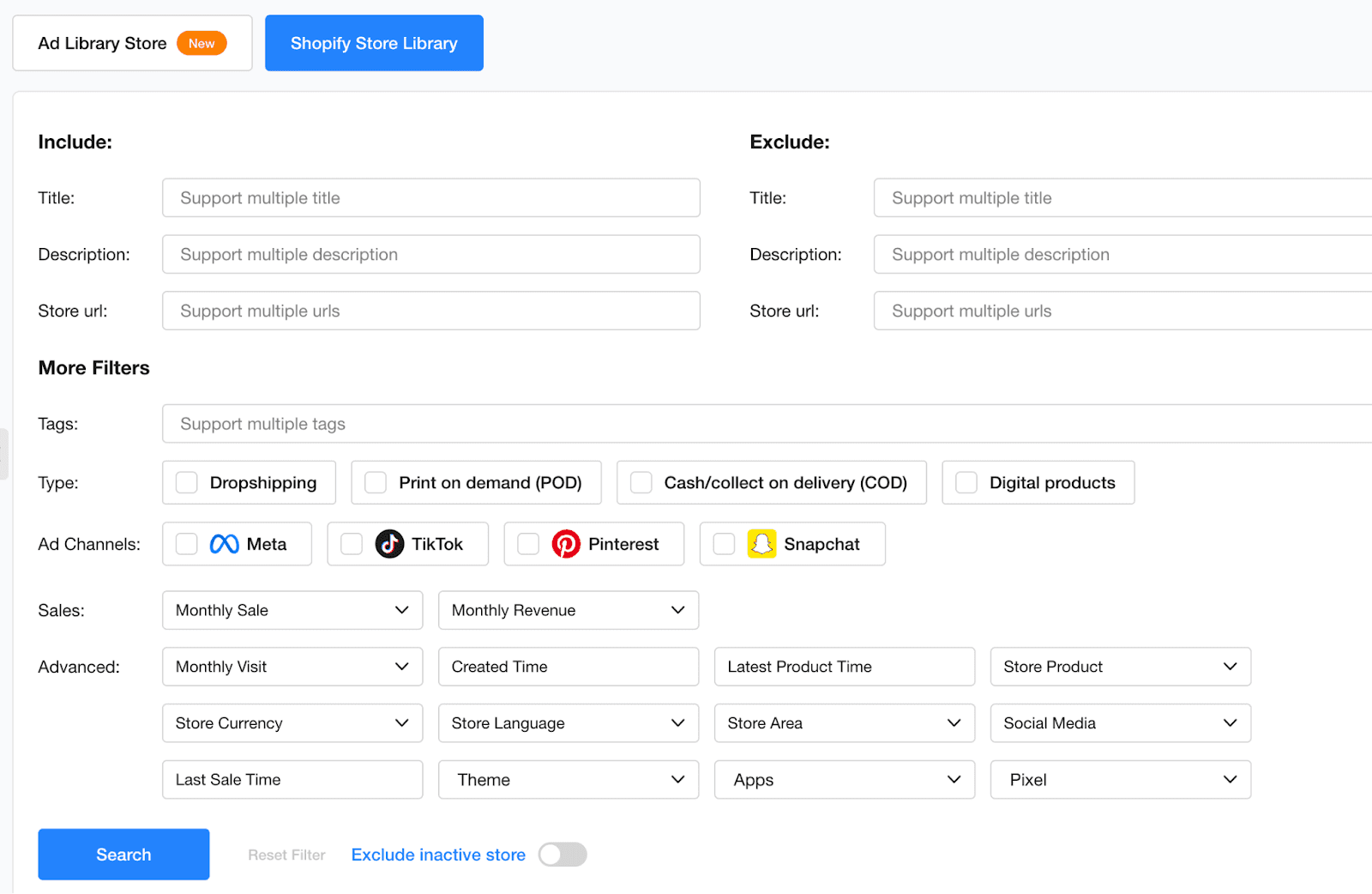
The Shopify Store section builds on the store tracking idea but gives you more control over how stores are filtered and reviewed.
When testing this section, we were able to explore stores using a wide set of filters rather than relying on default rankings or labels.
You can narrow stores based on:
Store-level details, such as title, description, and store URL, which help when researching specific brands or competitors
Business type filters, including dropshipping, print on demand, cash on delivery, and digital products
Advertising channels like Meta, TikTok, Pinterest, and Snapchat are useful for understanding where a store is actively promoting
Sales-related inputs, such as monthly sales and monthly revenue, should not be treated as confirmed numbers
Operational details, including store currency, language, region, and social media presence
Technical elements like themes, installed apps, pixel presence, and store structure
During hands-on testing, the strength of this section was not the sales estimates. It was the visibility into how stores are built and how they operate. Being able to see product counts, launch timing, catalog depth, and app usage makes competitive analysis more concrete.
The advanced filters also make it easier to avoid inactive or abandoned stores. Excluding inactive stores and filtering by recent product activity helped surface businesses that are actively testing or scaling, which is far more useful than browsing static examples.
3. Ad Library
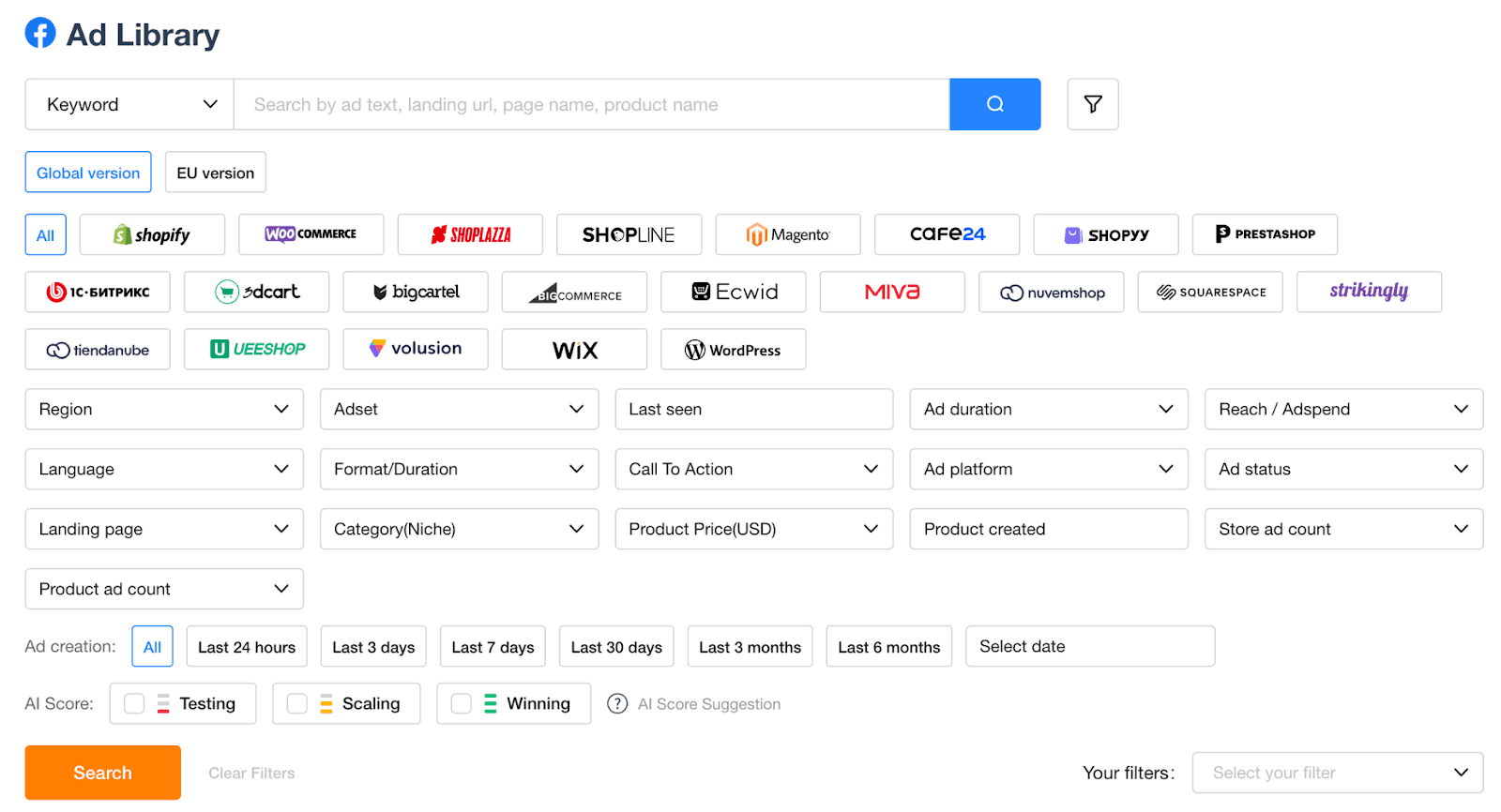
PPSPY includes an ad library that covers Facebook and Instagram ads. The interface focuses on discovery, allowing you to filter ads by platform, region, language, landing page, category, and basic engagement signals.
Ads loaded quickly and filters worked as expected during testing, which makes it easy to scan what is currently being promoted. For surface-level research, this helps identify active products and messaging angles without much friction.
The limitations show up once deeper analysis is needed. Historical depth is shallow, creative level insights are minimal, and TikTok coverage lacks detail compared to dedicated ad spy tools. You can see what is running, but not much context around performance or longevity.
4. Sales Estimator
PPSPY claims it can track sales close to real time and show sales data going back about fifteen days.
When we tested this, the numbers often did not line up with what we could observe from the stores themselves. In some cases, the estimates roughly followed visible activity. In others, they did not match traffic levels, product availability, or basic store behavior.
The problem was inconsistency. The same type of store could show reasonable estimates one time and exaggerated figures another time. Newer stores were especially unreliable, but even established ones showed swings that were hard to explain.
Because of that, we did not treat the sales estimator as a source of truth during testing. At best, it offered a loose signal that something might be happening.
We suggest using the sales numbers as hints, not facts, and always verify them elsewhere.
Pricing: What It Actually Costs
PPSPY pricing looks straightforward on the surface, but the real constraint is the credit-based system behind each plan.
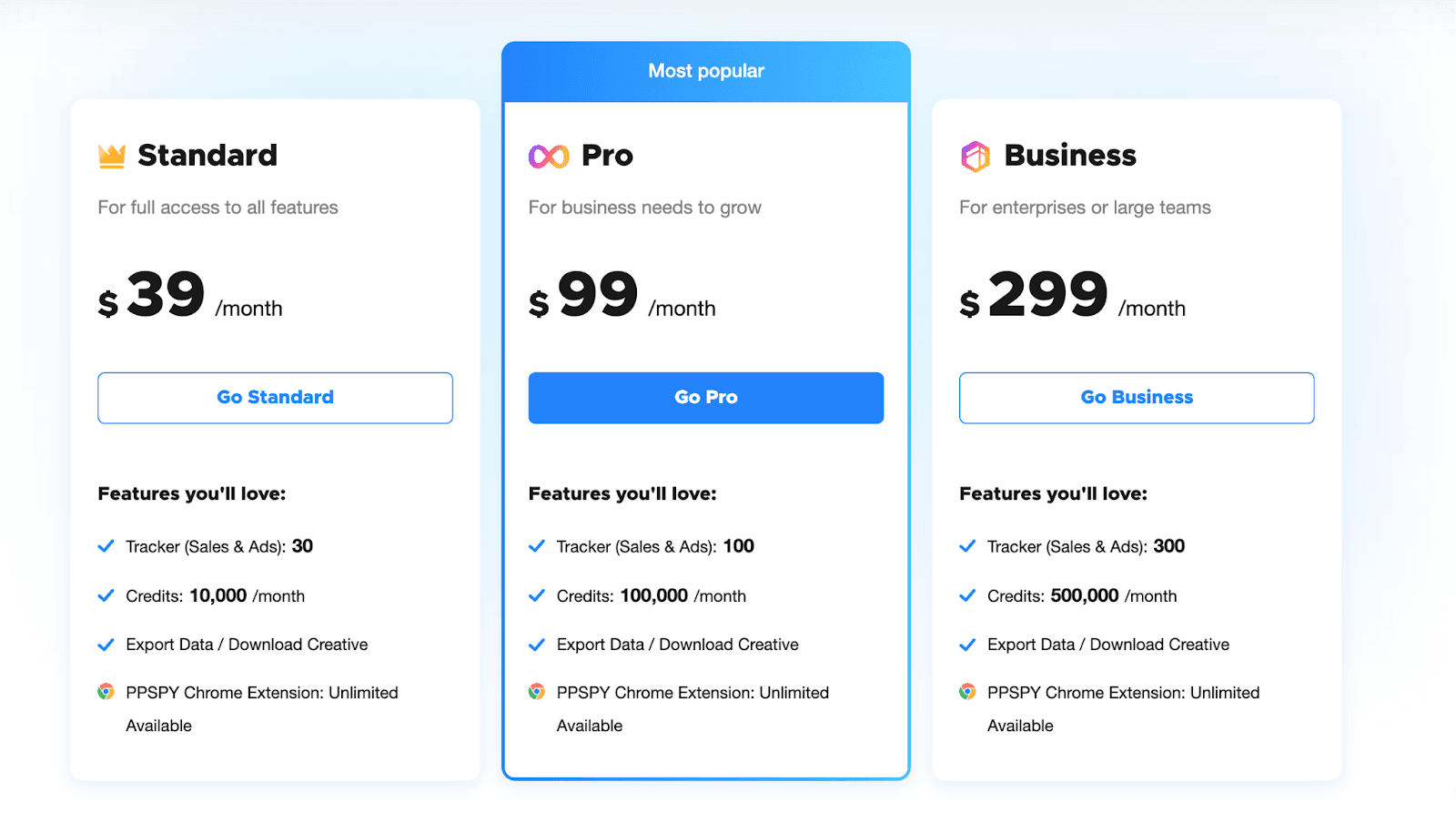
All plans run on monthly credits. Credits are used when you load stores, scan products, pull ads, or refresh results. Higher plans give you more credits, but none of them remove credit usage entirely. During testing, longer research sessions burned through credits faster than expected, especially when switching filters or checking multiple stores together.
The lower plan works for light use. Once research becomes daily, the Pro plan is the practical minimum. The Business plan increases volume only. It does not change how the data is generated or how accurate it is.
PPSPY also offers a free trial. It gives limited access and a small credit allowance, which is enough to explore the interface and test a few searches, but not enough to fully validate the data.
A few points worth noting:
Unlimited refers to feature access, not unlimited queries
Credits reset monthly and do not roll over
Credit limits affect validation more than browsing
Who Should Use PPSPY?
Some workflows benefit from broad visibility rather than precise measurement. This tool helps when the goal is to scan markets and compare store setups. It becomes less useful once exact numbers start to matter.
Here is where it fits and where it does not.
Situation | Fit |
Learning how Shopify stores structure products | Yes |
Exploring product ideas quickly | Yes |
Analyzing catalogs, themes, and store setups | Yes |
Operating with a smaller monthly budget | Yes |
Needing dependable sales figures | No |
Verifying revenue before spending money | No |
Research centered on TikTok ads or long-term creatives | No |
Using tool data as the sole basis for decisions | No |
What We’d Change
After using the platform and reviewing public feedback, there are a few gaps for sure. Each issue directly impacts trust and retention.
If this feedback were going to the product team, it would focus on the following:
Fix sales accuracy - Sales estimates drive most user decisions. When those numbers feel inflated or inconsistent, everything else loses credibility.
Be clearer about data limits - Labeling estimates more honestly would help. Overselling precision sets expectations that the data cannot meet.
Improve refund transparency - Confusion around refunds shows up in public reviews and creates friction before users even sign up.
Strengthen TikTok ad coverage - Basic visibility is no longer enough. Depth and filtering matter far more in 2026.
Support: What to Expect
Support is handled through email only. There is no live chat or 24x7 assistance. If an issue comes up, communication happens through back-and-forth emails, which can take time depending on the situation.
For basic questions, this is usually manageable. When billing or data-related issues need quick resolution, the lack of real-time support can slow things down.
The Bottom Line
PPSPY scored 6.7/10 in our analysis.
The interface is simple to navigate, easy to use, the layout is clean, and the tool is helpful when the goal is to browse stores and scan products. That usefulness drops once accuracy and confidence become important. Sales estimates are inconsistent, and public trust signals raise questions that cannot be ignored.
Our recommendation: If you are just getting started, this can be a quick way to explore products and study how other stores are set up.
If you are running established stores or making financial decisions, it works better as a supporting reference rather than something to rely on directly.
FAQs
Is PPSPY worth it?
Value depends on how you plan to use it. For beginners exploring product ideas or browsing stores, it can be useful. If your workflow depends on dependable sales figures or precise validation, the data often needs external confirmation before being trusted.
Is PPSPY legit?
The tool exists, functions as described, and has an active user base. That said, many users question the reliability of its sales estimates. Legitimacy is not the issue. Confidence in the accuracy of reported numbers is where doubts begin.
Does PPSPY have a free trial?
Yes. A free trial is available with limited access and restricted credits. It allows you to explore the interface and test a small number of searches. It is enough to understand how the tool behaves, but not enough to validate long-term usefulness.
What’s the best PPSPY alternative?
For ad-focused research, tools like WinningHunter offer deeper creative visibility. For validation, no single alternative replaces cross-checking. Most experienced sellers rely on multiple tools rather than trusting one platform for confirmation.
Can I cancel PPSPY anytime?
Subscriptions are typically billed month to month. Cancellation is possible, but refund handling has drawn mixed feedback. Before upgrading to higher plans, it is worth reviewing the refund terms carefully and understanding how credits and billing cycles are handled.


We already know what works before you even have the chance to blink!
© 2024 WinningHunter.com