sell-the-trend-alternative
7 Best Sell The Trend Alternatives in 2026 (Compared)

Sell The Trend promises a clean shortcut. One place to find products, analyze trends, manage suppliers, and build a store without juggling multiple tools.
That idea sounds solid until the work gets serious. The platform covers a lot, yet the insights behind each feature can feel thin when decisions need to be precise. Product results start to blur together, and ad data does not always go far enough to tell you what is truly worth testing.
It is not a lack of features that creates friction. It is the lack of depth that actually matters. Once that becomes clear, sticking with the same setup starts to feel limiting.
That is where exploring a stronger Sell The Trend alternative becomes the logical next step. The tools below show what that shift looks like in practice.
TL;DR
Sell The Trend is an all-in-one dropshipping tool, but users often move away from it due to limited ad insight and repetitive product data. The best Sell The Trend alternative is WinningHunter because it focuses on Facebook and TikTok ad intelligence, along with Shopify sales tracking. Other tools like Dropship.io, Minea, and AutoDS handle specific tasks well but do not offer the same level of data depth in one place.
Why People Look for a Sell The Trend Alternative?
It usually starts with hesitation. A product looks promising, but something feels off. You check again, compare results, and open another tab just to be sure. When that pattern repeats, it becomes clear that the tool is not giving enough confidence to act quickly.
Product database starts to feel recycled: With regular use, similar products begin showing up repeatedly. In forum discussions, users often mention seeing the same “winning products” across different tools, which makes early discovery harder.
Ad insights do not go deep enough: You can see ads, but understanding why they are working is less clear. Without strong performance signals or deeper breakdowns, decisions rely more on surface-level metrics.
Too many features packed into one system: Product research, supplier sourcing, automation, and store tools all sit together. The result is a platform that covers a lot but does not fully deliver in any one area.
Strong dependency on Shopify-based workflows: The setup works best when everything runs through Shopify. As soon as workflows expand or become more flexible, that structure starts to feel restrictive.
Limited product validation through real performance data: Finding trends is straightforward. Confirming whether those products are generating consistent sales takes extra effort, often outside the platform.
The platform gets outgrown as scale increases: What feels efficient early on begins to slow things down. Many users in community threads mention moving to more focused tools once they need faster and more reliable decisions.
These patterns make one thing clear. Convenience alone is not enough when every decision starts to carry real weight.
What to Look for in a Sell The Trend Alternative?
Once the limitations become clear, switching tools is not about finding more features. It is about finding better signals. The goal shifts from exploring ideas to acting on them with confidence, which means the quality of data and how easily you can use it start to matter far more than how many tools are bundled together.
Strong ad intelligence across Facebook and TikTok: A reliable alternative should give clear visibility into both platforms, not just surface-level creatives. You need to understand which ads are gaining traction and why, especially as trends now move across channels.
Real product validation backed by performance signals: Community discussions often highlight that tools alone do not guarantee winning products. One user pointed out that you still need to understand “why customers buy” rather than relying on tools to decide for you. That is where store-level revenue data and ad spend signals become critical.
A clean workflow from discovery to testing: Research should feel connected. Finding a product, analyzing its ads, and validating demand should happen in one smooth flow without constant switching or second-guessing.
No unnecessary feature clutter: More features do not always mean better outcomes. A focused system that does a few things well will always outperform a platform that tries to cover everything but lacks depth.
Reliable and frequently updated data: Trends move quickly, and delayed data leads to late decisions. Fresh, accurate inputs help you spot opportunities before they become obvious to everyone else.
Flexibility without ecosystem lock-in: Relying too heavily on a single platform setup can limit how you scale. A strong alternative should support different workflows without forcing everything into one structure.
7 Best Sell The Trend Alternatives (Tested & Compared)
1. WinningHunter: Best Data-Driven Sell The Trend Alternative
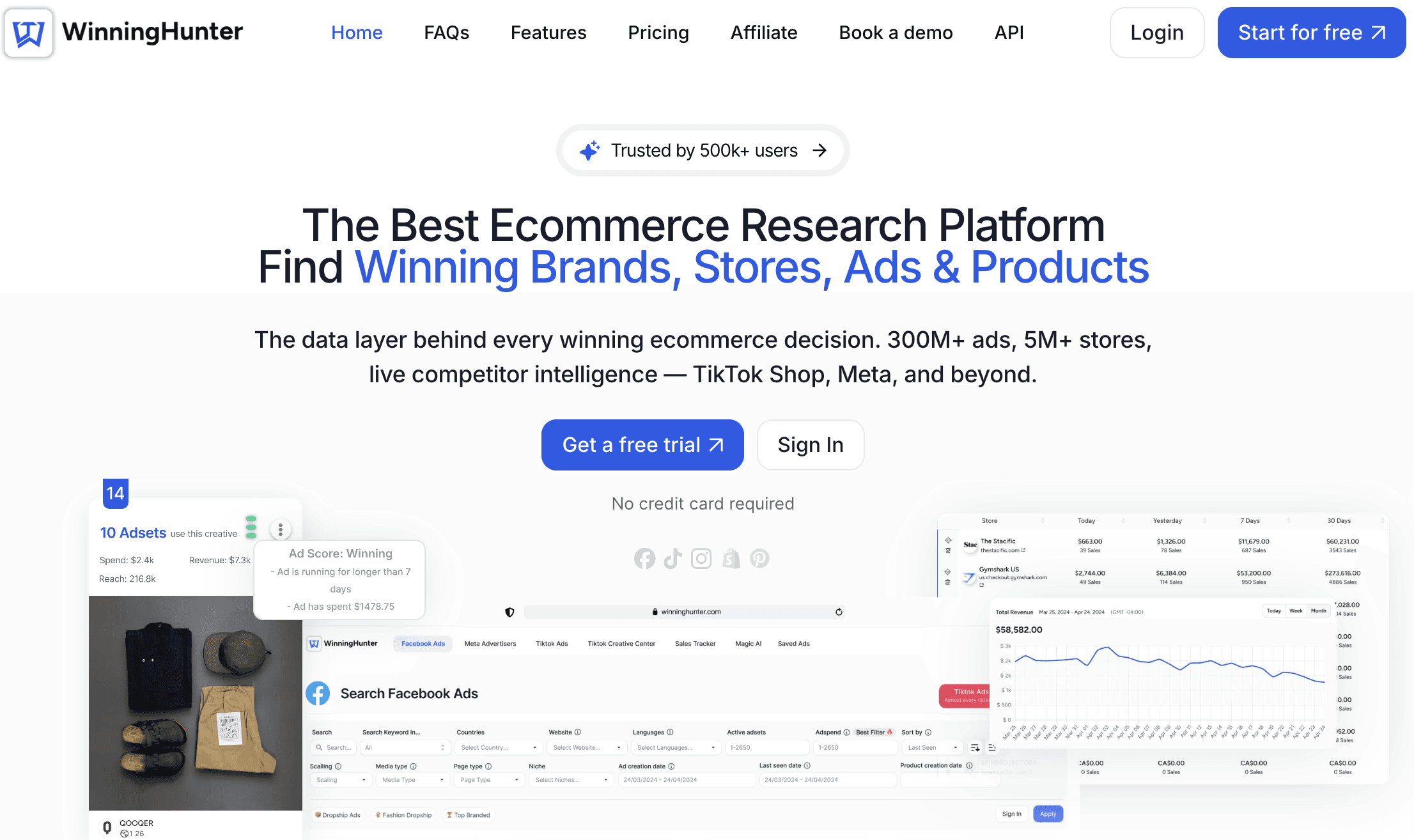
WinningHunter is the all-in-one ad intelligence platform that combines Facebook ad spy, TikTok ad spy, and live Shopify sales tracking in a single dashboard.
Sell The Trend brings multiple tools together, but depth is where the difference shows. When decisions depend on real signals, surface-level insights are not enough. That is where WinningHunter shifts the focus from feature coverage to data clarity.
Instead of spreading attention across multiple areas, the platform is built around what actually drives results. Ad intelligence, product validation, and performance signals that help you decide faster without second-guessing.
Here is what you can rely on:
Facebook and TikTok ad tracking in one system: Analyze creatives, trends, and scaling patterns across both platforms without splitting your research.
Shopify sales tracking for real validation: Move past assumptions and see which products are generating actual revenue at the store level.
Unlimited searches without restrictions: Explore freely without worrying about credits or usage limits holding you back.
Real-time performance signals: Identify ads that are actively scaling based on spend behavior, not just engagement metrics.
The difference becomes clear in how the workflow feels. You can move from finding an ad to validating the store behind it and deciding what to test without breaking your momentum.
Pricing: Starts at $49 per month, with higher tiers offering expanded tracking and deeper access to data.
Best for: Dropshippers who want to scale based on real data rather than surface-level trends.
Start a free trial and see what changes when ad research and product validation work together in one system.
2. Dropship.io: Best Product Research Alternative
Dropship.io takes a different route compared to most tools in this space. Instead of focusing heavily on ads, it centers around product discovery backed by Shopify store data, which makes it appealing when decisions are based on numbers rather than trends.
The platform tracks store performance, revenue estimates, and best-selling products across thousands of Shopify stores, helping you identify what is already working in the market.
Strong product discovery powered by store data: Find products based on revenue, sales volume, and competitor activity rather than engagement metrics
Detailed Shopify store insights: Track top-performing stores, monitor product launches, and analyze sales trends directly
The limitation becomes clear when ad research enters the picture. Ad-level intelligence is present but not deep enough for creative analysis or scaling decisions, which often requires an additional tool.
Pricing: Starts at $39 per month and goes up to $99 depending on the plan.
Best for: Product-first research workflows focused on store data rather than ad creatives.
3. AutoDS: Automation-Focused Alternative
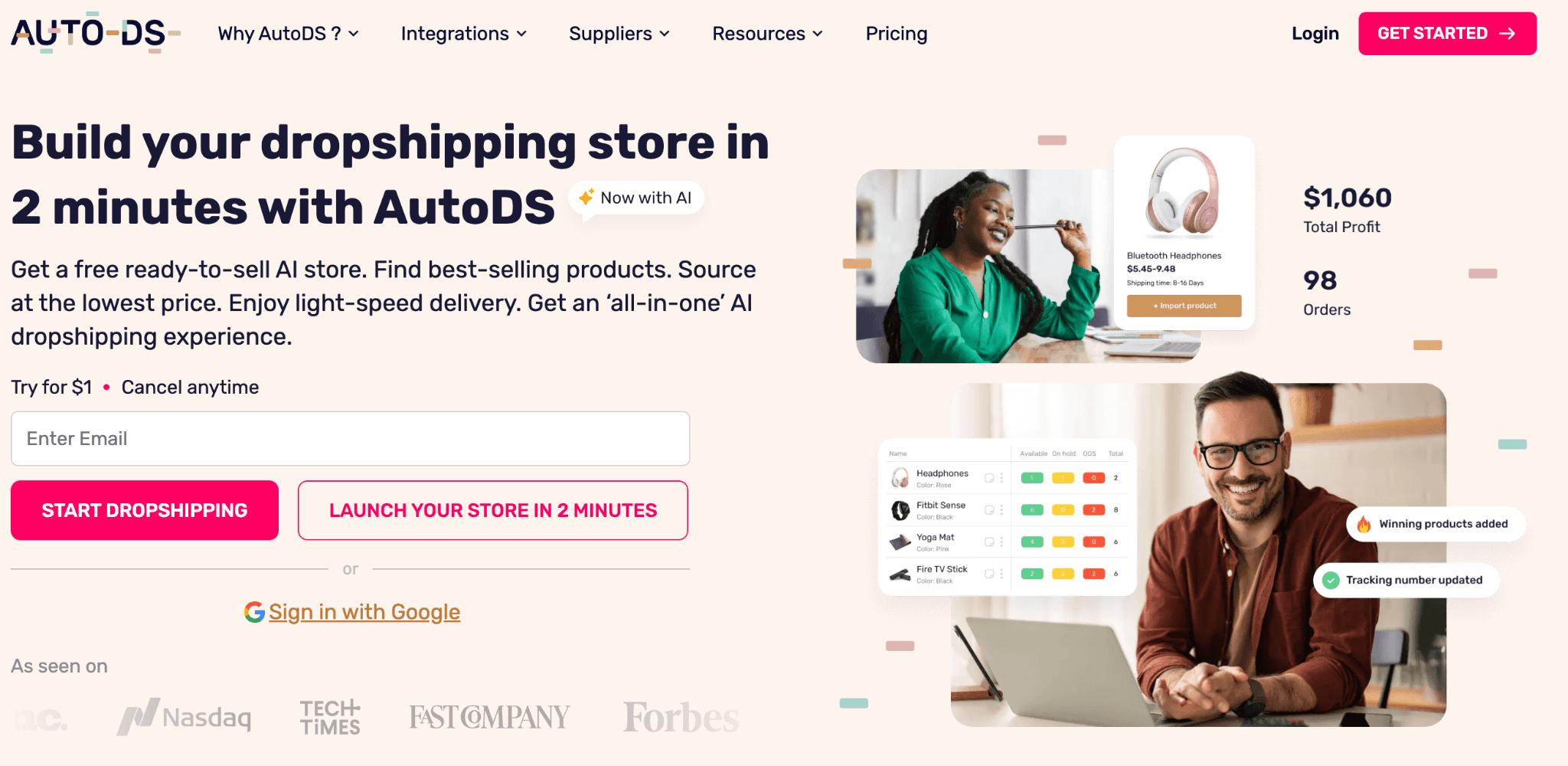
AutoDS is built around operational efficiency. It handles sourcing, pricing updates, and order fulfillment so day-to-day store management runs with minimal manual effort.
The platform connects with multiple suppliers and sales channels, making it easier to import products, sync inventory, and automate fulfillment from one place. This makes it useful when managing larger catalogs or scaling multiple stores.
End-to-end automation for store operations: Covers product imports, inventory tracking, price monitoring, and order fulfillment
Multi-supplier integration: Works with a wide range of suppliers, giving flexibility in sourcing and scaling
Where it falls short is in research depth. It is not designed for analyzing ad creatives or understanding performance trends, which limits its role in product discovery.
Pricing: Varies based on store type and plan, typically starting around $26.90 per month and scaling across tiers depending on product limits and features.
Best for: Automation-heavy workflows focused on operations rather than research or ad intelligence.
4. Minea: Ad Spy and Product Trends Platform
Minea is built for multi-platform ad research, combining product discovery with a large ad database across Facebook, TikTok, and Pinterest. It gives you access to creatives, influencer placements, and trending products in one system, which makes it useful when comparing performance across different channels.
Multi-platform ad coverage: Track ads across Facebook, TikTok, and Pinterest without switching tools
Creative and product-level insights: Analyze ad creatives, discover trending products, and monitor competitor activity
One constraint to keep in mind is how access is structured. The platform runs on a credit-based system, which means deeper research depends on how many credits you have available rather than unrestricted usage.
Pricing: Ranges from $49 to $399 per month across different plans, depending on access and credit limits.
Best for: Multi-platform ad research with built-in product trend discovery.
5. ZIK Analytics: Marketplace Research Tool
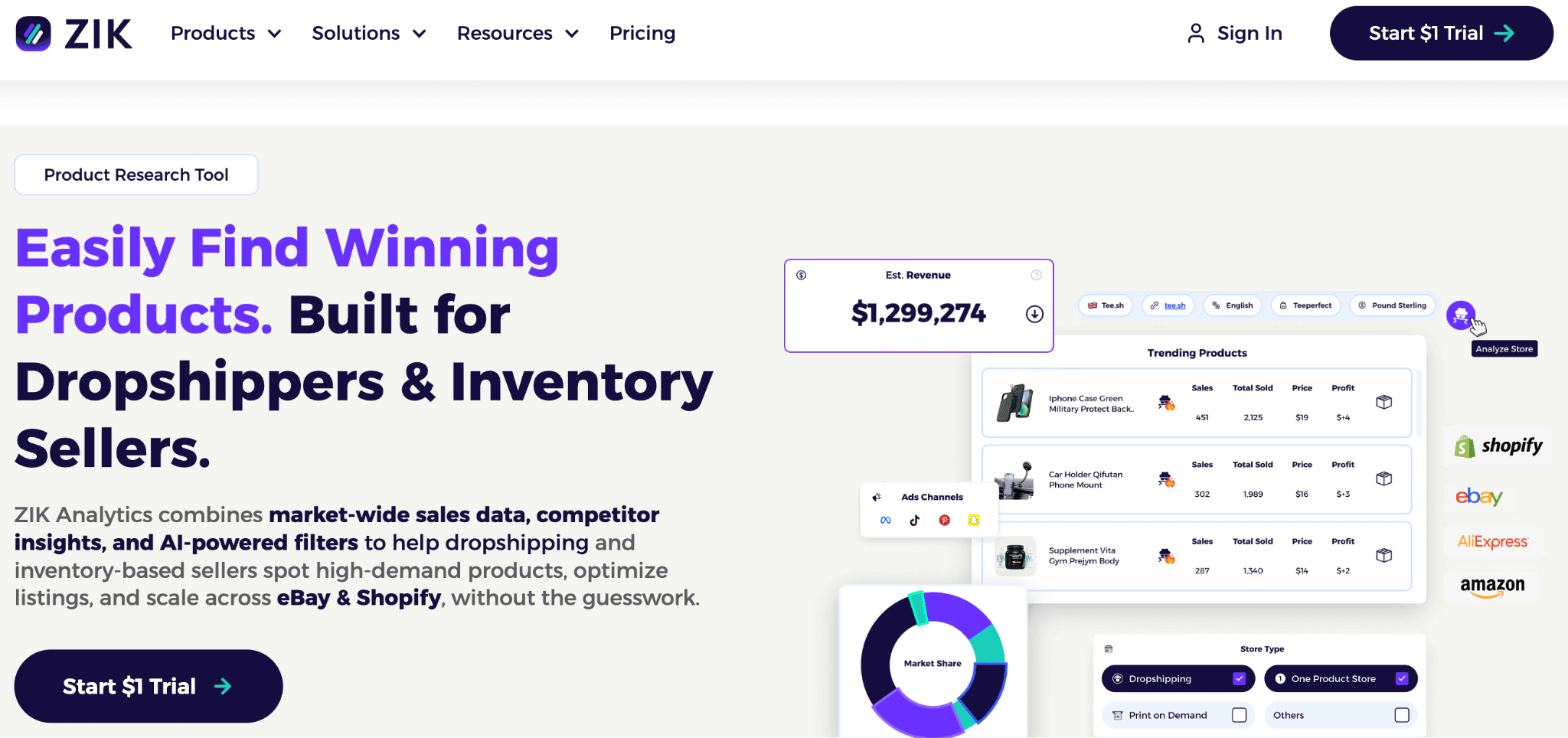
ZIK Analytics comes from a different angle compared to most tools in this list. It focuses on marketplace data, pulling insights from platforms like eBay and Amazon to help identify products based on actual listings, demand, and competition.
Marketplace-driven product research: Discover products using real sales data, keyword trends, and competitor listings across eBay and similar platforms
Strong competitor and listing insights: Break down pricing, demand, and performance using marketplace-level signals
The gap becomes clear when moving into ad-driven workflows. The platform is not structured around Facebook or TikTok research, and it does not provide the kind of creative or campaign-level insights needed for paid traffic strategies.
Pricing: Typically starts around $39.99 per month for standard plans, with higher tiers unlocking more scans and features.
Best for: Marketplace sellers working with eBay or Amazon who are starting to explore dropshipping beyond those platforms.
6. Ecomhunt: Curated Winning Products
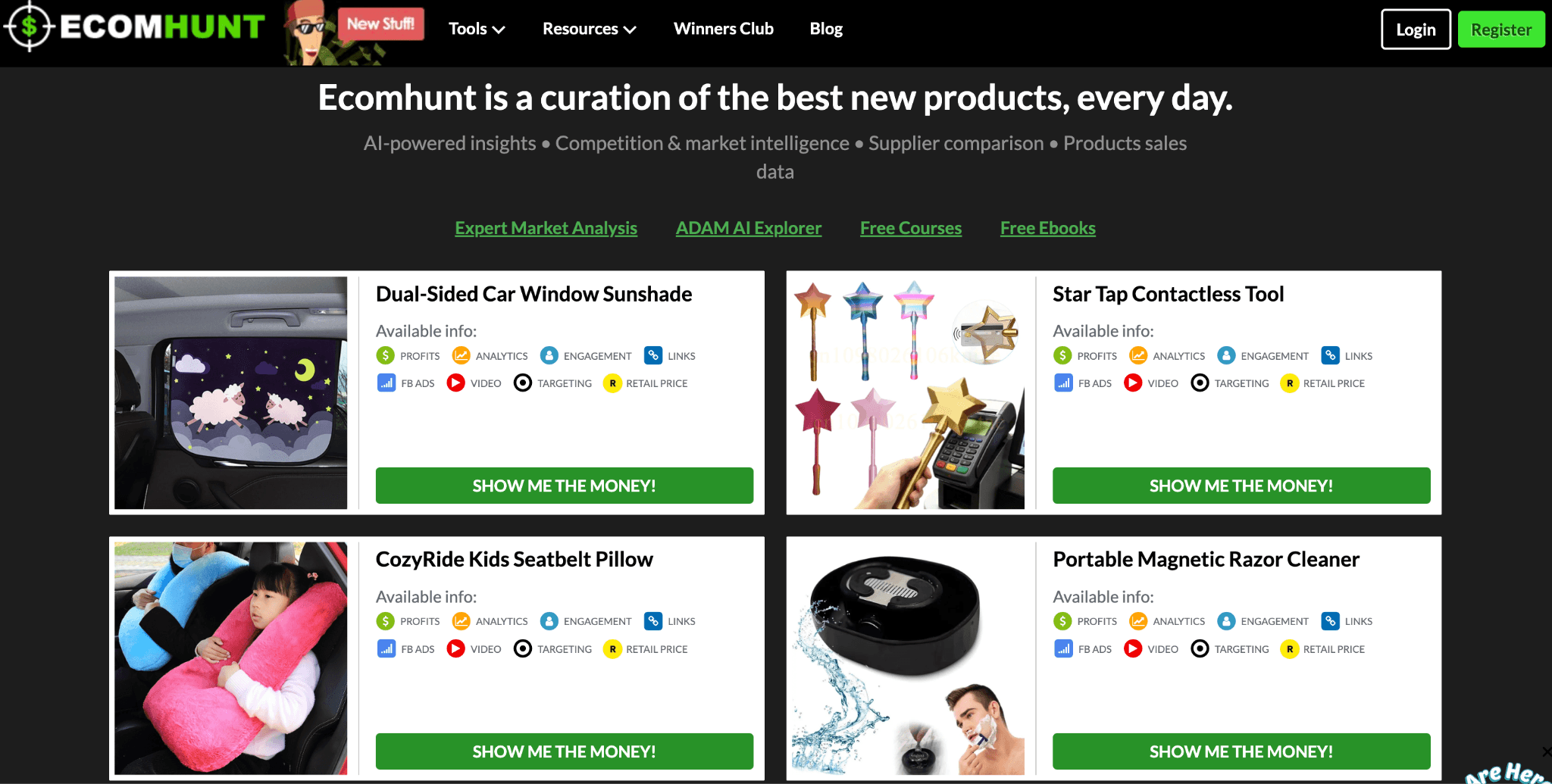
Ecomhunt takes a curated route, presenting handpicked products rather than relying on large searchable databases. Each product comes with basic insights, giving a quick snapshot of potential without requiring deep analysis.
Curated product selection
Access manually selected products with details like pricing, margins, and supplier linksSimple breakdown for quick evaluation
Includes basic analytics, targeting ideas, and performance indicators to guide early testing
Depth becomes a concern when decisions need stronger backing. Insights stay fairly surface-level, especially around ad performance and long-term validation, which limits how far you can rely on it while scaling.
Pricing: Ecomhunt offers a free plan with limited access, while paid plans typically range from $29 to $69 per month, depending on features and access.
Best for: Beginners exploring product ideas without complex research tools
7. Niche Scraper: Beginner-Friendly Tool
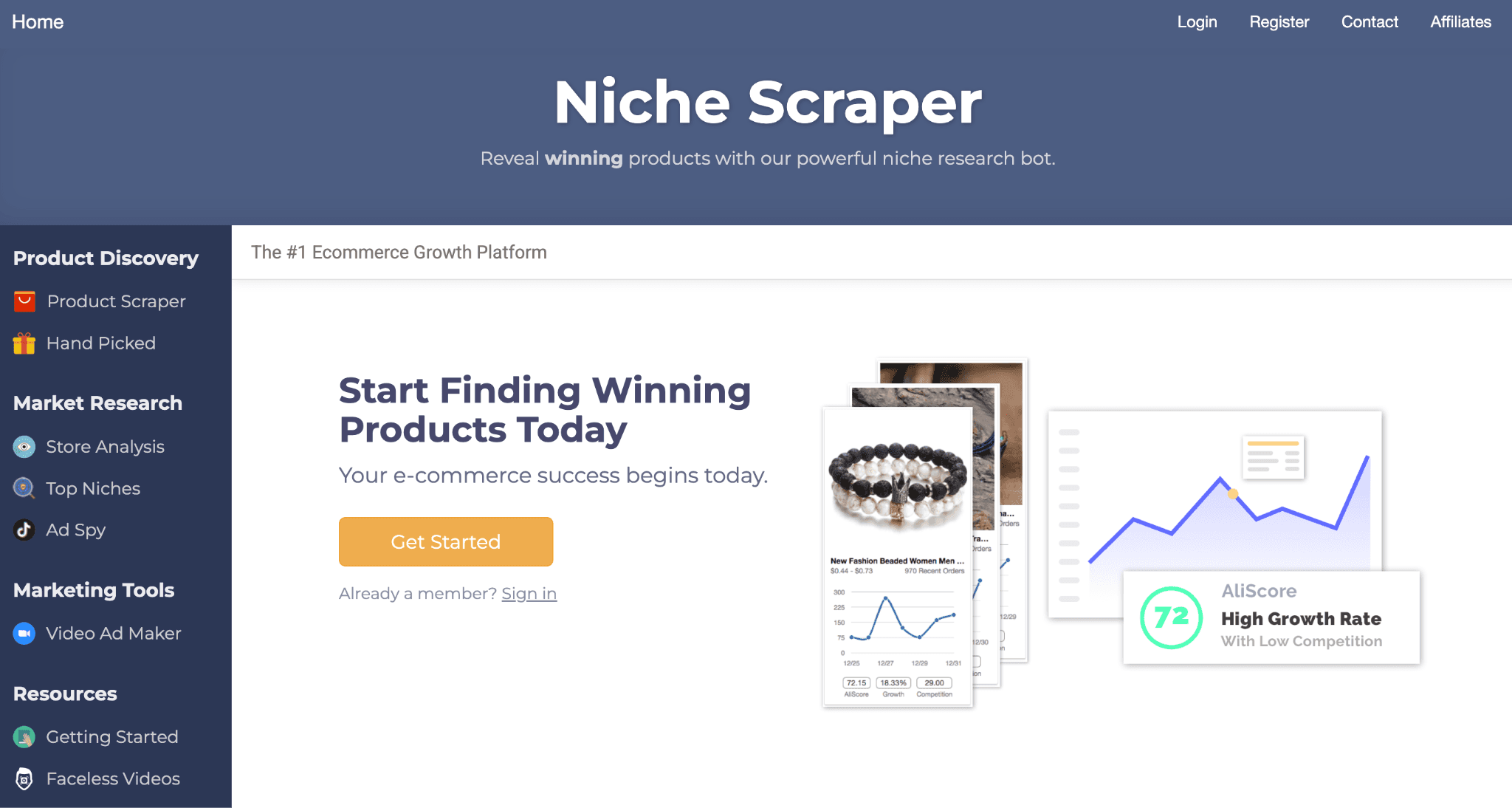
Niche Scraper keeps things simple by focusing on quick product discovery and competitor store insights. It pulls data from Shopify and AliExpress, helping you spot products that are already selling without spending hours researching manually.
Product scraping and store analysis: Identify trending products, analyze competitor stores, and review estimated performance data
Built-in video ad examples: Access ready-to-use video creatives and ad samples to speed up testing
Accuracy can become a concern when relying on fast-moving data. Since much of the information is scraped, results may not always reflect real-time performance with full precision, especially for scaling decisions.
Pricing: Niche Scraper offers a free plan with limited access, while the Pro plan is priced at $49.95 per month with full feature access.
Best for: Entry-level users who want a simple tool for product discovery and basic validation.
Sell The Trend Alternatives Compared: Features, Data Depth, and Pricing
This comparison highlights where each tool stands so you can quickly identify which one fits your workflow and where tradeoffs start to appear:
Tool | Best For | Ad Intelligence Depth | Shopify Tracking | Product Research | Starting Price |
WinningHunter | Scaling dropshippers | High | Yes | Yes | $49 |
Sell The Trend | Beginners (all-in-one) | Low–Moderate | Yes | Yes | $39.97 |
Dropship.io | Product discovery | Moderate | Yes | Strong | $39 |
AutoDS | Automation | Low | Yes | Yes | ~$29+ |
Minea | Multi-platform ads | High | Yes | Yes | $49+ |
ZIK Analytics | Marketplace sellers | Low | No | Strong | ~$39.99 |
Ecomhunt | Curated products | Low | No | Moderate | Free / $29+ |
Niche Scraper | Beginner-friendly research | Low–Moderate | Limited | Moderate | $49.95 |
When Surface-Level Insights Stop Working
Sell The Trend helps you get started. It brings ideas together, shows trends, and gives a simple way to explore products without much setup. That works well in the early phase.
The challenge begins when results need to be reliable. At that stage, surface-level insights stop being enough to support consistent decisions.
WinningHunter is built for that point. It brings together Facebook ads, TikTok ads, and Shopify store tracking so you can evaluate products through actual market activity. You are not relying on what looks promising. You are working with signals tied to what is already gaining traction.
This changes how quickly you can move and how confidently you can test. If your current setup feels uncertain, it usually means the data is not strong enough to support the next step.
Start a free trial and work with insights that reflect real performance, not just assumptions.
FAQs
Is Sell The Trend worth it in 2026?
Sell The Trend can be useful for beginners who want a structured way to explore products and set up a store quickly. It saves time by combining multiple features, but users focused on scaling often prefer tools with deeper data and stronger validation signals.
What is the best Sell The Trend alternative?
WinningHunter is a strong Sell The Trend alternative because it focuses on ad intelligence and product validation. It combines Facebook ads, TikTok ads, and Shopify tracking, giving clearer visibility into what is actually working instead of relying only on product suggestions.
Is there a free Sell The Trend alternative?
Tools like BigSpy and Ecomhunt offer free plans that allow basic product and ad research. These options work for early exploration, but they come with limitations in filtering, data depth, and validation, which can affect decision-making as you start testing products seriously.
Sell The Trend vs WinningHunter, which is better?
Sell The Trend offers a broader all-in-one setup, covering product research, suppliers, and automation. WinningHunter goes deeper into ad and sales data, making it more suitable for users who want stronger insights to guide testing and scaling decisions.
Does Sell The Trend find winning products?
Sell The Trend helps surface trending products and saves research time, but it does not guarantee winners. Users still need to verify demand, competition, and performance signals before testing, since product success depends on execution and market timing.


We already know what works before you even have the chance to blink!
© 2024 WinningHunter.com