shophunter-alternatives
7 Best ShopHunter Alternatives in 2026

You can tell a lot about an e-commerce tool by how quickly you outgrow it.
That is exactly what happens with ShopHunter for many sellers. The platform built its name as a Shopify store tracking tool that helps you monitor competitor stores, estimate revenue activity, and discover trending products. For basic store research, it still does the job.
The problem is that e-commerce research no longer revolves around storefronts alone.
TikTok creators, viral ad creatives, fast-moving trends, and short-form video campaigns now drive product demand much faster than traditional store tracking tools can react. That leaves many users searching for the best ShopHunter alternatives once they need deeper ad research, stronger TikTok discovery, and more reliable product validation.
Modern ecommerce intelligence platforms now combine Shopify tracking, Facebook ad spying, TikTok research, and creative analysis in one workflow.
And once you experience that level of visibility, simple store tracking starts feeling painfully outdated.
TL;DR
ShopHunter works well for Shopify store tracking, but many ecommerce sellers outgrow it once they need stronger TikTok research, deeper ad intelligence, and faster product validation workflows. The best ShopHunter alternative is WinningHunter because it combines Shopify tracking, Facebook ad spying, and TikTok ad intelligence in one platform. Tools like PPSPY, Trendtrack, and PiPiADS also fit specific e-commerce research workflows.
Why People Look for a ShopHunter Alternative?
ShopHunter earned attention by making Shopify competitor research easier. You could inspect stores, monitor bestselling products, estimate revenue activity, and uncover products gaining traction across e-commerce.
The frustration usually begins once product discovery moves beyond storefront data.
Today, a product can blow up from a single creator video long before sales trackers fully register the demand. E-commerce teams now study paid creatives, engagement spikes, repost velocity, creator usage patterns, and ad repetition far more aggressively than they did a few years ago.
Sales estimates can feel inconsistent: Fast-growing stores, private product pages, and sudden traffic spikes often create tracking gaps that make revenue projections difficult to trust confidently.
TikTok discovery feels underdeveloped: Viral products increasingly emerge through creator-led content cycles, while Shopify tracking alone only shows the aftermath once demand already exists.
Meta ad research lacks deeper context: Advertisers now care about scaling patterns, creative refresh cycles, engagement quality, and campaign longevity across Facebook and Instagram.
Winning products move faster than store databases update: By the time certain products appear across traditional trackers, the market may already be crowded with competitors testing identical offers.
Creative research now drives product validation: Sellers closely study hooks, video pacing, call-to-action structures, landing page angles, and audience reactions before spending on ads.
Research workflows became fragmented: Many ShopHunter users eventually rely on separate tools for TikTok ads, Facebook creatives, Shopify tracking, and trend monitoring.
What to Look for in a ShopHunter Alternative?
A Shopify store tracker can show you what products are selling. It cannot fully explain why customers suddenly started buying them in the first place.
That difference matters much more today than it did a few years ago. Product demand now spreads through TikTok videos, Meta creatives, influencer campaigns, repost cycles, and short-lived trend waves that move incredibly fast across platforms.
When comparing ShopHunter alternatives, these are the capabilities worth paying attention to:
TikTok and Facebook ad research: Strong ecommerce tools should help you discover active campaigns, monitor scaling ads, and uncover products gaining traction across paid social platforms.
Reliable Shopify validation workflows: Store tracking still matters, especially when validating whether products are generating consistent sales activity across real ecommerce stores.
Creative tracking and hook analysis: Winning products often share similar opening hooks, video structures, creator styles, and messaging angles. Strong creative visibility helps uncover those patterns earlier.
Faster trend discovery systems: Delayed product databases create crowded opportunities. Platforms with stronger trend detection help surface products before the market becomes saturated.
Advanced filtering options: Large databases become frustrating quickly when search results feel cluttered. Better filtering makes it easier to narrow products by engagement signals, platform activity, ad growth, or store behavior.
Multi-platform e-commerce coverage: Modern research workflows rarely stay limited to Shopify alone. Sellers increasingly connect TikTok trends, Meta ads, landing pages, and store activity together during product validation.
Connected research workflows: Jumping between separate tools slows product discovery dramatically. Integrated workflows help you analyze stores, creatives, products, and ads from one place.
7 Best ShopHunter Alternatives (Tested & Compared)
1. WinningHunter
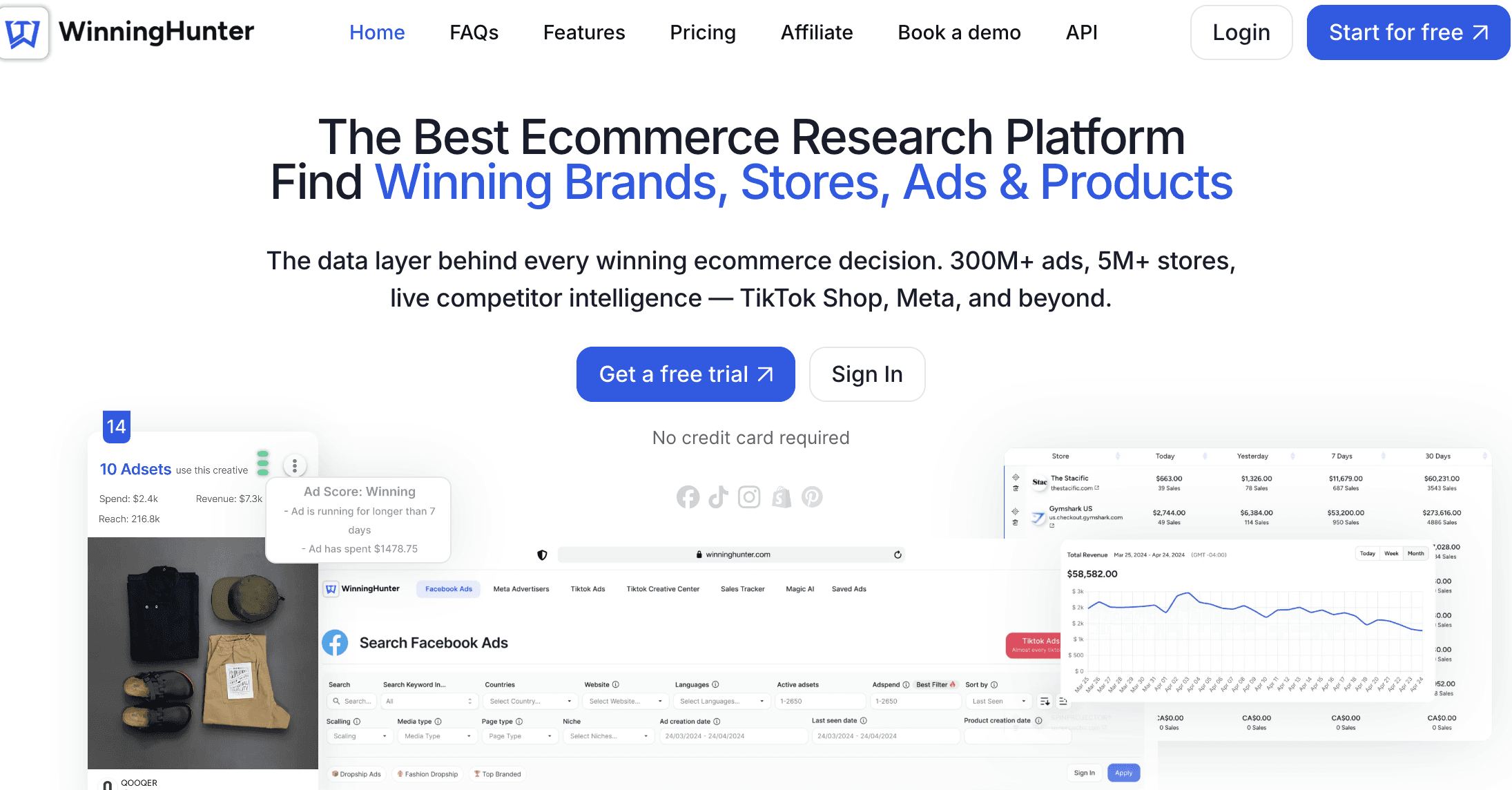
WinningHunter combines TikTok ad research, Facebook ad spying, Shopify sales tracking, and competitor monitoring into one connected ecommerce intelligence workflow.
ShopHunter mainly focuses on storefront visibility, whereas WinningHunter extends the research process much further by connecting products, ads, creatives, scaling signals, and store activity within the same platform. That creates a much clearer picture of what is actually gaining traction across e-commerce.
Here is what you can access:
TikTok ad intelligence: Discover viral products, creator-driven campaigns, fast-growing niches, and short-form creatives before they spread across the market.
Facebook ad spying: Analyze active campaigns, engagement patterns, scaling behavior, creative repetition, and ad longevity across Meta platforms.
Integrated Shopify sales tracking: Validate stores and products using live ecommerce activity instead of relying only on product assumptions.
AI-powered competitor discovery: Surface emerging stores, products, and campaigns through automated research workflows built for faster product hunting.
Unlimited searches: Run deep research sessions without worrying about credit systems, capped searches, or restricted filtering.
Multi-platform validation workflows: Connect ad activity, storefront data, creatives, and trend movement together during product research.
One of the strongest advantages is the speed of the workflow. You can move from product discovery to store validation, creative analysis, competitor tracking, and scaling research without constantly switching tabs or stitching multiple tools together manually.
Pricing: Starts at $49 per month.
Best for: Dropshippers, ecommerce brands, and media buyers who want broader research visibility across TikTok, Facebook, and Shopify from one platform.
Start your free trial with WinningHunter and access TikTok, Facebook, and Shopify intelligence from a single workflow.
2. PPSPY
PPSPY focuses heavily on Shopify store intelligence and competitor tracking. The platform is designed for e-commerce sellers who want deeper visibility into store activity, product movement, and estimated sales behavior across Shopify stores.
You can monitor catalog changes, inspect product launches, track store growth patterns, and review historical store activity during competitor research sessions.
Key strengths include:
AI-powered Shopify sales estimates
Historical store tracking
Product movement monitoring
Detailed Shopify store breakdowns
The biggest limitation is research depth outside Shopify ecosystems. TikTok-focused workflows remain limited, and the interface can feel overly dense during larger research sessions.
Pricing: Starts at $39 per month.
Best for: Shopify-focused operators who prioritize competitor store intelligence and storefront analysis.
3. Trendtrack
Trendtrack focuses heavily on competitive ecommerce research across ads, landing pages, products, and creative monitoring workflows.
The platform gives users broad visibility into how products scale across TikTok and Meta campaigns. You can inspect creatives, analyze landing pages, monitor competitor activity, and follow product movement across multiple traffic sources from one dashboard.
Some notable capabilities include:
Cross-platform competitor monitoring
TikTok and Meta ad intelligence
Landing page analysis
Creative tracking workflows
Broader ecommerce research coverage
Trendtrack feels more suited for larger research operations than lightweight product discovery workflows. The interface can become overwhelming during deeper analysis, and the platform demands a higher learning curve before the workflow starts feeling efficient. Smaller ecommerce teams may also find parts of the system heavier than necessary for day-to-day product validation.
Pricing: Starts at $49 per month, with higher plans at $99 and $249 monthly.
Best for: Experienced e-commerce operators running larger-scale competitive research workflows.
4. PiPiADS
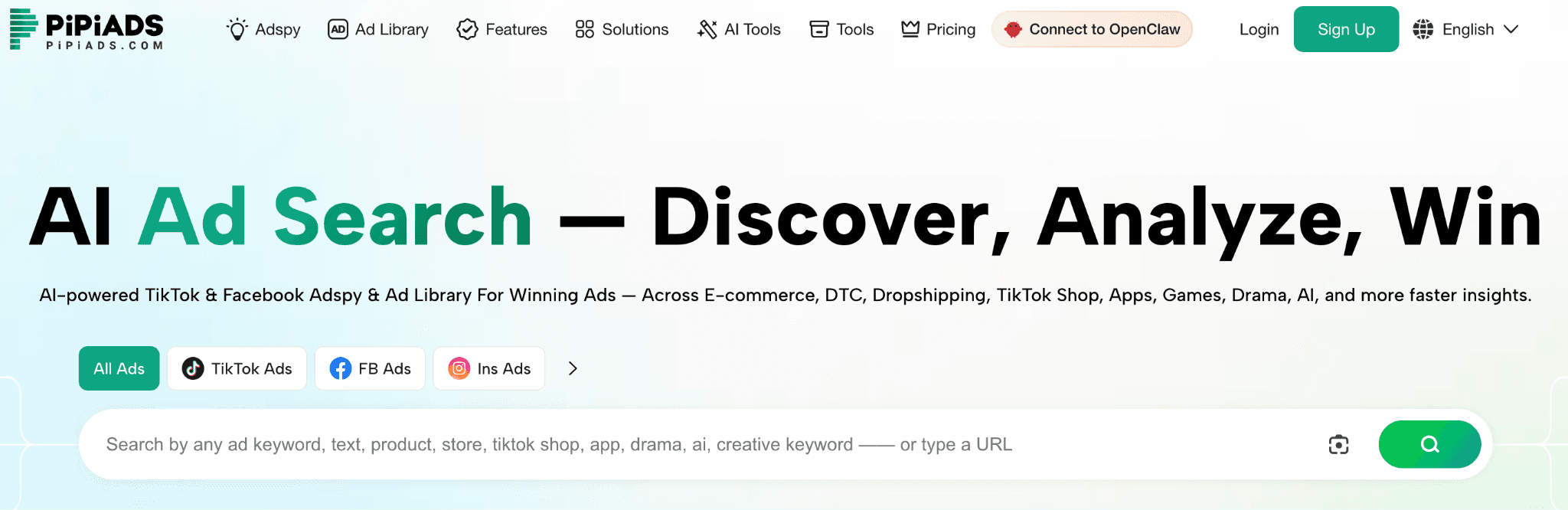
PiPiADS focuses almost entirely on TikTok advertising research and viral product discovery. The platform is popular among dropshippers who spend most of their time analyzing short-form creatives, influencer campaigns, and trending TikTok products.
Users can browse large volumes of active ads, inspect engagement activity, monitor creator promotions, and study how products spread through short video content across TikTok.
The platform offers:
Detailed TikTok ad filtering
Influencer tracking tools
Creative-focused discovery workflows
Large-scale TikTok ad databases
The workflow feels much narrower once research expands beyond TikTok. Shopify validation remains fairly limited, and broader ecommerce analysis often requires additional tools layered around the process.
Pricing: Plans currently start at $69 per month, with higher tiers at $159.
Best for: Sellers heavily focused on TikTok-driven product discovery and short-form ad research.
5. Dropship.io
Dropship.io centers heavily around product validation and Shopify store analysis for ecommerce sellers researching potential winning products.
The platform makes it easy to monitor stores, estimate product performance, and track how products spread across different Shopify brands. Its interface feels more approachable than heavier competitive intelligence platforms, which makes the research process easier for newer sellers.
You can use the platform for:
Shopify revenue estimation
Product saturation tracking
Competitor store monitoring
Product-focused research workflows
It works well for validating whether products already show signs of traction across e-commerce stores. The limitation appears once deeper ad analysis and creative research become part of the workflow. Creative intelligence remains fairly lightweight compared to platforms built around ad discovery and campaign analysis.
Pricing: Paid plans currently start at $39 per month, with higher tiers at $59 and $199 monthly.
Best for: E-commerce sellers focused primarily on product validation and Shopify store research.
6. Minea

Minea focuses heavily on ad discovery and creative research across TikTok, Facebook, Instagram, and Pinterest. The platform is commonly used by e-commerce sellers searching for viral products, fast-moving creatives, and emerging ad trends across social platforms.
Its interface feels polished and visually organized, especially during creative browsing sessions. Users can explore winning ads, monitor engagement activity, and study different marketing angles across multiple ad channels.
The platform includes:
TikTok, Meta, and Pinterest coverage
Creative discovery workflows
Ad-focused product research
Visual browsing experience
The biggest frustration comes from the credit-based system. Research sessions can feel restrictive once usage scales, especially for sellers running larger testing workflows. Shopify intelligence also remains lighter compared to platforms built more heavily around store validation.
Pricing: Plans currently range from $49 to $399 per month.
Best for: Sellers focused primarily on ad creatives, social trend discovery, and multi-platform product research.
7. AdSpy
AdSpy revolves mainly around Facebook and Instagram advertising research. The platform has been part of the ad spy space for years and remains widely used by media buyers focused heavily on Meta campaigns.
Users can search large volumes of Facebook ads through detailed filtering systems built around engagement activity, keywords, call-to-action types, affiliate networks, and advertiser behavior. The database depth still appeals to advertisers researching long-running Meta campaigns and evergreen offers.
The platform provides:
Large Facebook ad database
Advanced ad filtering
Detailed Meta campaign searches
Long established research workflows
The platform feels far more limited once research expands outside Meta ecosystems. Shopify tracking is completely absent, and TikTok research remains relatively underdeveloped compared to newer e-commerce intelligence platforms.
Pricing: AdSpy currently costs $149 per month.
Best for: Advertisers focused primarily on Facebook and Instagram campaign research.
Best ShopHunter Alternatives Compared: Features, Pricing, and Platforms
Tool | Ideal Use Case | Shopify Intelligence | Ad Research Coverage | Research Workflow Depth | Starting Price |
WinningHunter | Full ecommerce research workflows | Advanced live tracking | TikTok + Facebook | Very High | $49/month |
PPSPY | Shopify competitor tracking | Advanced | Limited | Medium | $39/month |
Trendtrack | Competitive intelligence research | Moderate | TikTok + Meta | High | $49/month |
PiPiADS | TikTok ad discovery | Limited | TikTok focused | Medium | $69/month |
Dropship.io | Product validation workflows | Strong | Limited | Medium | $39/month |
Minea | Creative focused product research | Moderate | TikTok + Meta + Pinterest | High | $49/month |
AdSpy | Facebook ad research | None | Meta focused | Medium | $149/month |
The best ShopHunter alternative in 2026 is WinningHunter because it combines Shopify sales tracking, TikTok ad intelligence, Facebook ad spying, and creative research inside one connected workflow. Tools like PPSPY and Dropship.io focus more heavily on store tracking, while platforms like PiPiADS and AdSpy remain limited to specific advertising channels.
The Research Workflow Ecommerce Sellers Actually Need Now
Store tracking still plays an important role in product research. The difference is that successful e-commerce operators no longer rely on storefront data alone to make decisions.
Products now scale through TikTok creatives, aggressive ad testing, creator momentum, and fast-moving social trends that spread across multiple platforms at once. That makes disconnected research workflows much harder to manage efficiently.
WinningHunter fits the way modern e-commerce research works today. You can discover products through TikTok and Facebook ads, validate demand through Shopify tracking, monitor competitors, analyze creatives, and follow scaling signals without constantly switching between separate tools.
That combination creates a much faster validation process compared to relying only on store intelligence.
If you want a ShopHunter alternative built for modern product discovery workflows, WinningHunter gives you broader visibility across ads, stores, creatives, and ecommerce trends from one platform.
FAQs
What is the best ShopHunter alternative?
WinningHunter is one of the strongest ShopHunter alternatives for modern ecommerce research because it combines Shopify sales tracking, TikTok ad intelligence, Facebook ad spying, and creative analysis inside one connected workflow. It gives sellers broader visibility across products, ads, creatives, and competitor activity compared to Shopify-focused tracking tools alone.
Which Shopify tracker is most accurate?
No Shopify intelligence platform can provide perfectly accurate revenue estimates because these tools rely on modeled data, traffic analysis, product movement, store signals, and external tracking systems. Accuracy can also fluctuate depending on private apps, hidden product pages, storefront changes, and evolving Shopify protections that affect how data gets collected.
Is ShopHunter still worth it in 2026?
ShopHunter still works for basic Shopify competitor research, especially for monitoring stores, bestselling products, and estimated ecommerce activity. The limitation appears when sellers need deeper ad visibility, TikTok trend discovery, creative tracking, and broader validation workflows across multiple e-commerce platforms during product research.
Which ShopHunter alternative is best for TikTok dropshipping?
PiPiADS and WinningHunter are both strong options for TikTok-focused dropshipping workflows. PiPiADS centers heavily around TikTok creatives and influencer campaigns, while WinningHunter combines TikTok research with Facebook ad intelligence and Shopify tracking for broader ecommerce validation.
Why do Shopify sales estimates vary between tools?
Different Shopify tracking platforms use different estimation models, tracking systems, traffic analysis methods, store monitoring signals, and product movement data. Revenue projections can also change depending on how frequently platforms update store information and how effectively they detect hidden sales activity across Shopify stores.
What is better than ShopHunter for ad research?
WinningHunter, PiPiADS, and Trendtrack provide broader ad intelligence workflows than ShopHunter. These platforms offer deeper visibility into TikTok creatives, Meta campaigns, engagement activity, creative tracking, and multi-platform ecommerce research workflows.


We already know what works before you even have the chance to blink!
© 2024 WinningHunter.com