trendtrack-alternative
Best Trendtrack Alternatives in 2026

Finding winning products used to feel simple. Now you are competing against sellers tracking TikTok trends, creator ads, Shopify stores, and viral products all at once. That pressure pushed platforms like Trendtrack into the spotlight.
Trendtrack is an ecommerce research platform built for product discovery, ad tracking, competitor monitoring, and Shopify store analysis in one place. The idea sounds great until your workflow starts slowing down under too much data, overlapping features, and research paths that feel harder to manage as you scale.
That is exactly why more sellers are searching for the best Trendtrack alternatives in 2026.
Today, speed matters more than endless dashboards. You need tools that help you validate products quickly, spot profitable ads early, and move before trends burn out. The platforms below stand out for doing exactly that.
TL;DR
Trendtrack combines TikTok ad research, Shopify tracking, and creative discovery in one platform, but many sellers switch because of rising pricing and crowded workflows. WinningHunter is the best Trendtrack alternative because it combines Facebook ad spying, TikTok ad intelligence, and Shopify validation in one faster ecommerce research system.
Why People Look for a Trendtrack Alternative?
Trendtrack gained attention by bringing multiple e-commerce research workflows into one platform. You could explore products, monitor competitors, analyze ads, track Shopify stores, and study creatives without constantly switching between tools.
That convenience works well in the beginning. The friction usually starts once your research process becomes more performance-driven, and speed starts mattering more than having every dataset available on one screen.
Seller conversations have also changed significantly over the last year. E-commerce operators now focus far more heavily on TikTok Shop momentum, creative performance, ad hooks, creator velocity, and fast validation cycles.
That shift explains why more sellers are actively searching for alternatives.
Pricing plans become harder to justify as research needs expand: Many sellers begin with lower tiers, then quickly realize advanced research workflows and larger datasets require more expensive plans.
Workflow complexity slows down newer e-commerce sellers: Large research dashboards can become overwhelming when you are trying to validate products quickly and launch faster.
Shopify tracking accuracy continues to raise questions: Store revenue estimates still help with direction, but many sellers now treat tracking data as supporting insight instead of exact measurement.
Public product databases create faster saturation cycles: Once products spread across large research platforms, competition usually follows almost immediately.
TikTok research workflows still leave indexing gaps: Viral creatives and fast-moving ad trends often move more quickly than traditional tracking systems can fully capture.
Specialized tools increasingly outperform broad all-in-one systems: Many sellers now prefer cleaner workflows dedicated to ad intelligence, creative discovery, or Shopify research separately.
Subscription stacking still becomes common for scaling brands: Even with broad feature sets, sellers often end up combining additional tools for creatives, automation, or deeper ad analysis.
What to Look for in a Trendtrack Alternative?
A large research database means very little if you still spend hours second-guessing products. Sellers move through trends much faster now, especially on TikTok Shop, where products can explode and disappear within days. The platforms worth paying for help you reach decisions quickly without forcing you through cluttered research loops.
When comparing Trendtrack alternatives, these are the areas that matter most:
TikTok and Meta ad visibility: Viral products usually appear inside ad creatives before they appear inside product databases. Strong ad search tools help you catch patterns early.
Shopify store validation: Product research becomes more useful when you can check whether stores are actively pushing volume instead of relying on guesswork from engagement numbers alone.
Creative and hook tracking: Sellers now study openings, creator delivery styles, UGC formats, and ad repetition much more closely because creative execution often decides whether a product scales or dies.
Filtering that actually saves time: Research platforms become frustrating very quickly when search results feel bloated or difficult to narrow down properly.
Faster navigation during research sessions: Product testing moves quickly. Slow dashboards and crowded layouts make daily research harder than it needs to be.
Cross-platform research coverage: Products rarely stay inside one ecosystem anymore. Sellers usually track TikTok ads, Facebook campaigns, Shopify stores, and creator content together.
Cleaner day to day workflows: Some platforms try to cover everything and end up slowing down basic research tasks. Simpler workflows often lead to faster decisions.
Fresh data instead of oversized databases: Large ad counts sound impressive, but fresh indexing and current campaign activity matter far more when you are trying to spot live opportunities.
8 Best Trendtrack Alternatives (Tested & Compared)
1. WinningHunter: Best Overall Trendtrack Alternative
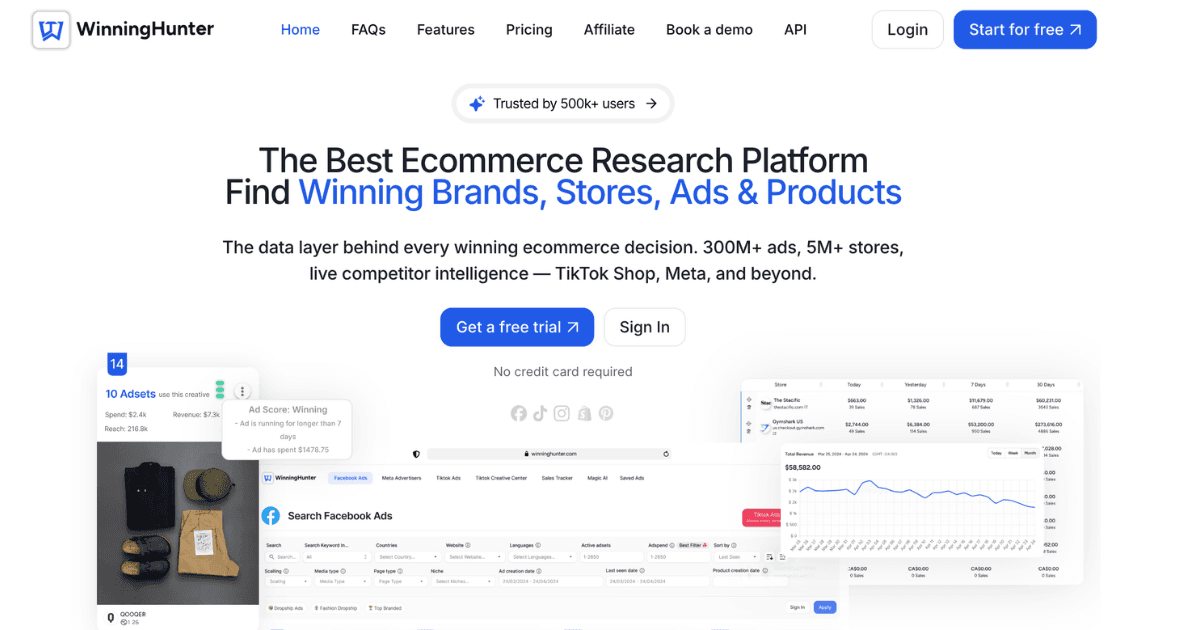
WinningHunter brings TikTok ad intelligence, Facebook ad spying, and Shopify sales tracking into one connected workflow for ecommerce sellers who need faster product validation without overloaded dashboards.
A large part of e-commerce research today comes down to speed. The faster you can move from discovering an ad to validating whether the product is actually generating sales, the easier it becomes to spot opportunities before markets become overcrowded.
That is where WinningHunter separates itself from Trendtrack. While Trendtrack leans heavily into broad ecommerce research workflows, WinningHunter keeps the research process tighter and more action-driven. You can study active ads, validate Shopify stores, and monitor competitor activity without constantly jumping between disconnected research layers.
Here is what you get:
TikTok and Facebook ad intelligence together: Study active campaigns, creator style ads, engagement movement, and scaling products across both platforms.
Shopify validation workflows: Analyze store activity and product momentum before committing to product testing.
Unlimited searches: Run deep product and ad research sessions without credit limits interrupting your workflow.
AI competitor discovery: Find related stores, products, and emerging ecommerce brands much faster.
Faster workflow navigation: Move through product research, ad analysis, and store validation without crowded menus slowing you down.
Built for broader ecommerce research: Track products, ads, creatives, and stores across TikTok, Facebook, and Shopify from one system.
One of the biggest advantages is workflow simplicity. Instead of piecing together product signals manually from multiple tools, you can discover ads, validate products, analyze stores, and monitor scaling activity from a single dashboard.
Pricing: Starts at $49 per month.
Best for: Dropshippers and ecommerce operators who want broad ecommerce intelligence without workflow overload.
Start a free trial and access TikTok, Facebook, and Shopify intelligence in one workflow with WinningHunter.
2. Minea: Best for Creative Discovery
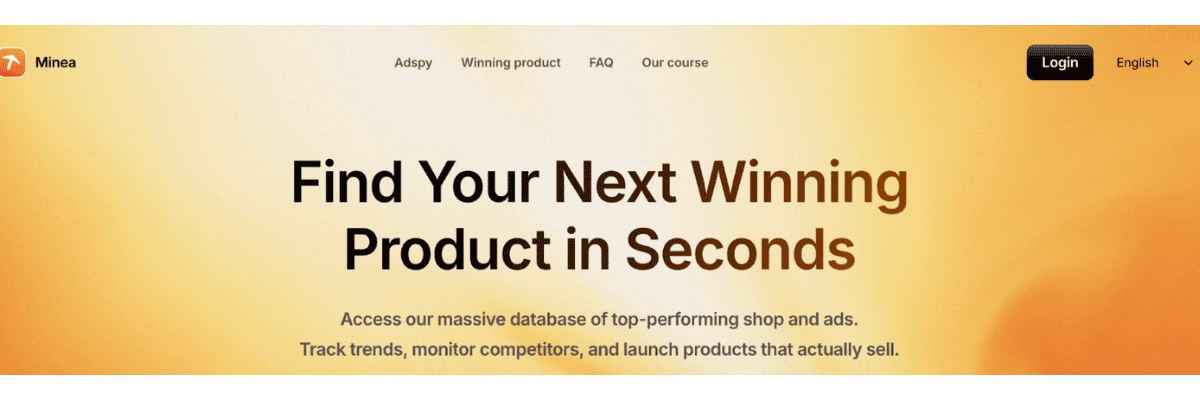
Minea works well for sellers who research products through creatives first. The platform covers TikTok, Facebook, and Pinterest ad discovery, making it useful for spotting viral formats, creator trends, and fast-moving ecommerce campaigns.
Pinterest support is one of its strongest advantages since very few tools in this category track Pinterest ads properly. The filtering system also feels polished during research sessions, especially when sorting by engagement, niche, or platform activity.
Some of its features include:
TikTok ad discovery for tracking viral creatives and trending products
Facebook ad research with detailed e-commerce filtering
Pinterest ad coverage for visual product trend research
Creative-focused workflows built around hooks and ad formats
Multi-platform ad monitoring from one dashboard
The biggest downside is the credit-based system, which can feel restrictive during larger research sessions. Shopify validation also feels lighter compared to platforms focused more heavily on store tracking.
Pricing: Starts at $49 per month and scales up to $399 per month.
Best for: Sellers focused primarily on creative discovery and ad research.
3. Dropship.io: Best for Product Validation
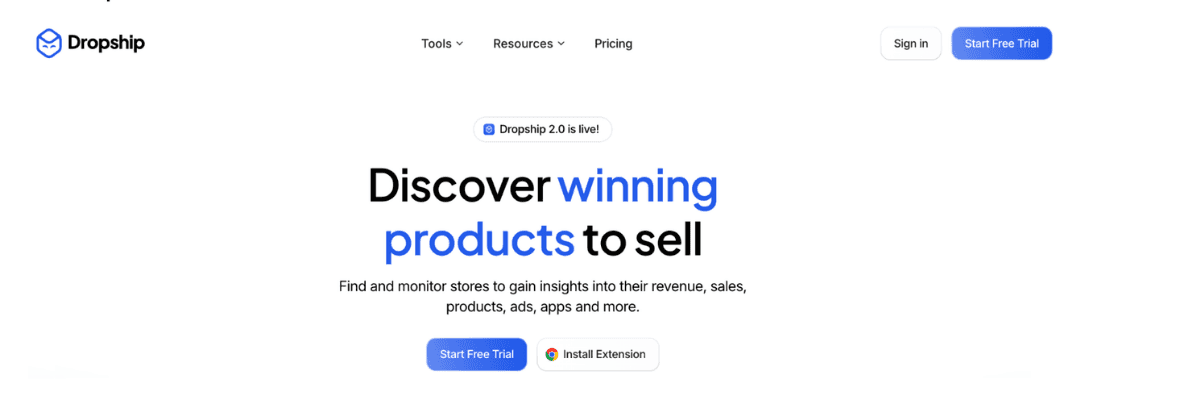
Dropship.io focuses heavily on Shopify store tracking and product validation. The platform is designed for sellers who want to see which products are already generating traction before spending money on testing campaigns themselves.
The interface feels beginner-friendly compared to some larger e-commerce research platforms, which makes product research easier to manage for newer sellers. Store analysis is also straightforward, especially when reviewing product movement and estimated revenue activity across Shopify stores.
Some of its features include:
Shopify focused store tracking for monitoring competitor activity
Revenue estimation tools for spotting products gaining traction
Product validation workflows built around store performance data
Simple dashboard structure that feels easier to navigate during research sessions
Product discovery tools connected with Shopify analysis
The platform feels weaker on the advertising side. TikTok workflows are not as advanced, and creative research remains fairly limited compared to platforms built around ad intelligence.
Pricing: Starts at $39 per month.
Best for: Sellers focused mainly on Shopify product validation and store research.
4. PPSPY: Best Shopify Store Intelligence Tool
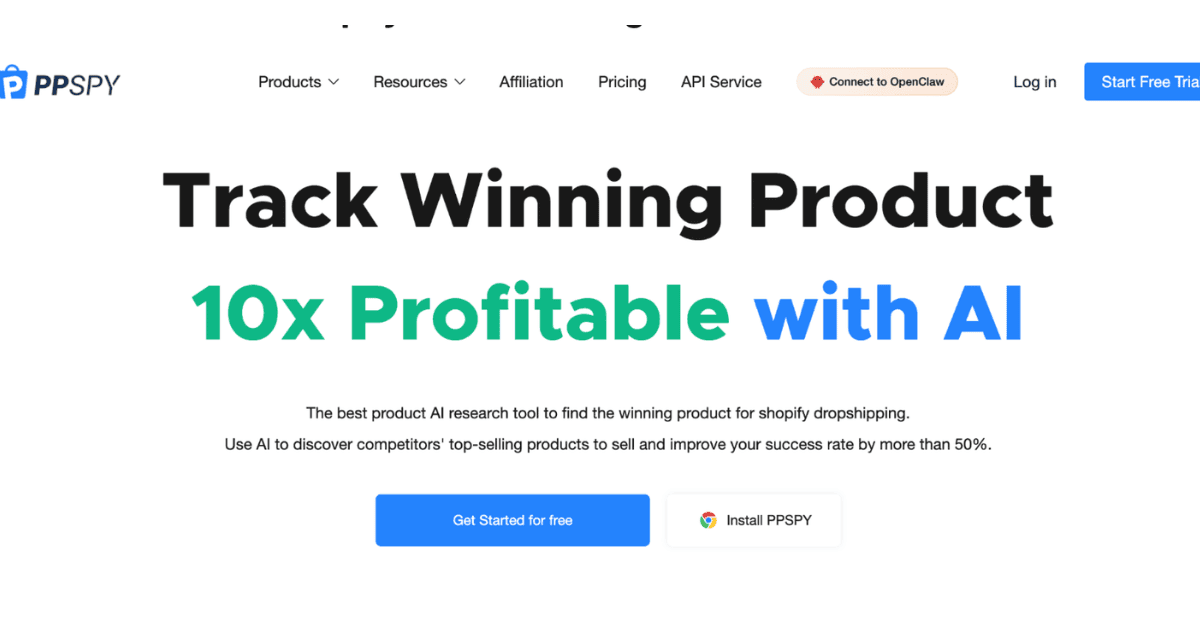
PPSPY is built for sellers who spend most of their research time analyzing Shopify stores. The platform focuses heavily on store intelligence, helping users monitor product activity, estimated sales movement, and niche-level trends across e-commerce brands.
One of its stronger areas is historical store tracking. You can review store changes, monitor product additions, and study how competitors evolve over time instead of relying only on current snapshots.
Some of its features include:
AI-powered Shopify sales estimation for competitor research
Store history tracking for monitoring long-term changes and product movement
Product tracking workflows connected with Shopify store activity
Niche monitoring tools for spotting growing e-commerce categories
Store intelligence research built around competitor analysis
The platform feels less effective for sellers focused heavily on TikTok ad research and creative discovery. The interface can also feel crowded during deeper research sessions.
Pricing: Starts at $39 per month and scales to $299 per month.
Best for: Shopify-focused sellers researching stores, products, and competitor activity.
5. Sell The Trend: Best Beginner Workflow Platform
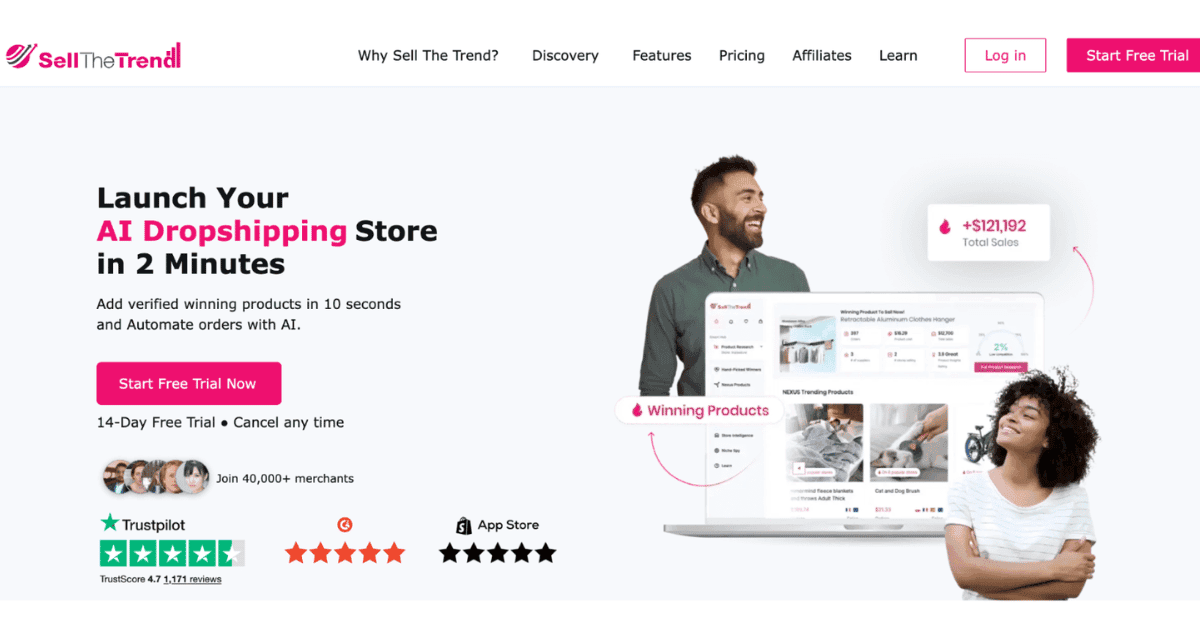
Sell The Trend is designed for newer dropshippers who want product research, supplier sourcing, and store workflows connected inside one platform. The interface feels beginner friendly, especially for sellers launching their first Shopify stores.
The platform focuses heavily on simplifying the early stages of dropshipping. Product discovery, supplier integrations, and fulfillment tools are all placed into one workflow, which reduces the amount of setup work beginners usually deal with.
Some of its features include:
Product discovery tools for finding trending e-commerce items
Supplier integrations connected with product sourcing workflows
Beginner-friendly onboarding for faster store setup
Fulfillment workflows designed for day-to-day store management
Shopify focused on e-commerce research tools
The biggest drawback is product saturation. Many products spread quickly across public databases, making it harder to find less competitive opportunities. Ad intelligence and creative research also feel more limited compared to platforms focused heavily on TikTok and Facebook ads.
Pricing: Starts at $29.97 per month and scales to $299.97 per month.
Best for: Beginners entering dropshipping and building their first ecommerce workflows.
6. AdSpy: Best Meta Ad Research Tool
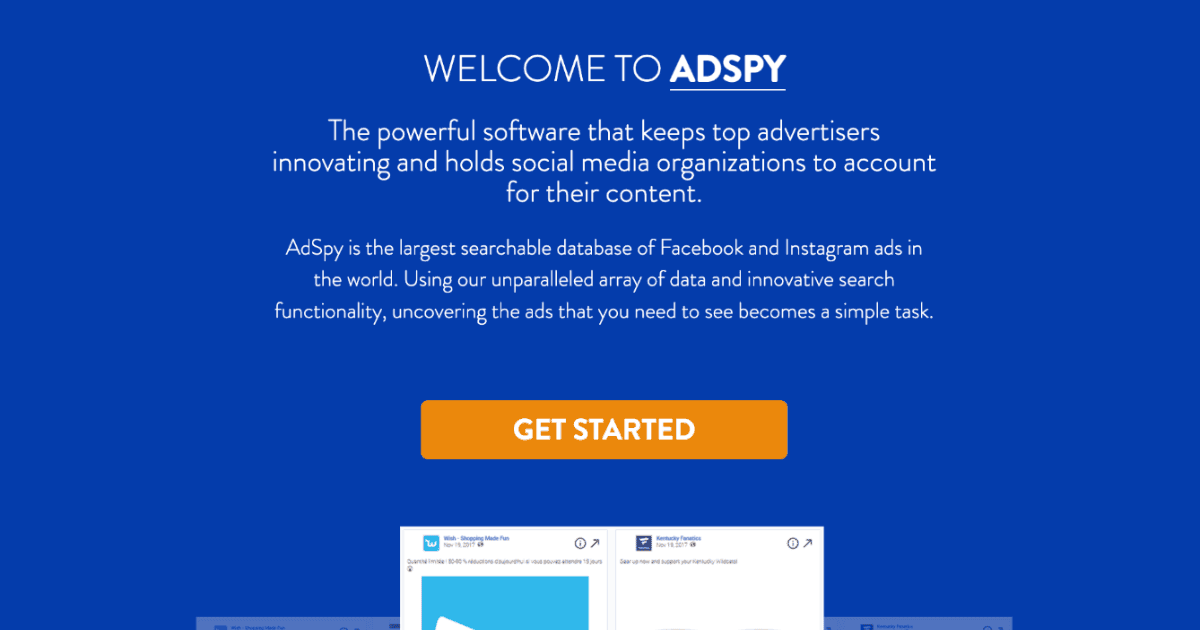
AdSpy built its reputation around Facebook advertising research long before TikTok became central to e-commerce product discovery. The platform still remains one of the largest Meta-focused ad databases available, which makes it useful for advertisers studying long-running Facebook campaigns and proven ecommerce creatives.
The filtering system is one of its strongest areas. You can sort ads using engagement activity, keywords, affiliate networks, call to action types, and advertiser details with a high level of precision.
Some of its features include:
Large Facebook ad database built for e-commerce and affiliate research
Advanced filtering for creatives, engagement signals, and campaign targeting
Long-standing reputation among Meta-focused advertisers
Strong search tools for studying competitor ads and scaling campaigns
Detailed ad research workflows for Facebook focused marketing teams
The platform feels far less developed for modern TikTok research workflows. Shopify validation and store intelligence are also missing, which limits broader ecommerce research capabilities.
Pricing: $149 per month.
Best for: Advertisers focused primarily on Meta and Facebook ad research.
7. Foreplay: Best Creative Workflow Tool

Foreplay is built for creative teams that collect, organize, and study ads every day. The platform works more like a collaborative swipe file system than a traditional ecommerce research tool, which makes it popular among agencies, media buyers, and creative strategists.
The interface feels clean and visually focused. You can save ads, group creatives into boards, organize hooks, and collaborate with team members without dealing with crowded research dashboards.
Some of its features include:
Creative saving workflows for organizing ad inspiration
Swipe file systems built around hooks, formats, and campaign ideas
Team collaboration tools for sharing creatives and feedback
Ad organization boards for managing research across campaigns
Clean interface focused heavily on creative workflows
The platform feels weaker for product validation and broader ecommerce intelligence. Shopify tracking, store analysis, and deeper product research are not major parts of the workflow.
Pricing: Starts at $59 per month and scales to $459 per month with a free trial available.
Best for: Creative teams, agencies, and marketers focused heavily on ad inspiration workflows.
8. PiPiADS: Best TikTok Ad Intelligence Platform

PiPiADS is built for sellers and advertisers who rely heavily on TikTok for product discovery. The platform focuses deeply on tracking TikTok creative, helping users monitor viral ads, creator campaigns, engagement spikes, and fast-moving ecommerce products.
Its TikTok first structure makes research feel focused and direct. You can study ad formats, creator styles, hooks, landing pages, and advertiser activity without sorting through unrelated datasets.
Some of its features include:
Deep TikTok ad tracking for viral ecommerce campaigns
Creator analysis tools for studying influencer-driven ads
TikTok focused on product discovery and ad research
Creative filtering built around engagement and campaign activity
Strong workflows for monitoring fast-moving TikTok trends
The biggest drawback is pricing at scale. Larger research sessions and higher usage tiers become expensive quickly. Broader ecommerce intelligence also feels more limited outside TikTok-centered workflows.
Pricing: Starts at $69 per month and scales to $263 per month.
Best for: Advertisers and dropshippers focused heavily on TikTok ad research.
Trendtrack Alternatives Compared: Features, Pricing, and Platforms
Tool | Best For | TikTok Coverage | Meta Coverage | Shopify Tracking | Starting Price |
WinningHunter | All around ecommerce intelligence | Strong | Strong | Yes | $49/month |
Minea | Creative discovery | Strong | Strong | Limited | $49/month |
Dropship.io | Product validation | Basic | Limited | Strong | $39/month |
PPSPY | Shopify store intelligence | Weak | Limited | Strong | $19.9/month |
Sell The Trend | Beginner dropshipping workflows | Basic | Basic | Moderate | $29.97/month |
AdSpy | Meta ad research | Weak | Strong | No | $149/month |
Foreplay | Creative workflow organization | Limited | Moderate | No | $59/month |
PiPiADS | TikTok ad intelligence | Strong | Limited | No | $69/month |
Tools like Pipiads focus heavily on TikTok ads, while PPSPY and Dropship.io lean more toward Shopify tracking and store analysis. WinningHunter stands out as the best Trendtrack alternative because it combines TikTok ad research, Facebook ad spying, and Shopify validation into a single workflow built for faster ecommerce product research.
Build a Research Workflow That Actually Helps You Move Faster
Modern e-commerce research no longer revolves around finding random winning products. Sellers now track ad momentum, creative patterns, Shopify activity, and creator trends at the same time. That is exactly why platforms like Trendtrack gained traction.
The problem is that larger research systems often become slower to work with as more features pile up. Too much data can delay decisions instead of improving them.
WinningHunter keeps the workflow focused on what matters most: discovering products early, validating whether stores are actively scaling, and studying the ads driving that momentum. TikTok ad intelligence, Facebook ad spying, and Shopify tracking all work together inside one streamlined system without credit limits slowing research down.
If you want a Trendtrack alternative built for modern TikTok and Shopify ecommerce workflows, WinningHunter gives you the strongest balance between ad research, creative discovery, and product validation.
Start your free trial and explore products, ads, and Shopify stores from one place.
FAQs
What is the best Trendtrack alternative?
WinningHunter is one of the strongest Trendtrack alternatives for sellers who want TikTok ad research, Facebook ad spying, and Shopify validation connected inside one workflow. It works especially well for e-commerce operators who need faster product validation without dealing with crowded research dashboards or credit-based search limits.
Is Trendtrack worth it in 2026?
Trendtrack still offers useful e-commerce research features, particularly for sellers who prefer broad research environments covering products, ads, creatives, and store analysis together. The platform makes sense for advanced users managing large research workflows, though some sellers eventually move toward more focused systems built around speed and simpler execution.
Which Shopify tracker is most accurate?
No Shopify tracking platform can provide perfectly accurate revenue estimates because most tools rely on modeled store data and external tracking signals. Some platforms perform better than others depending on store visibility and tracking methods, but sellers generally use Shopify estimates as directional research data instead of exact financial reporting.
Which Trendtrack alternative is best for beginners?
Sell The Trend remains one of the more beginner friendly platforms in this category. The interface is easier to navigate for new dropshippers, and the platform combines product discovery, supplier sourcing, and fulfillment workflows in one place. It works well for sellers building their first Shopify focused ecommerce workflow.
Why do advanced ecommerce sellers use multiple research tools?
Most experienced sellers separate different parts of the research process instead of relying on one platform for everything. They often combine ad intelligence tools, Shopify validation systems, creative research workflows, supplier management platforms, and TikTok research tools together because each platform usually performs better in specific areas.


We already know what works before you even have the chance to blink!
© 2024 WinningHunter.com