high-demand-low-competition-products
High Demand Products With Low Competition: How to Find Them in 2026
By
Kinnari Ashar
You can tell when a product is already too late. The ads feel familiar, the comments repeat the same reactions, and every store starts to look identical.
That is what “high demand” looks like once competition catches up.
In 2026, timing matters more than discovery. Trends move fast, attention shifts faster, and products that once lasted months now fade within weeks. E-commerce is heading toward 6.88 trillion dollars in global sales, which means demand is not the issue. Getting there early is.
A product can look like a strong opportunity in one place and already be crowded in another. That gap is where most decisions go wrong, leading to late entries and shrinking margins.
There is a more precise way to read what is happening before saturation hits.
Once you see it, product research stops feeling like a gamble.
High Demand Products With Low Competition in 2026 (What It Actually Means Today)
If a product looks obvious, you are already late.
That is the quickest way to understand how this works in 2026.
High-demand, low-competition products are products that already show consistent buying interest across multiple platforms, but lack a clear, dominant offer, positioning, or brand that makes the purchase decision easy.
They are not undiscovered products. They are early-stage opportunities where:
Demand is visible (searches, sales, content, ads)
But the market is still unstructured, fragmented, or poorly positioned
The Product Discovery System (Step-by-Step Process)
Step 1: Define the Market Angle (Not the Product)
If you begin with a generic product, you end up competing with everyone selling the same thing. There is no direction, no edge, and no reason for a buyer to choose you.
So, here’s something you can follow to stand out from the generic. Do not start with a product, but rather with the angle.
That angle comes from three parts working together:
Use case: What specific problem does this solve in a real situation? Not a broad benefit, but a clear moment where the product becomes useful.
Audience: Who needs this solved right now? The more defined the group, the easier it becomes to shape your offer and messaging.
Price band: Where does this sit in terms of spending comfort? This directly affects who you compete with and how much room you have for margins.
Once these align, the product no longer feels generic.
A water bottle is easy to ignore, but a gym protein-tracking bottle designed for meal-prep users speaks to a very specific buyer with a clear intent.
That difference is where strong product ideas begin.
Step 2: Collect Multi-Platform Demand Signals
One platform will lie to you. Strong product decisions come from stacking signals that confirm each other.
Signal stacking means the same product shows up across platforms for different reasons. One platform shows interest, another shows sales, and another shows how people engage with it. When these align, you are no longer guessing.
Here is how to read each source:
Platform | What it reveals | What to look for |
Google Trends | Search interest over time | Gradual rise, recurring spikes, consistent queries |
Amazon | Actual buying behavior | Stable ranking movement, repeat listings, ongoing reviews |
Etsy | Niche and personalized demand | Specific use cases, custom variations, repeat product styles |
TikTok Creative Center | Content-driven traction | Repeated hooks, multiple creators testing similar angles |
YouTube | Considered buying behavior | Product reviews, problem solution content, and longer engagement |
Once you review them together, patterns become easier to spot.
Interest grows across more than one platform
Similar product ideas keep appearing in different formats
Searches shift from curiosity to buying intent
That combination is what separates random spikes from demand you can actually build on.
What Real Demand Actually Looks Like?
Ignore spikes. Look for repeat behaviour.
Search interest holds for days or weeks, not just a one-day jump
The same product shows up in ads from different stores within a short window
Those ads are still running when you check again later
Now check the response.
Comments include buying questions like price, shipping, or availability
Shares are visible, not just likes or views
On marketplaces:
Listings move up over time, not overnight
Similar products keep getting added, which means sellers are doubling down
If a product disappears when you look again, it was noise. If it keeps showing up across places, it is being tested and paid for.
That is the difference.
Step 3: Build a Shortlist of Product Angles
Jumping from research to picking a product feels productive, but it usually locks you in too early.
This stage is about collecting directions, not making decisions. You are mapping out how a product could be shaped, positioned, and sold before committing to it.
Set a target of 20 to 50 angles. Not random ideas, but variations that already show signs of demand.
Each one should earn its place on the list:
Clear problem: You should be able to picture when and why someone would reach for it. If the situation feels unclear, the angle will struggle later.
Visible demand signals: The idea should already show up across platforms. Not as a one-off, but as a pattern that keeps resurfacing.
Room to shape the offer: If every listing looks the same, there is nothing to work with. You need space to present it differently, target a defined group, or package it in a more useful way.
Anything that does not meet these gets cut.
What remains is a shortlist with intent behind it. Each angle gives you something to test, not just something to hope works.
Step 4: Analyze Competition Across Channels
Competition does not look the same everywhere. A product that feels crowded on one platform can still be wide open on another. You are not looking for a single score. You are reading how the market behaves in each place.
Start breaking it down platform by platform:
Amazon
What to check | What does it tell you |
Review counts | Higher reviews raise the entry barrier <300 reviews → low competition 300–1000 → medium 1000+ → high |
Brand presence | Dominant brands signal tighter control |
Sponsored ads | Heavy ad placement increases pressure |
If listings look similar and no brand clearly leads, there is still space to work with.
Etsy
What to check | What does it tell you |
Listing quality | Effort in photos, tags, and personalization |
Seller authority | Reviews and badges indicate trust |
Strong demand with average presentation usually points to a positioning gap.
Shopify and DTC
What to check | What does it tell you |
Ad creatives | Volume and repetition reveal saturation |
Offers | Discounts, bundles, positioning depth |
If ads start blending together, the angle is already crowded.
WinningHunter helps you track ad patterns over time. Repeated creatives, long-running ads, and sudden drops in variation often reveal how crowded or fatigued a product has become.
Google Search
What to check | What does it tell you |
Ranking pages | Quality of content and depth |
Search intent | Whether results match what users want |
Weak pages ranking for strong buying queries signal room to enter with better positioning.
Now make a quick judgment.
If reviews are too high, entry slows down
If ads blend, differentiation becomes harder
If pricing keeps dropping, margins will get squeezed
If everything looks interchangeable, expect a price fight
If restrictions exist, fewer sellers usually enter
You are not trying to measure competition perfectly.
You are deciding on one thing. Can you enter this space and still stand out without competing on price alone?
Step 5: Validate Unit Economics Before Anything Else
Numbers decide faster than research ever will.
Before going any further, you need to know one thing. Can this product afford to acquire customers?
Start with the basic structure:
Product cost and shipping: What you pay to source and deliver the product
Platform fees: Payment processing, marketplace cuts, or app costs
Expected CPA: What it will realistically cost to get a customer
Now comes the part that actually matters.
Your contribution margin decides how much you can spend to acquire a customer without losing money.
Here is a simple breakdown:
Selling price - $30
Total cost - $18
Remaining margin - $12
That $12 is not profit yet. It is your ceiling for ad spend. If your acquisition cost crosses that number, the model breaks.
This is where a lot of “winning products” fall apart. Demand may be strong, engagement may look promising, but the economics do not hold.
Product Selection Criteria That Filter Out Bad Ideas
Some products pass research and still fail once you start selling them.
This step removes those early:
Margins after ads: If there is no room left after acquisition, nothing else matters
Size and weight: Bulky products increase shipping costs and make returns harder to handle
Seasonality: Short windows limit how long you can sell before demand drops
Return risk: Products with sizing issues or high expectations tend to come back
Compliance: Restricted categories add friction. Skip them unless you know the requirements
If a product fails here, drop it. It is easier to replace an idea than fix a product that creates problems later.
Step 6: Run Fast Validation Tests
Before spending real money, put the idea in front of people and watch what happens. Not what you expect to happen.
Each test answers a different question.
Pre-sell landing pages: Build a rough page around the angle and send traffic to it. Do people click through and leave, or do they stay, scroll, and sign up? Interest shows up in behaviour, not opinions.
PPC micro tests: Run small campaigns with no intention to scale. The numbers will tell you how expensive attention is. Cheap clicks with no action signal a weak offer. Higher costs with strong engagement can still work.
Creator seeding: Place the product in the hands of smaller creators who already speak to the audience you want. The way they present it, and how their audience responds, reveals more than polished ads.
Supplier testing: Order the product yourself. Check how it feels, how it arrives, and how long it takes. Delays and quality issues do not show up in product images.
No dashboards, no overthinking.
Put it in the market. Watch the response. That reaction is your answer.
How to Use WinningHunter to Find Low Competition Products Faster?
By this stage, you have already seen how scattered the process can get. Multiple tabs, half answers, and constant switching between platforms.
WinningHunter pulls that process into one place so you can read patterns without jumping between platforms.
Start by filtering ads with intent.
Spend shows which products are getting budget behind them
Duration highlights ads that keep running, not short bursts
Duplicates reveal ideas being reused across stores
These filters quickly narrow down what deserves attention.
From there, you can separate products that are still gaining traction from those that feel overused. Repeated creatives with no variation often point to fatigue.
Magic AI helps you map competition faster. Search by keyword or image to uncover similar products and see how crowded the space feels.
The sales tracker adds another layer. It gives you a clearer view of store performance, so you can judge whether demand is holding up.
Everything stays in one flow, which makes decisions faster and far more grounded.
10 High-Demand, Low-Competition Product Angles for 2026
1. Collectible Display Accessories
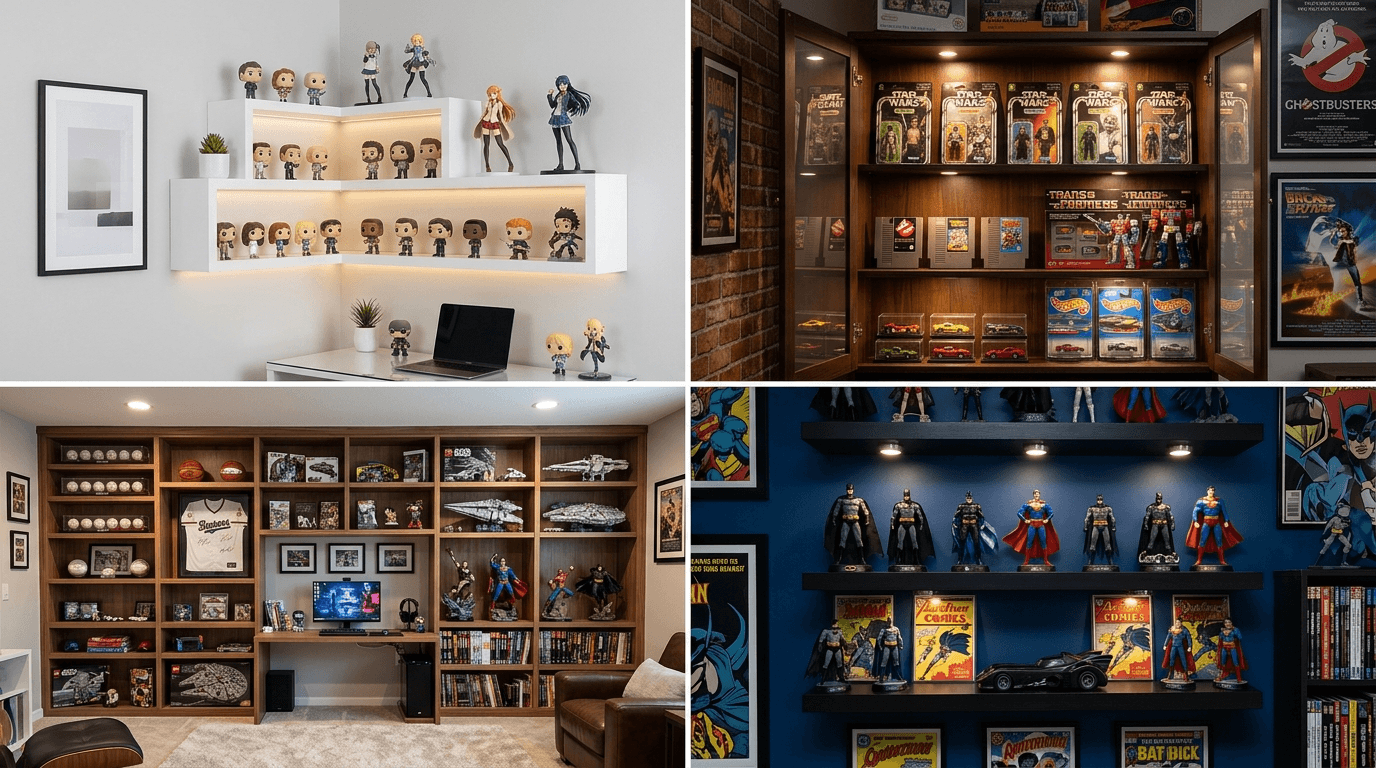
People buy more collectibles than they have space for. The next purchase is not another figure, it is how to arrange what they already own.
Look at setups around Funko Pop collectibles or anime figures. You will see risers, tiered shelves, and lighting that turns a flat row into a layered display.
Example: stackable acrylic risers for shelf depth, LED base plates that highlight individual figures, or wall grid panels that hold smaller items without crowding.
2. Crochet and DIY Festival Kits
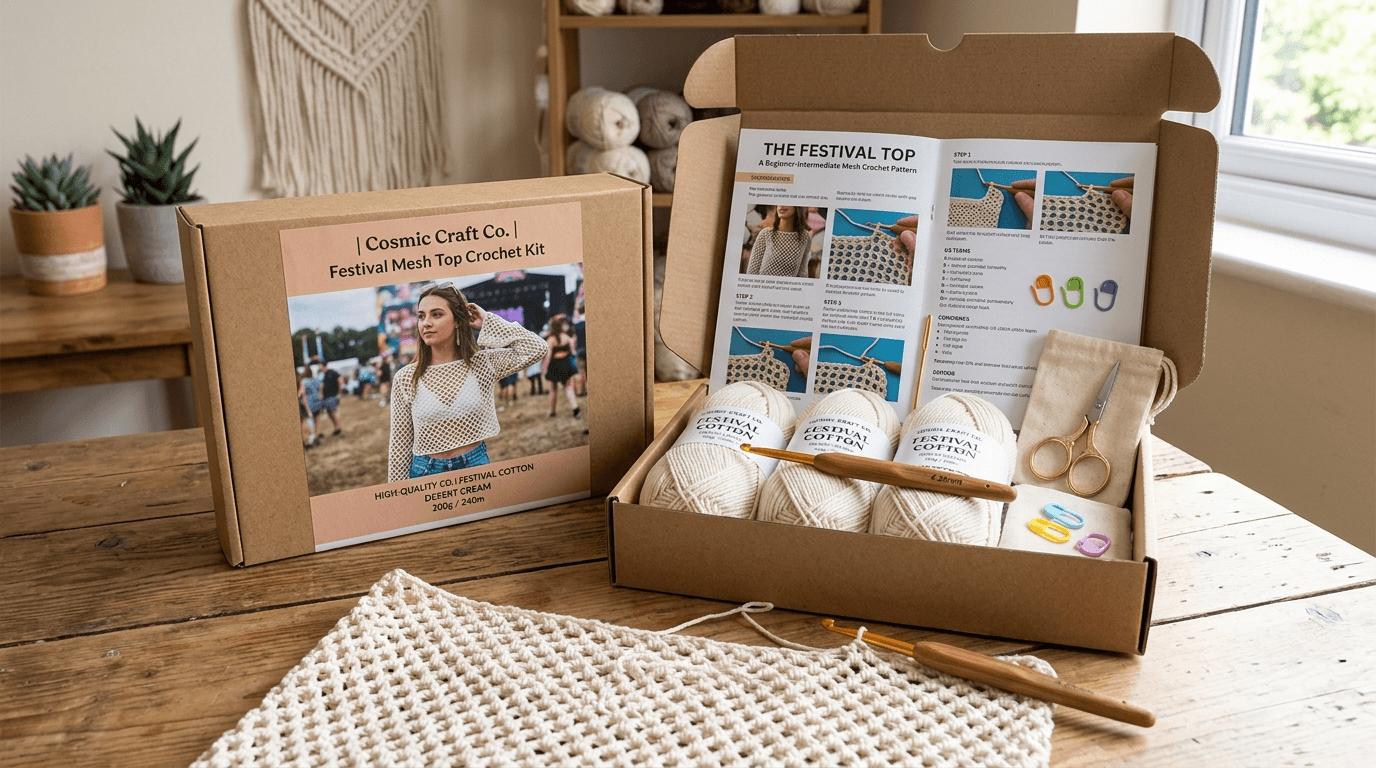
Crochet pieces keep showing up in festival outfits, but most listings sell the finished product, which puts everything into the same crowded space.
The demand doesn’t stop there. A lot of people want the same look, but don’t want to figure out yarn, sizing, or patterns on their own. That’s what you can focus on.
Example: a crochet kit built around one result, like a mesh festival top or arm sleeves, with pre-selected yarn, the correct hook size, and a pattern designed for that exact piece.
3. Junk Journal Starter Kits

Journaling keeps pulling people in who are trying to spend less time on screens. The interest is steady, but the entry point is messy.
Open a typical listing, and it’s a pile of unrelated supplies. Papers, stickers, textures. You have to assemble everything before you even begin.
That’s where people drop off.
Now imagine opening a box where everything already belongs together. A worn paper set that looks like old letters, stamps that match the tone, and inserts that feel like they came from the same place.
Example: a “vintage travel” kit that feels like it came out of a suitcase, or a dark-themed set built around gothic textures and aged paper.
4. Weatherproof Wedding Sign Systems
Outdoor weddings always have one problem no one plans for until it happens.
The sign starts leaning. Someone adjusts it. Then again. Then it gets moved entirely because the ground isn’t stable, or the wind picks up.
Search listings, and most of them stop at design. Acrylic sheets, printed boards, decorative stands. They look good, but they assume perfect conditions.
The demand is already there. Every event needs signage. What’s missing is something that holds up without constant fixing.
5. High Protein Meal Prep Tools
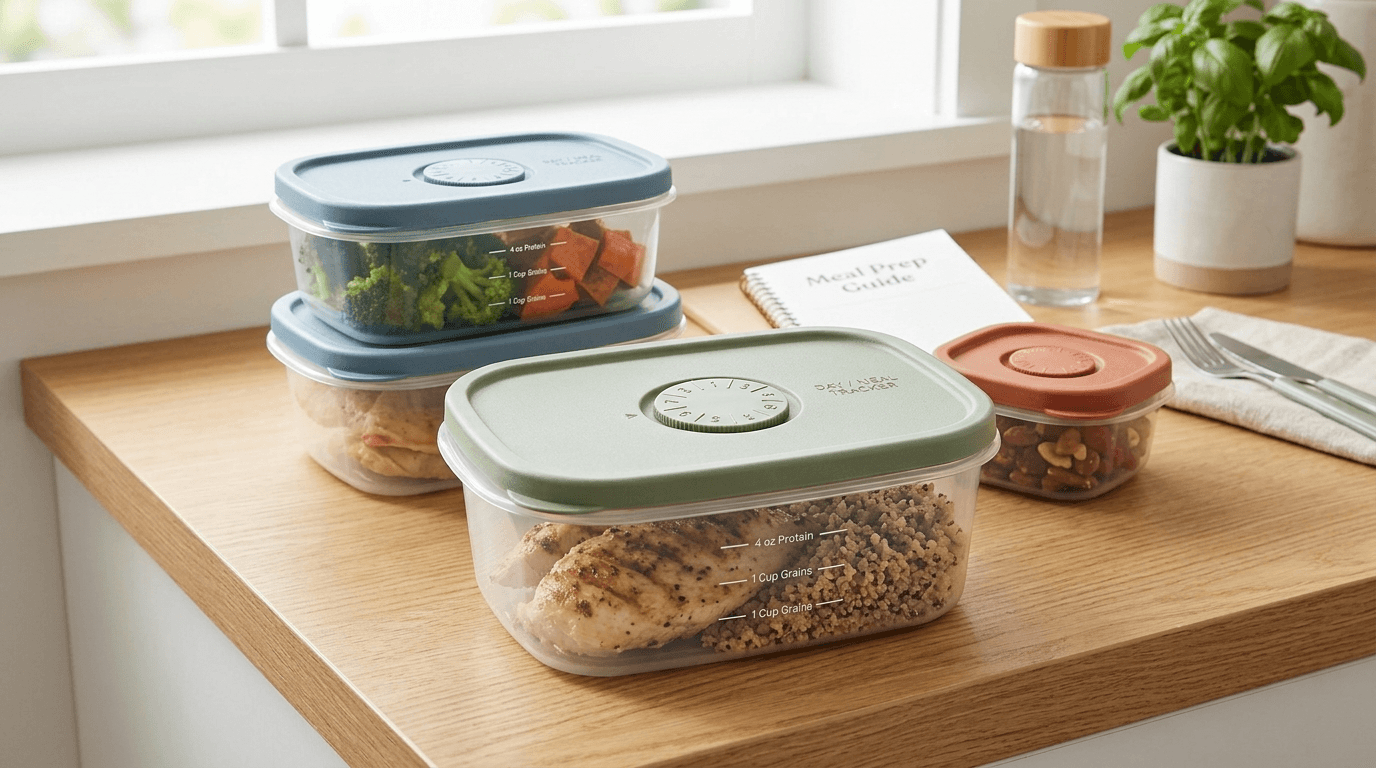
Protein targets drive how meals get planned now. Not just what to eat, but how much.
Most containers ignore that. They store food, but don’t help you hit a number. So people improvise. Weigh, note, repeat. There’s room for tools that match how meals are actually used.
Think containers aligned to common protein portions, lids with built-in markers, or sets that come with a simple way to track intake without switching screens.
6. Travel Organizer Gift Systems
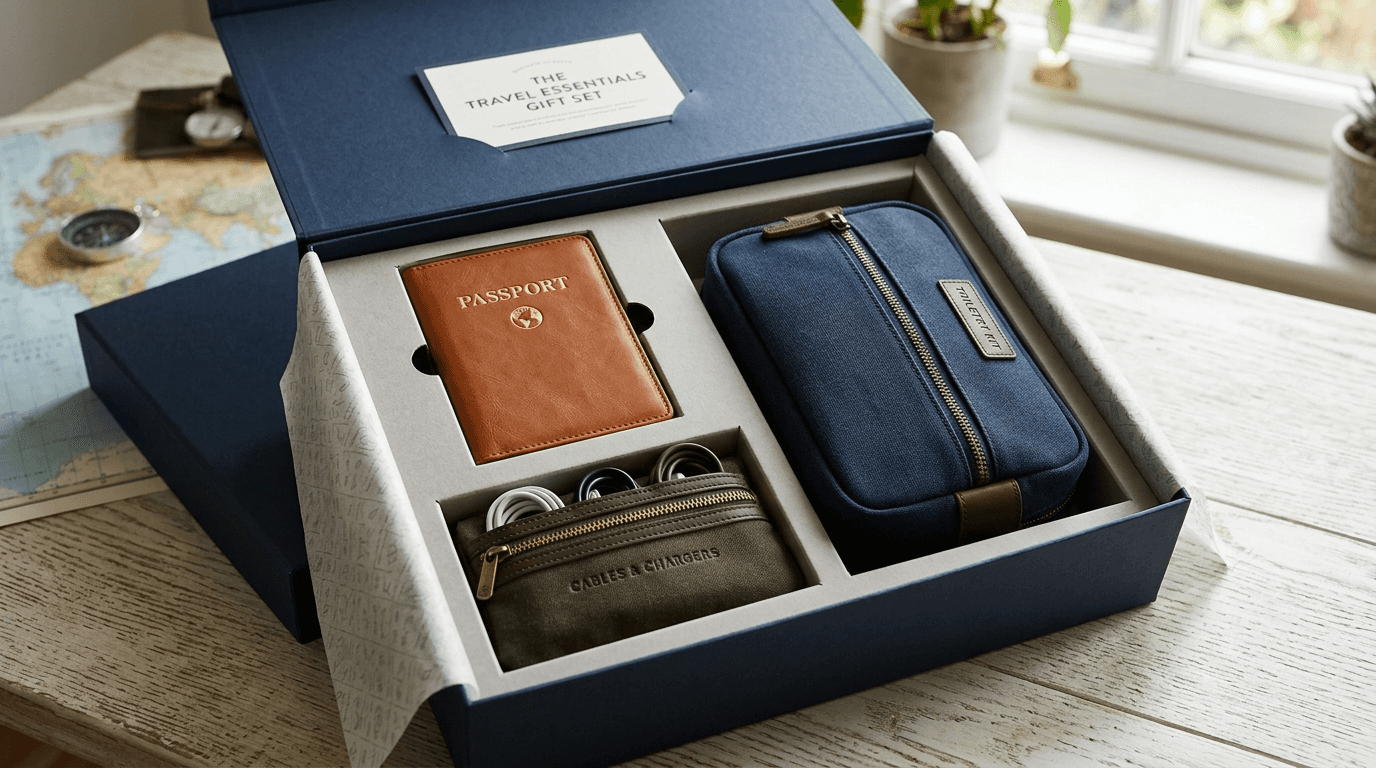
Search for travel organizers, and most of them look identical. Same pouches, same layouts, nothing that feels worth choosing over another.
Things change when it’s bought as a gift.
Now the focus is not just on storage. It’s how the set looks when opened. Matching pieces, clean packaging, and small details like name personalization make a difference.
A single pouch is compared on price. A complete set feels ready to give.
Passport holder, cable pouch, and a toiletry case packed together in a well-presented box make the decision easier.
7. Niche Pet Clothing Accessories

Pet clothing looks saturated until you check what actually gets returned.
Fit issues show up everywhere in reviews. Back length off, chest too tight, awkward movement. Most products are built around generic sizing, which leads to constant mismatches.
That keeps demand active. People keep searching because they haven’t found something that fits properly.
Competition looks high on the surface, but it thins out once you narrow it by breed. Generic listings compete with each other. Breed-specific products don’t.
Example: jackets designed for dachshunds with extended back coverage, or slim cut raincoats for greyhounds that don’t bunch around the legs.
8. Analog Desk Accessories

People still plan on paper. They track habits, sketch ideas, or block time without opening another app.
The demand is steady, but most products in this space are forgettable. Basic plastic timers, generic planners, nothing that feels like it belongs on a desk long term.
That leaves room for objects people don’t replace after a week.
Example: a solid wood timer with preset intervals that sits on the desk like a permanent tool, or a daily planner with thick paper and a reusable habit tracker designed to stay visible throughout the day.
9. Work Gear Accessory Bundles
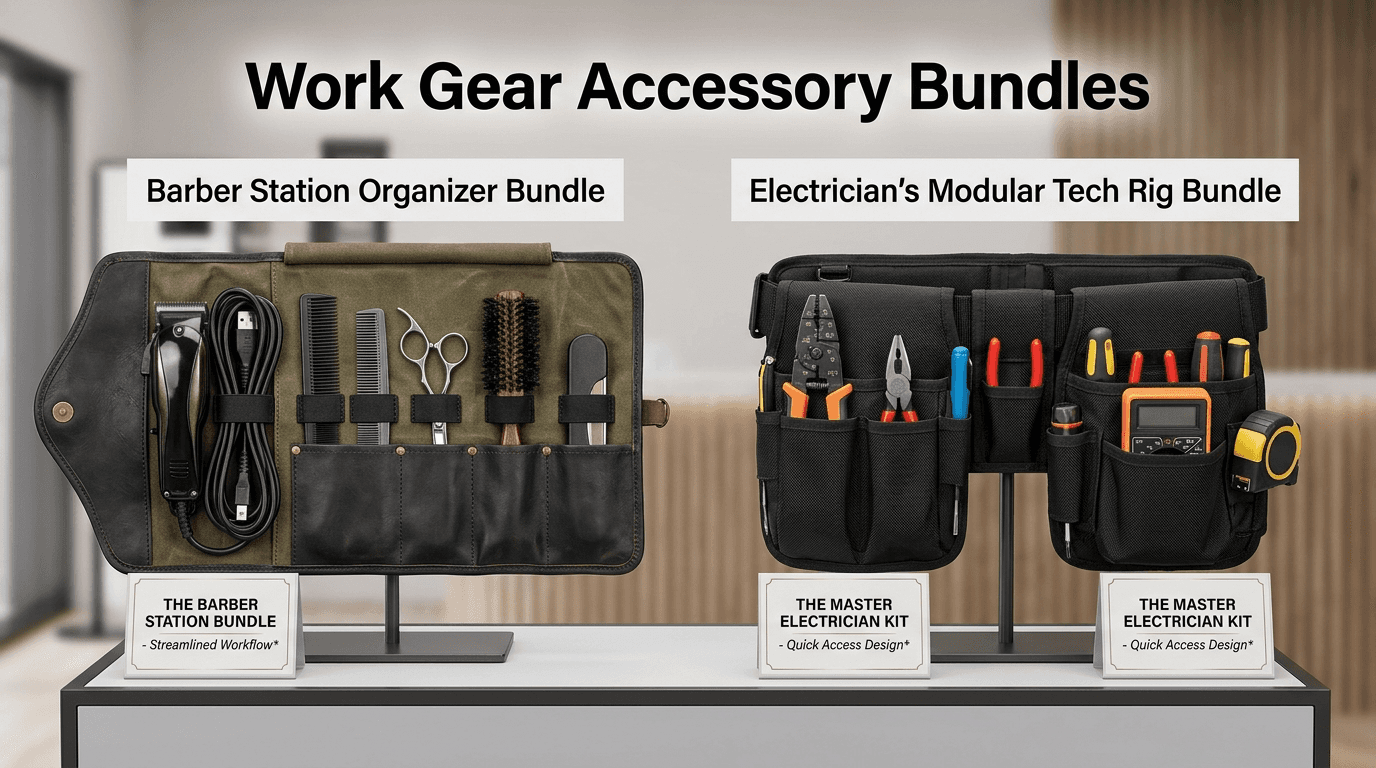
Look at how tools are sold versus how they’re used.
Online, everything is separated. One pouch, one holder, one accessory at a time. In real work, nothing is used like that.
A barber sets up a station. An electrician builds a carry system. It’s always a combination that gets repeated daily.
Buying those pieces one by one is where it breaks.
That’s why pre-built setups stand out. Not random bundles, but layouts that match how someone actually works.
Example: a barber setup where clippers, brushes, and cords all have fixed positions, or an electrician's carry kit arranged for quick access without digging through tools.
10. Creator Led Demo Products

Some products don’t need a description. You understand them the moment you see them.
A stain disappears. Dust lifts out of a keyboard. A surface changes in seconds.
That kind of clarity drives clicks without effort. Most sellers list the product. Very few think about how it looks on camera. That’s where things get crowded. Same item, no difference in how it’s shown.
Products built around a visible result behave differently. They’re made to be filmed, not just used.
Example: a scratch remover that shows a clear before and after in one motion, or a cleaning tool that pulls dirt out instantly with no explanation needed.
If it can be understood in a few seconds of video, it has a much easier path to attention.
Turn Research Into a Faster, Smarter Loop
Finding products is not the hard part anymore. Reading them correctly is.
Demand shows up everywhere. The difference comes from how quickly you can confirm it, understand the competition, and decide whether to move forward or drop it.
That process breaks when it is scattered across tabs, guesses, and delayed decisions.
WinningHunter brings that into one place. You can spot trends early, see which ads are actually running long enough to matter, and track how competitors are pushing similar products.
That shortens the loop.
Instead of spending hours piecing together signals, you move from idea to validation much faster. What stays gets tested. What doesn’t gets removed early.
Winning products don’t come from luck or timing alone. They come from reading signals properly and acting on them without delay.
If the process is clear, decisions become easier. And once decisions get faster, finding something that works stops feeling random.
FAQs
What are high-demand, low competition products?
Products that already show buying interest across platforms but lack strong positioning. You will see sales happening, but no clear brand or offer leading the space. That gap creates room to enter.
How do I find low competition products in 2026?
Look for alignment, not single signals. Search trends, marketplace activity, and ad presence should all point to the same product. Then check if listings feel interchangeable or poorly positioned.
What tools help with product research?
Tools like WinningHunter help track ads, identify duplicates, and monitor how long creatives run. This makes it easier to spot products gaining traction without switching between platforms.
Are trending products always profitable?
No. Visibility does not guarantee margins. Many trending products are already crowded, which pushes ad costs up and reduces profit potential.
How do I check product competition on Amazon or TikTok?
On Amazon, look at review counts, listing quality, and price patterns. On TikTok, check how many creators are pushing the same product and whether creatives look repetitive or are still evolving.


We already know what works before you even have the chance to blink!
© 2024 WinningHunter.com