tiktok-ads-for-dropshipping
TikTok Ads for Dropshipping: Complete Guide (2026)
By
Kinnari Ashar
Spend a few minutes on TikTok and you will notice a pattern. A random product appears in one video, then another creator shows it and soon the same item keeps popping up across your feed and people in the comments start asking where they can buy it.
This is how many e-commerce products gain traction today. TikTok has become one of the fastest ways for a product to get attention, especially when a short video clearly shows what it does. For dropshipping stores, that visibility can translate directly into traffic.
TikTok ads give you a way to push those product videos to a wider audience and send interested viewers straight to your store.
Still, running profitable campaigns on TikTok requires more than uploading a video and adding budget. This guide breaks down how TikTok ads work for dropshipping and how experienced sellers structure campaigns that actually convert.
3 Reasons TikTok Ads Work Well for Dropshipping
1. Massive Product Discovery Platform
On most advertising platforms, visibility usually follows audience size. Brands build followers first, then promote products to that audience.
TikTok operates on a different distribution model through its For You feed, which decides which videos appear in front of users. The platform studies how viewers react to the clip and decides whether it deserves wider distribution. If people watch until the end, replay the video, or start commenting, TikTok continues placing that content in front of similar viewers.
This is why completely new accounts sometimes generate surprising reach. A product video that keeps people watching can spread well beyond the original audience even when the account has very little history.
That behavior makes TikTok unusually effective for product discovery. A clear demonstration can introduce an unfamiliar item to thousands of viewers who were not looking for it.
Many dropshipping products gain their first traction through this process. A simple organic clip reveals the product in action. Once a specific video angle proves that viewers respond, advertisers turn the same idea into paid campaigns and scale it through TikTok ads.
2. Lower Advertising Costs Compared to Some Channels
Advertising costs on TikTok often start lower than on platforms such as Facebook Ads Manager. This allows many dropshippers to test products without committing large budgets in the early stages.
Typical benchmark ranges include:
CPC: $0.20 to $1.50
CPM: $5 to $20
Conversion rate: 0.5% to 5%
Actual performance depends on several factors. Product category influences how competitive auctions become. Creative engagement also affects results because videos that hold attention usually receive more efficient distribution. Targeting choices further shape campaign performance since audience selection determines who sees the ad.
3. Native Video Ads Blend With Organic Content
Scroll through TikTok and advertisements do not immediately stand out. A product video appears between two creator clips, and most viewers keep watching without realizing the post is sponsored.
This happens because TikTok places ads directly inside the For You feed, the same stream where users discover regular videos. The format is identical to standard posts, so the ad becomes part of the viewing flow rather than a separate display element.
That placement removes a common problem seen on many websites. Traditional banners sit around the content people came to see, which makes them easy to ignore.
On TikTok, the video itself carries the message. Ads that resemble normal platform content usually receive stronger engagement, especially when they focus on:
Direct product use
Simple problem and solution scenarios
Creator style storytelling
Real product use in everyday situations
When the ad feels like something users would normally watch in their feed, attention stays longer and interaction increases.
How TikTok Dropshipping Ad Campaigns Are Structured?
1. Campaign Level
Every campaign on TikTok begins with selecting an objective. The objective tells the ad system what outcome the advertiser wants the platform to optimize for.
Common campaign objectives include:
Conversions
Traffic
Video views
During the early stage of testing a new product, advertisers sometimes begin with traffic or video view campaigns to generate initial engagement data. This helps the platform understand how users respond to the creative.
Once tracking data begins to accumulate through the TikTok pixel, advertisers often move toward conversion-focused campaigns. At this point, the system can analyze user behavior such as clicks, add to cart activity, and completed purchases.
With enough event data, the platform improves delivery by showing the ad to users who demonstrate stronger purchase intent. This shift allows the campaign to prioritize actual sales rather than simple engagement metrics.
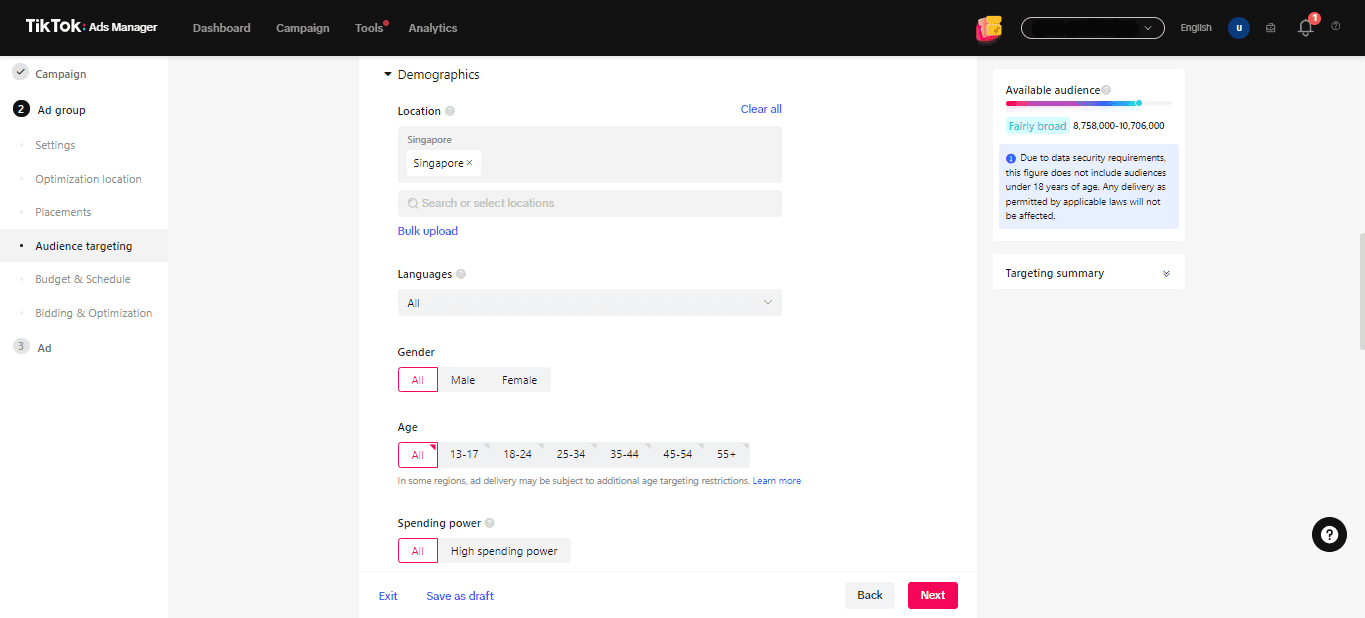
2. Ad Group Level
The ad group level controls how the campaign reaches people and how the budget is distributed.
Key settings typically include:
Audience targeting
Budget allocation
Optimization goals
Audience selection determines who sees the ad. Advertisers often experiment with different targeting approaches while testing a product.
Common strategies include:
Broad targeting, where the system receives minimal restrictions and finds potential buyers based on behavior signals.
Interest targeting, where audiences are grouped based on topics or activities related to the product category.
Lookalike audiences, where the platform identifies users whose behavior resembles an existing customer group or pixel data set.
These configurations shape how the campaign distributes impressions and how efficiently the system can locate users who respond to the product.
3. Ad Level
The ad level is where the creative enters the campaign. Advertisers upload the video and configure the elements viewers interact with when the promotion appears on TikTok.
Key components include:
Video creative
Caption
CTA button
Landing page URL
This stage usually involves testing several video variations built around the same product. Each version may present a different angle, such as a demonstration, a short problem scenario, or a quick before-and-after sequence.
Running multiple creatives inside the same ad group allows advertisers to observe which concept holds attention and drives clicks.
Targeting settings may remain identical across ads, yet performance often shifts dramatically depending on the video itself. A creative that communicates the product value within the opening seconds tends to generate stronger engagement and store visits than videos that delay the reveal.
4 Prominent TikTok Ad Formats Used by Dropshippers
1. In Feed Ads
In Feed, ads appear between regular videos while people scroll through TikTok. The format looks identical to normal posts, so the viewer interacts with the ad the same way they would with any other video on the platform.
Each ad can include a clickable call to action such as Shop Now, Buy Now, or Learn More.
The button can direct viewers to a product page, Shopify store, or a TikTok Shop listing. Because the action happens within the video experience, advertisers use this format heavily for campaigns focused on purchases or store visits.
Dropshippers usually launch their first tests with this format because it allows rapid creative experimentation without large budgets.
2. Spark Ads
Sometimes a video already attracts strong engagement before any advertising begins. Spark Ads allow brands to turn that existing post into a campaign without changing the original content.
If a post generates strong engagement organically, promoting that same video through Spark Ads pushes it toward a larger audience without changing the original content.
The ad still appears under the creator account, which helps maintain the natural feel of the video. Viewers see the same likes, comments, and shares attached to the post, which often encourages additional interaction.
3. TikTok Shop Ads
TikTok Shop ads allow viewers to complete a purchase without leaving the app. When a product appears in a video, the viewer can tap the item and open the product listing directly inside TikTok.
This structure removes extra steps that usually exist in traditional e-commerce advertising. The user does not need to leave the platform, load an external website, or navigate through a separate checkout page.
The format suits products that people can understand quickly through video. When the benefit becomes obvious within a short demo, viewers can move from watching the clip to completing the purchase within the same session.
4. Premium Formats (TopView and Brand Takeover)
TopView and Brand Takeover placements appear when a user opens the app. The advertisement occupies the screen before the viewer begins scrolling through videos.
This position delivers immediate exposure because the ad appears at the very start of the session. Brands use these placements when the goal is broad visibility across a large audience.
The cost of these formats is significantly higher than standard ad placements. Large brands often use them for product launches or major campaigns, while dropshipping advertisers typically focus on formats that support testing and performance-driven campaigns.
Creative Strategies That Drive Conversions on TikTok
1. Problem–Solution Video Structure
A large portion of successful product ads on TikTok follow a simple narrative pattern. The video opens with a situation viewers recognize, then introduces a product that resolves the issue.
The opening seconds usually present a relatable frustration. This moment needs to feel familiar to the viewer so they immediately understand the context. Everyday situations often work well because they connect with routine tasks people already deal with.
After the problem appears, the product enters the scene. The video quickly shows how the item changes the situation and simplifies the task.
A common sequence looks like this:
Introduce the problem
Reveal the product
Demonstrate the improvement
For example, a clip might begin with someone struggling to clean their car interior. The narration might say something like, “Cleaning your car like this takes forever.” The next shot shows a specialized cleaning tool removing dust in seconds, turning a frustrating task into a quick fix.
2. Before and After Demonstration
Visual contrast often drives strong engagement on TikTok because viewers can immediately see the change a product creates. A before-and-after format places that transformation at the center of the video.
The opening shot presents the problem clearly. This might show a messy surface, damaged material, or an unfinished task that needs improvement. The goal is to make the situation obvious without lengthy explanation.
The next part introduces the product in use. The video captures the moment where the item begins addressing the issue, allowing viewers to watch the process rather than relying on claims.
The final frame highlights the completed result. The contrast between the initial state and the finished outcome becomes the main selling point.
This format appears frequently in product categories where visual results are easy to notice, such as:
Beauty
Cleaning
Home improvement
3. TikTok Storytelling Ads
Some product ads on TikTok avoid direct promotion and start with a personal experience. The creator speaks to the camera and explains how they came across the product before showing it.
Typical opening lines include:
“TikTok made me buy this…”
“I didn’t believe this worked until I tried it.”
Dropshippers often use this format because it resembles organic content already circulating on the platform. The video feels closer to a product discovery moment than a traditional advertisement.
The creator usually walks through the experience step by step. The product appears naturally during the explanation, followed by a short demo showing the result.
This works well for unfamiliar products. Viewers watch to see whether the claim holds up, and that curiosity often keeps them engaged long enough to consider the purchase.
4. Product Demonstration Ads
Some TikTok ads skip storytelling and go straight to the product. The camera focuses on the item while it performs the task it was designed for.
A kitchen tool slicing vegetables in seconds.
A small gadget for removing lint from a couch.
A pet toy keeps a dog busy while the owner records the reaction.
The viewer understands the product by watching it work. No long explanation is needed.
This style works well for products where the result is visible on camera. Gadgets, kitchen tools, and pet products often fit this pattern because the benefit appears immediately once the product is used.
Product Types That Perform Well on TikTok
The platform favors items that can capture attention quickly and communicate their usefulness through visuals. When viewers understand what a product does within moments of seeing it, curiosity builds and engagement follows.
Here are the products that work on TikTok:
1. Products With Strong Visual Demonstrations
Certain products naturally translate well into video because the benefit appears directly on screen.
Examples include:
Cleaning tools
Kitchen gadgets
Beauty devices
Car accessories
Pet products
These products allow the viewer to immediately see the action and result. When the function becomes obvious within the opening moments of the video, the audience does not need long explanations to understand why the item might be useful.
2. Problem-Solving Products
Products that remove everyday frustrations tend to attract attention quickly.
When the problem is familiar, the viewer instantly connects with the situation. The product then appears as the practical fix.
3. Impulse Purchase Price Range
Price strongly influences whether viewers act immediately after seeing a product.
Typical ranges include:
$10 to $20 for quick impulse buys
$20 to $40 for products that still feel affordable without heavy consideration
Lower price points reduce hesitation. When the perceived risk feels small, viewers are more willing to purchase after discovering the product through a short video.
Testing Strategy Used by Successful TikTok Dropshippers
Dropshipping advertisers approach TikTok with a testing mindset, treating the first campaigns as a way to observe how different creative angles perform.
1. Creative Testing Phase
The first step focuses on creative variation rather than audience changes. Advertisers usually launch several videos for the same product at once so the platform can distribute impressions across different concepts.
Typical testing setups include:
3 to 10 creatives built around the same product
Daily budgets between $20 and $50 per ad group
Different creative angles, such as problem scenarios, visual transformations, or creator-led product usage
Running multiple creatives simultaneously reveals which concept resonates with viewers. Once one or two videos begin receiving stronger engagement or conversions, advertisers gain a clear signal about which direction deserves further investment.
2. Killing Losing Ads
Not every creative deserves an extended budget. During the testing phase, advertisers monitor early performance signals and remove ads that fail to generate meaningful engagement.
Common indicators include:
Low click-through rate
High cost per acquisition
Limited viewer interaction
Ads showing these patterns for 2-3 days are typically paused. Quick decisions help prevent unnecessary spending and allow the budget to shift toward creatives that demonstrate stronger potential.
3. Scaling Winning Ads
When a creative consistently generates conversions, the campaign enters the scaling stage. Instead of making sudden budget jumps, advertisers increase exposure gradually while monitoring performance.
Common scaling approaches are:
Duplicating high-performing ad groups
Expanding audience targeting
Increasing budgets by 20% to 30% at a time
Gradual adjustments allow the campaign to grow while maintaining stability. If performance holds after each increase, the advertiser can continue expanding reach without disrupting the momentum of the winning creative.
Metrics Dropshippers Track in TikTok Ads Campaigns
CTR (Click Through Rate): Measures how appealing the ad is.
Healthy benchmark: 1% to 3%
CPC (Cost Per Click): Cost for each visitor
Conversion Rate: Percentage of visitors who complete a purchase
Typical ecommerce range: 0.5% to 5%
CPA (Cost Per Acquisition): Cost required to generate a sale. Must remain lower than the product profit margin
Common Mistakes Beginners Make With TikTok Ads
Running ads on TikTok involves constant testing and adjustment. Small decisions around creatives, targeting, and budgets can quickly influence whether a campaign performs well or wastes spend.
You should avoid these mistakes:
Launching campaigns with only one creative - A single video rarely reveals how people respond to a product.
Expecting immediate profitability - New campaigns usually require a testing phase before a profitable creative appears.
Overrestricting audience targeting during early tests - Very narrow audiences can prevent the system from discovering potential buyers.
Ignoring creative fatigue - A video gradually loses effectiveness once viewers encounter it repeatedly.
Increasing budgets too aggressively - Large budget jumps can disrupt campaigns that were delivering steady results.
How WinningHunter Helps Dropshippers Find Winning TikTok Ads
Product research often takes a large portion of a dropshipper’s time. Identifying which items are gaining traction requires analyzing stores and tracking which creatives continue appearing across the platform. Ad intelligence tools reduce this manual work by organizing advertising data in one place.
WinningHunter provides visibility into TikTok advertising activity by tracking more than 100,000 ads. Users can review active campaigns, observe ad spend patterns, and identify stores running high-performing promotions. The platform also allows reverse searches of competitor creatives using AI and supports downloading TikTok videos without watermarks for creative analysis.
Access to this type of data allows advertisers to recognize emerging product trends earlier. When a product begins appearing in multiple ad campaigns, it often signals growing demand. Monitoring these patterns helps dropshippers evaluate opportunities before the market becomes saturated.
FAQs
How many creatives should I test for a TikTok dropshipping product?
Testing several video angles helps reveal how people respond to the product. A common starting point is three to ten creatives built around the same item. Each version can present a different hook, scenario, or use case. Running these variations together allows advertisers to see which video holds attention and generates clicks before allocating larger budgets.
What budget is needed to start TikTok ads for dropshipping?
Initial tests do not require large spending. New advertisers often begin with ad groups set at around $20-$50 per day. This range provides enough impressions to evaluate early performance signals such as click behavior and engagement. Once a video shows consistent results, budgets can increase gradually while monitoring whether performance remains stable.
How do dropshippers find winning TikTok products?
Product discovery usually begins with observing which items repeatedly appear in TikTok videos and advertisements. Ad intelligence platforms such as WinningHunter simplify this process by tracking active campaigns, revealing trending products, and showing which creatives and stores continue running successful ads.
Can organic TikTok videos help dropshipping sales?
Organic content can generate significant product discovery before paid campaigns begin. A single video showing a product solving a relatable problem can attract views, comments, and purchase interest. When a post begins gaining traction, advertisers sometimes promote the same video through paid ads to extend its reach and capture additional sales.


We already know what works before you even have the chance to blink!
© 2024 WinningHunter.com