dropship-io-alternative
Best Dropship.io Alternatives in 2026

Dropship.io became popular because it made competitor research feel simple. You could track Shopify stores, estimate revenue, discover trending products, and monitor what other sellers were launching without spending hours digging through storefronts manually.
For a while, that gave dropshippers a serious edge.
The problem is that e-commerce has changed. A product can explode through TikTok before Shopify tracking tools even catch the trend. Sellers are paying closer attention to ad creatives, viral momentum, creator content, fulfillment speed, and multi-platform data simultaneously.
That growing pressure is pushing many users to search for Best Dropship.io alternatives that can do more than just track stores.
Finding products is still important. Finding them early enough to win is the part that changed.
TL;DR
Dropship.io still works for Shopify product discovery and competitor tracking, but many sellers now need stronger TikTok research, ad intelligence, and broader product validation workflows. WinningHunter is the best Dropship.io alternative because it combines TikTok ad research, Facebook ad spying, and Shopify sales tracking in one platform. Tools like AutoDS, Sell The Trend, and Pipiads perform well in specific areas, though they focus more narrowly on automation, beginner workflows, or TikTok research alone.
Why People Look for a Dropship.io Alternative?
Dropship.io gained attention because it simplified Shopify product research for dropshippers. You could monitor stores, estimate revenue, discover trending products, and validate ideas faster than manually researching competitors yourself.
The friction usually begins once e-commerce operations become more complex.
Seller conversations across forums and communities increasingly revolve around creative performance, TikTok momentum, ad testing speed, and multi-platform research workflows. Product databases still matter, but they no longer tell the full story.
Shopify tracking accuracy concerns continue growing: Many sellers now treat store revenue estimates as directional insights instead of precise numbers after Shopify ecosystem changes affected tracking visibility.
TikTok intelligence feels limited for modern workflows: A large percentage of winning products now gain traction through TikTok creatives and viral content long before traditional product databases fully catch up.
Creative research matters more than static product lists: Experienced sellers pay closer attention to hooks, UGC formats, creator angles, and ad repetition patterns before testing products.
Subscription stacking becomes expensive quickly: Sellers often end up combining separate tools for TikTok ads, Facebook research, fulfillment automation, supplier sourcing, and Shopify tracking.
Winning product databases saturate faster than before: Once products spread across multiple research tools, market competition usually follows immediately, making timing more important than simple discovery.
Operational workflows feel incomplete with one tool alone: Product research solves only one part of the e-commerce process. Scaling brands usually requires broader visibility into ads, creatives, automation, and campaign performance.
What to Look for in a Dropship.io Alternative?
Dropship.io works well when your main goal is spotting products that already show signs of sales activity. The problem starts when you need more context before spending money on testing.
When comparing Dropship.io alternatives, these are the areas that usually matter most:
Ad intelligence across TikTok and Facebook: Product data becomes far more useful when you can see which creatives are actively scaling and which campaigns already look saturated.
Better product validation signals: A store generating sales does not automatically mean the opportunity is still profitable. Stronger tools help you connect products with ad engagement, campaign freshness, and trend timing.
Reliable Shopify tracking: Sellers want store insights they can actually use for decision making, not numbers that feel disconnected from visible market activity.
Creative research workflows: Many winning campaigns succeed because of positioning, hooks, creator style, or UGC execution, not because the product itself is unique.
Automation and fulfillment support: Once stores begin scaling, product research alone stops being enough. Importing products, managing suppliers, and handling operations manually slows everything down.
Multi-platform visibility: Products rarely succeed through one traffic source anymore. Sellers increasingly want visibility across Shopify, TikTok, Facebook, and broader ecommerce ecosystems together.
Filtering built for scaling workflows: The bigger the database gets, the more important speed becomes. Good filtering helps you narrow opportunities quickly without going through endless recycled products.
7 Best Dropship.io Alternatives (Tested & Compared)
1. WinningHunter: Best Overall Dropship.io Alternative
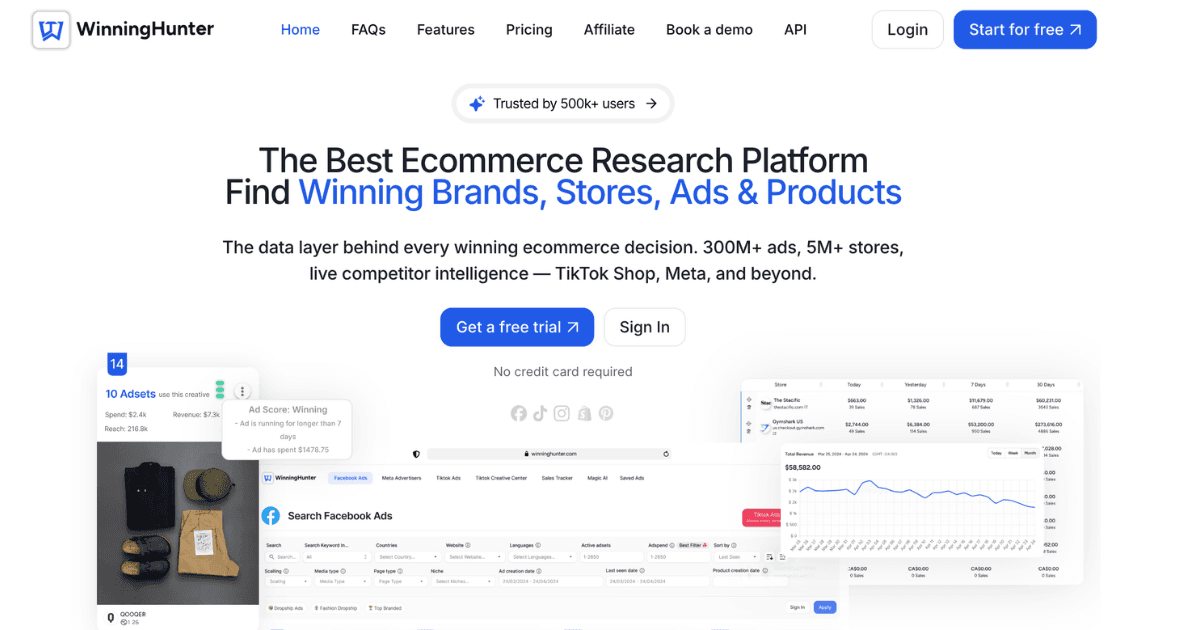
WinningHunter brings ad intelligence, Shopify tracking, and competitor monitoring into one place for sellers who need more than store spying alone.
Dropship.io can help you find products that already show sales activity. The harder part is figuring out whether those products still have room left to scale. A store may look profitable while the creatives behind it are already oversaturated across TikTok feeds and Facebook ads.
WinningHunter closes that visibility gap by connecting product discovery with live advertising data and store analysis.
Here is what you get:
TikTok and Facebook ad tracking together: Study active campaigns, creative patterns, engagement spikes, and scaling signals across both platforms.
Integrated Shopify sales insights: Cross-check store performance before testing products yourself.
Unlimited searches: Run deep research sessions without credit limits, allowing you to explore as much data as you can.
AI competitor discovery: Surface emerging stores, products, and campaigns faster through automated tracking systems.
Stronger validation workflows: Move from viral ads to store analysis and competitor breakdowns without constantly switching tools.
Built for broader ecommerce operations: Research products across Shopify, TikTok, and Facebook from one connected system.
One major advantage is speed. Instead of piecing together product signals from several platforms, you can analyze ads, stores, and scaling activity from a single dashboard while trends are still gaining traction.
Pricing: Starts at $49 per month.
Best for: Sellers who want stronger product validation beyond traditional Shopify product databases.
Start a free trial and access TikTok, Facebook, and Shopify intelligence in one place with WinningHunter.
2. AutoDS: Best for Fulfillment Automation
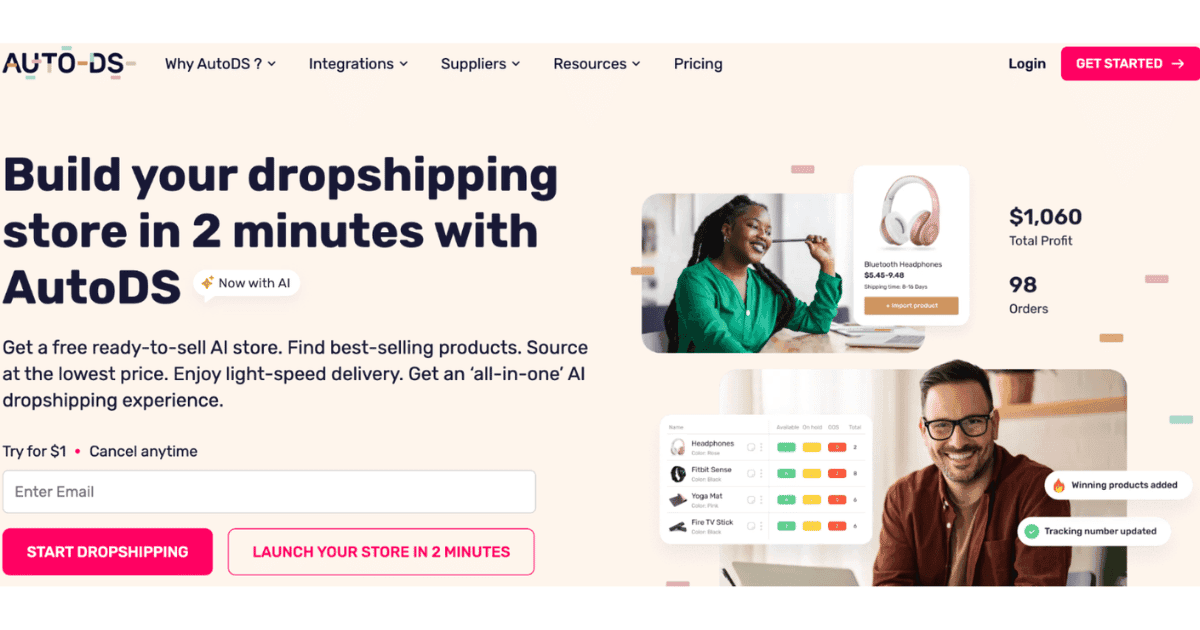
AutoDS is built for sellers who spend more time managing operations than hunting for products. Once order volume starts increasing, repetitive backend work becomes one of the biggest bottlenecks for scaling a store smoothly.
That is the area where AutoDS stands out.
The platform focuses heavily on automation. Product imports, supplier syncing, stock monitoring, pricing updates, and order fulfillment can all run with far less manual involvement. Sellers handling large catalogs or multiple stores usually benefit the most from that kind of operational support.
Some of its features include:
Automated order processing connected with supported suppliers
Inventory syncing that keeps stock levels updated automatically
Product importing tools for faster store setup
Automatic pricing updates across connected products
Supplier integrations designed for ongoing fulfillment management
AutoDS makes the day-to-day side of e-commerce feel more manageable, especially for sellers juggling high product volume. The platform is far less centered around ad intelligence, though. If your workflow depends heavily on tracking TikTok creatives, researching Facebook campaigns, or spotting viral ad trends early, you will likely need additional research tools alongside it.
Pricing: Starts around $26.90 per month.
Best for: Sellers focused on fulfillment automation and backend store management.
3. Sell The Trend: Best Beginner All-in-One Tool
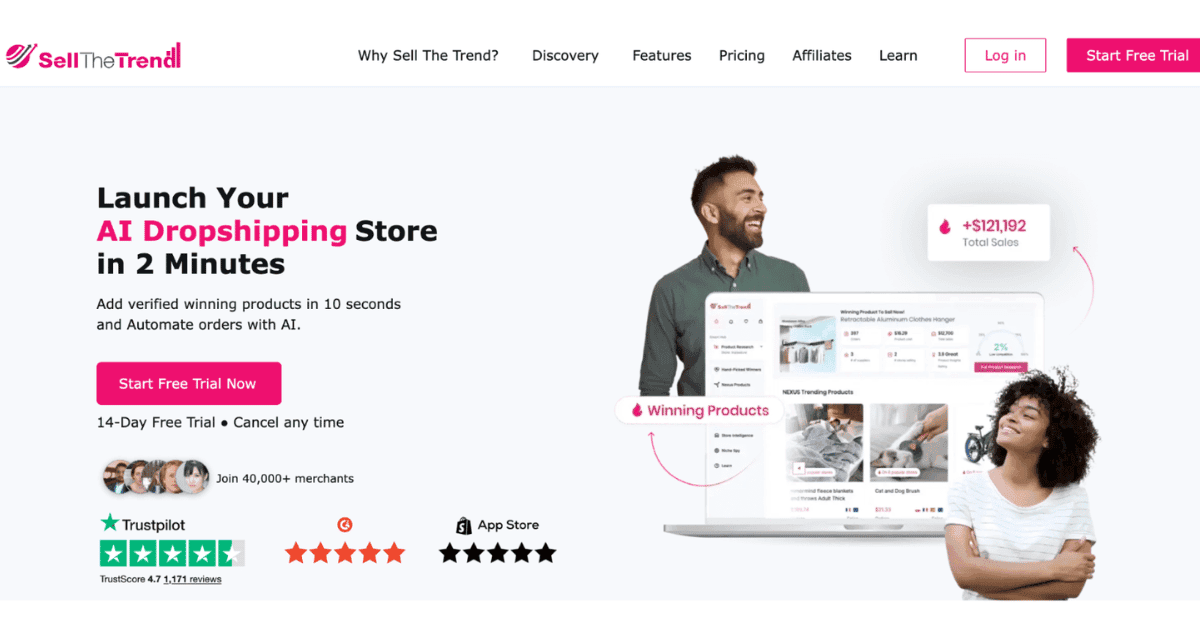
A lot of first-time dropshippers land on Sell The Trend because it feels easier to navigate than stitching together five separate ecommerce tools from day one.
The dashboard combines product discovery, supplier sourcing, store imports, and basic research features in a way that feels approachable for beginners still figuring out how the entire process works. You are not dealing with a steep setup process or overly technical research filters immediately.
Several features are geared toward simplicity:
Trending product discovery for newer sellers
Shopify importing tools connected with suppliers
Product sourcing workflows built into the dashboard
Cleaner navigation compared to more advanced research platforms
Multiple e-commerce functions bundled into one tool
The research side feels lighter once competition increases, though. Sellers running larger testing cycles often want deeper ad visibility, stronger TikTok research, and more detailed creative tracking than Sell The Trend currently provides.
Pricing: $49.97 to $299.97 per month.
Best for: Beginner dropshippers who want a simpler starting point.
4. PiPiADS: Best TikTok Ad Intelligence Alternative
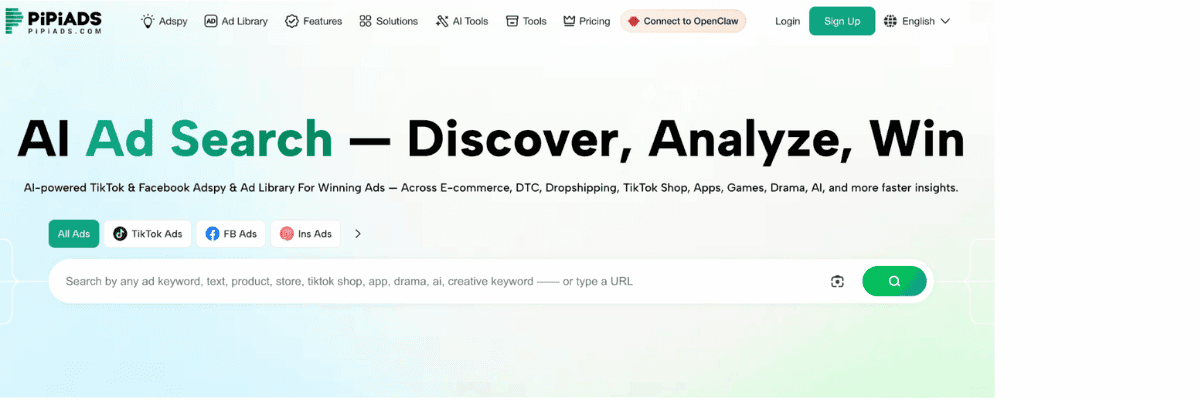
If your entire product discovery process starts on TikTok, PiPiADS will probably feel far more useful than traditional Shopify spying tools.
The platform revolves around short-form advertising data. Sellers use it to study viral creatives, monitor engagement trends, track advertiser activity, and break down which products are gaining traction through TikTok ads before they fully spread across saturated product databases.
A few standout capabilities include:
Large TikTok ad library with searchable creatives
Creative analysis tools for hooks, formats, and engagement patterns
Influencer and advertiser tracking features
Product discovery tied closely to active TikTok campaigns
Filters designed around TikTok-style research workflows
For sellers heavily dependent on TikTok traffic, that level of visibility can shorten product testing cycles significantly. The downside is cost. Pricing climbs quickly for newer sellers, and the platform feels narrower once your workflow expands beyond TikTok ad research into fulfillment, automation, or broader ecommerce operations.
Pricing: $69 to $1999 per month.
Best for: Sellers building products primarily through TikTok advertising.
5. DSers: Best Budget Automation Tool
For sellers running lean operations, DSers is often used as a practical fulfillment layer connected to AliExpress sourcing.
The tool focuses less on product discovery and far more on handling repetitive order management tasks efficiently. Bulk processing, supplier mapping, and automated fulfillment are the main reasons many dropshippers keep DSers in their stack, especially during the early growth stage when manual order handling starts becoming messy.
Its capabilities include:
AliExpress fulfillment automation for faster order handling
Bulk order processing that reduces repetitive admin work
Supplier management tools for product sourcing
Product mapping features for switching suppliers more easily
Basic automation built around operational efficiency
The tradeoff is visibility. Product validation, ad tracking, competitor monitoring, and creative research are not major strengths of the platform, so sellers usually pair it with separate research tools.
Pricing: Paid plans start around $19.90 per month.
Best for: Budget-focused dropshippers prioritizing fulfillment automation over advanced product research.
6. Minea: Best Multi-Platform Research Alternative
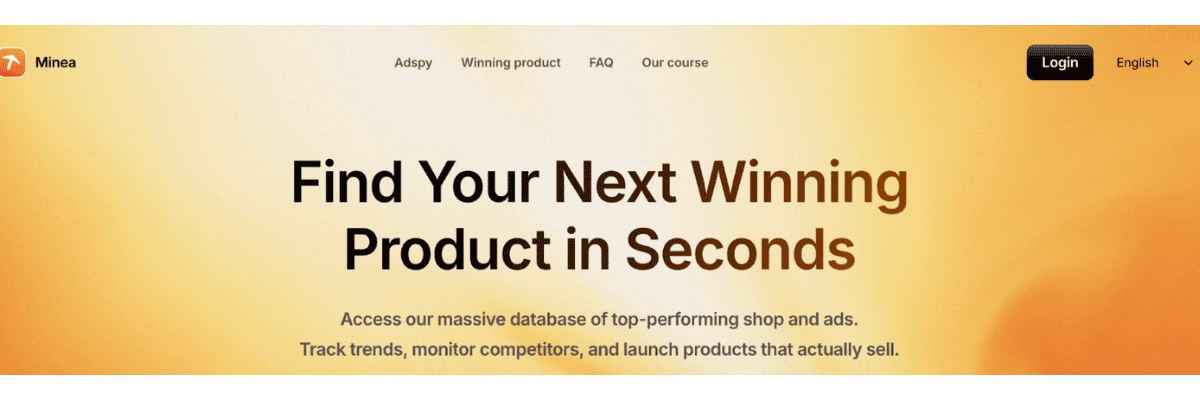
Sellers who research products across several traffic sources usually gravitate toward Minea because the platform pulls data from more than just one advertising channel.
Facebook ads, TikTok campaigns, Pinterest creatives, products, and influencer content all feed into the same research environment. That broader visibility helps sellers compare trends across platforms instead of relying entirely on Shopify store tracking alone.
Minea also leans heavily into visual discovery. A large part of the experience revolves around finding products through creatives, engagement patterns, and social activity rather than scrolling endless product databases.
Some of its features include:
Multi-platform ad research across Facebook, TikTok, and Pinterest
Product and creative discovery are tied closely to social ads
AI-powered research tools for spotting trends faster
Influencer tracking connected with e-commerce campaigns
Large searchable advertising database
The biggest complaint from long-term users usually comes down to the pricing structure. Minea uses a credit-based system, which can feel restrictive during deeper research sessions or high-volume product hunting.
Pricing: $49 to $399 per month.
Best for: Sellers running multi-platform ecommerce research workflows.
7. Ecomhunt: Best Lightweight Product Discovery Tool
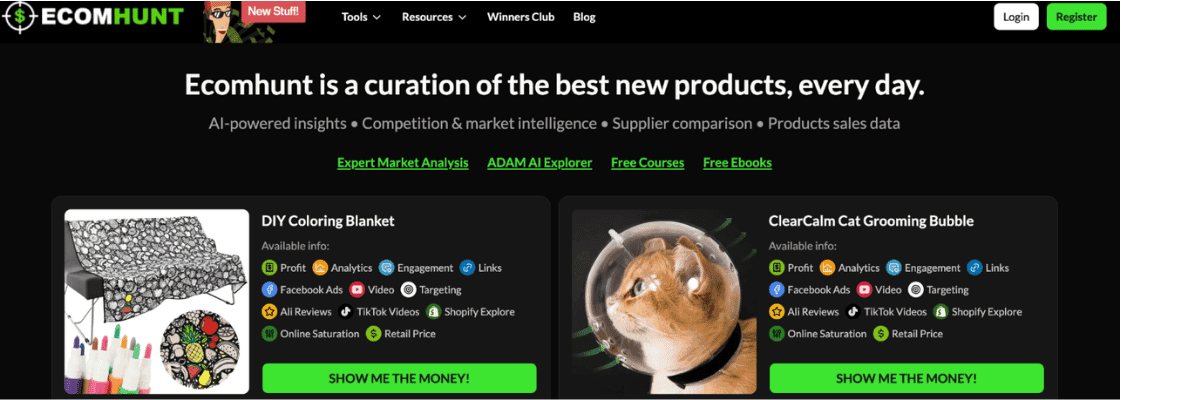
Not every seller wants a massive research dashboard packed with advanced filters and deep analytics. Ecomhunt keeps things much lighter by focusing on curated product discovery for newer ecommerce stores.
The experience feels straightforward from the beginning. Instead of digging through huge databases manually, users browse handpicked products already organized around trending potential, engagement signals, and basic store metrics.
A few areas where Ecomhunt remains useful include:
Curated lists of trending ecommerce products
Beginner-friendly product browsing workflows
Basic profit estimates and engagement insights
Simpler navigation compared to more advanced research tools
Faster product discovery for smaller testing cycles
Sellers looking for live ad tracking, deeper TikTok visibility, or stronger validation data may outgrow the feature set fairly quickly once testing becomes more aggressive.
Pricing: Free limited access available. Paid plans start around $23 per month.
Best for: Early-stage sellers looking for lightweight product discovery.
Dropship.io Alternatives Compared: Features, Pricing, and Platforms
Tool | Best For | TikTok Support | Shopify Tracking | Ad Intelligence Depth | Starting Price |
WinningHunter | Full Stack Ecommerce Intelligence | Strong | Yes | Advanced | $49/month |
AutoDS | Fulfillment-focused store operations | Limited | Yes | Basic | $26.90/month |
Sell The Trend | Beginner-friendly ecommerce workflows | Limited | Yes | Moderate | $49.97/month |
PiPiADS | TikTok Creative Intelligence | Strong | No | Advanced | $69/month |
DSers | Budget AliExpress fulfillment management | No | Yes | Minimal | $19.90/month |
Minea | Cross-Platform Ad Discovery | Strong | Partial | Advanced | $49/month |
Ecomhunt | Lightweight product discovery | Limited | No | Basic | $23/month |
Tools like Pipiads focus heavily on TikTok ads, while DSers and AutoDS lean more toward fulfillment automation. WinningHunter is the best Dropship.io alternative because it combines TikTok ad research, Facebook ad intelligence, and Shopify sales tracking in one platform, giving sellers a stronger product validation workflow before launching campaigns.
Build a Research Stack That Keeps Up With Modern E-commerce
Finding products is no longer the difficult part of dropshipping. The real challenge is understanding whether a product still has room to scale before the market becomes overcrowded.
That is the gap many sellers eventually run into with traditional Shopify spying tools.
Dropship.io still performs well for store tracking and product discovery, especially for sellers focused heavily on Shopify data. Modern ecommerce research now stretches far beyond storefront monitoring alone. Creative performance, TikTok momentum, Facebook ads, competitor scaling patterns, and product timing all influence whether campaigns stay profitable.
WinningHunter brings those research layers together in one place. You can analyze TikTok ads, monitor Facebook campaigns, validate Shopify stores, and track competitor activity without relying on disconnected tools or restrictive credit systems.
For sellers trying to validate products faster and make sharper testing decisions, that broader visibility becomes a major advantage.
FAQs
What is the best Dropship.io alternative?
WinningHunter is one of the strongest Dropship.io alternatives for sellers who need more than Shopify product tracking. It combines TikTok ad research, Facebook ad intelligence, competitor monitoring, and Shopify sales tracking in one workflow. That broader visibility helps sellers validate products through both store activity and live advertising data before testing campaigns.
Is Dropship.io still worth it in 2026?
Dropship.io still works well for Shopify product discovery and competitor store tracking, especially for newer dropshippers. The limitation usually appears once research expands into TikTok ads, creative testing, fulfillment automation, and multi-platform validation. Sellers scaling aggressively often supplement it with additional tools built for broader ecommerce intelligence and ad research.
Are Dropship.io sales estimates accurate?
No, Dropship.io sales estimates are not exact revenue figures. Like most Shopify spying tools, the platform relies on estimated tracking models instead of direct access to store financial data. The numbers can still help identify active stores and product trends, but accuracy varies between stores and should be treated as directional insight, not precise reporting.
Which Dropship.io alternative is best for TikTok?
WinningHunter and Pipiads are two strong options for TikTok-focused research. Pipiads leans heavily into TikTok creative tracking and influencer discovery, while WinningHunter combines TikTok ad intelligence with Facebook ads and Shopify sales tracking for broader ecommerce validation workflows.
Which Dropship.io alternative includes fulfillment automation?
AutoDS and DSers both focus heavily on fulfillment automation and supplier management. They help sellers automate repetitive backend tasks like order processing, inventory syncing, supplier mapping, and product imports. Those platforms are usually better suited for operational efficiency than advanced ad intelligence or product research.
Why do sellers use multiple dropshipping tools?
Most advanced e-commerce sellers split their workflow across several specialized tools because different platforms solve different problems. One tool may handle TikTok research, another may focus on Shopify tracking, while others manage fulfillment, supplier sourcing, or ad creatives. Combining tools often gives sellers better validation and stronger operational flexibility than relying on one platform alone.


We already know what works before you even have the chance to blink!
© 2024 WinningHunter.com